Answering the need for reliable power switching between shore power and an auxiliary source, this guide highlights five top transfer switches suited for RVs, boats, and mobile setups. These devices automate the handoff between shore power, generators, and inverters, helping to prevent backfeed and maintain uninterrupted AC loads. Best fits include travelers, full-time RVers, and boaters who require seamless, safe power management with straightforward installation and robust construction.
Summary of chosen products
| Product | Brand | Type | Best For | Key Benefit |
|---|---|---|---|---|
| Renogy 30Amp Transfer Switch | Renogy | Automatic | RVs, campers, shore power users | Wide compatibility with inverters |
| Sekelo AC Rotary Selector Switch | Sekelo | Manual/Rotary | Boats, yachts, off-grid | Break-before-make safety |
| Lizixny 30 Amp Manual Transfer Switch | Lizixny | Manual 3-position | Mobile rigs, RVs | Clear Shore-Off-Gen labeling |
| Nirakoka 30 Amp Automatic Transfer Switch | Nirakoka | Automatic | RV setups, boats | Simple two-source switching |
| YAURILO 30 Amp Automatic Transfer Switch | YAURILO | Automatic | Travel trailers, vans | Integration with inverters and gensets |
Renogy 30Amp Transfer Switch for Solar Inverters and Shore Power

Best for RVs and off-grid setups that use Renogy or similar inverters. The switch automatically shifts power between shore power and a backup source, avoiding manual intervention. It is described as widely compatible with various battery inverters, making it suitable for shore power, solar, and generator configurations.
Who it’s best for: RV owners and campers who rely on shore power but want automatic continuity during outages. Why selected: seamless, automatic handoff reduces downtime and simplifies power management. Caution: ensure your inverter compatibility with the 30A load and confirm wiring diagrams before installation.
Sekelo AC Rotary Selector Switch Panel
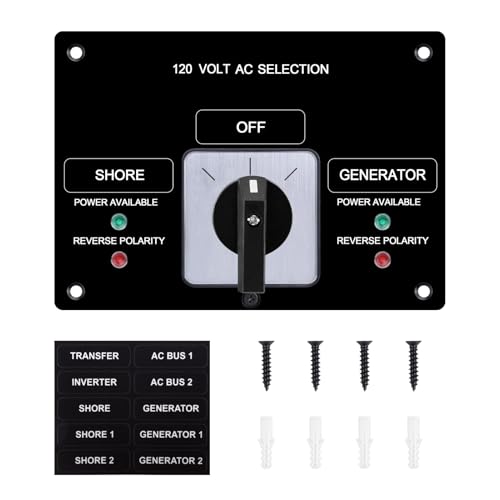
Best for boats and yachts needing a robust manual transfer with clear polarity indicators. This two-source 2-position (or 3-position with shore/off/gen) rotary switch uses break-before-make action to prevent cross-connection. It is designed for 120V systems in marine environments and supports reliable shore-to-generator switching.
Who it’s best for: boat owners who prefer direct, tactile control over source selection. Why selected: strong safety features, including reverse polarity cues, help prevent unsafe dock wiring conditions. Limitation: manual operation means it won’t auto-switch during a power outage.
Lizixny 30 Amp Manual Transfer Switch

Best for mobile power setups requiring a clear Shore-Off-Gen pathway. This 3-position switch supports 120V/240V and is rated for 30A with industrial-grade construction and 12 terminals. It is well-suited for RVs, boats, and trucks that want reliable, manual source control.
Who it’s best for: users who want explicit, manual source selection with robust terminals. Why selected: strong mechanical design and safety-conscious labeling help prevent miswiring. Caution: ensure wire gauge and terminal fit match the prepped installation points.
Nirakoka 30 Amp Automatic Transfer Switch

Best for RVs seeking automatic two-source switching with straightforward integration. The device provides automatic power switching between two 30-amp AC input sources and mentions a time delay of 20–30 seconds to let generator voltage stabilize.
Who it’s best for: RVs or boats needing a simple two-source auto-transfer. Why selected: time delay helps stabilize power from gen sets, reducing abrupt load changes. Limitation: verify compatibility with your generator’s output characteristics and inrush current.
YAURILO 30 Amp Automatic Transfer Switch
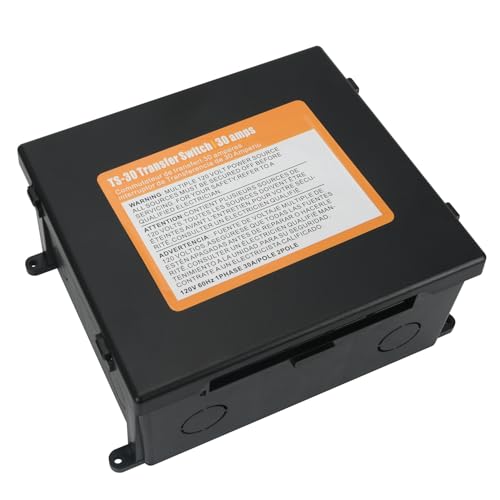
Best for travel trailers and vans needing automatic power sharing between shore power and generator/inverter. It emphasizes seamless integration with onboard power systems for reliable management across diverse environments, including RV travel and camping scenarios.
Who it’s best for: mobile setups requiring automatic switching with simple installation. Why selected: compact design and automatic switching provide effortless power continuity. Caution: confirm actual electrical rating in your specific shore power arrangement to avoid overloading circuits.
Buying Guide
- Automatic vs. Manual: Automatic switches provide hands-free operation and quick handoff during outages; manual switches give you direct control and can be simpler to install in some setups.
- Current and Voltage Ratings: Match the switch to your shore power and inverters. Common RV/boat need is 30A at 120V or 240V; some higher-amp switches exist for larger rigs.
- Compatibility: Check compatibility with your inverter, generator, or solar system. Some switches are optimized for particular brands or inverter types.
- Safety Features: Look for break-before-make action, cross-connection prevention, reverse polarity indicators, and proper enclosure for marine or outdoor use.
- Installation Notes: Some models require no rewiring and provide pre-punched holes; others demand more extensive wiring. Ensure terminal compatibility and wire gauges (often 6-10 AWG for 30A systems).
- Durability: For marine or off-grid environments, prefer ABS or corrosion-resistant housings and copper internals for longevity and reliable conductivity.
FAQ
- What is a shore power transfer switch?
A device that automatically or manually switches a load between shore power and an alternative source like an inverter or generator to prevent backfeed and maintain power continuity. - Do I need an automatic or manual transfer switch for my RV?
Automatic switches are convenient for continuous power and outages; manual switches are simpler and can be cheaper, with more direct control. - Will a 30A transfer switch work with 50A RVs?
No, a 50A system typically requires a 50A-rated transfer switch to safely handle current and prevent overheating. - Can I install a shore power transfer switch myself?
Some models are DIY-friendly with pre-wired harnesses, but many installations require electrical knowledge and adherence to local codes; consult a professional if unsure. - What safety features should I look for?
Break-before-make operation, proper isolation of inputs, reverse polarity indicators, and a robust enclosure suitable for marine or outdoor use.