Facing motor mounting decisions? This guide highlights the best outboard engine mounting brackets for small boats, 7.5–20 HP range. Each option is suited for different boat types and uses, with clear pros and limitations to help you pick the right bracket for stability, ease of use, and long-term durability. Ideal buyers include weekend sailors, anglers with compact skiffs, and anyone upgrading a transom setup for light-to-moderate loads.
| Product | Best For | Key Benefit |
|---|---|---|
| Marinebaby Boat Outboard Motor Bracket | Saltwater anglers; small boats needing solid aluminum support | Heavy-duty aluminum with 5-position height adjustment |
| FUTURUP Boat Outboard Motor Bracket | Dockside or coastal boats seeking wide base stability | Reinforced welded frame and stainless parts |
| Haida 2 Stroke Outboard Bracket Kicker | Simple, robust stainless design for up to 20 HP | 304 stainless steel construction with manual lift |
| ALMULOO Universal Heavy Duty Bracket | Transom installations requiring powder-coated durability | Powder-coated aluminum for long-term corrosion resistance |
| Mojiate Outboard Motor Bracket | Heavy-use small boats needing adjustable height | Marine-grade stainless steel with multiple vertical positions |
Below are five evaluated options, each with a concise breakdown to help you compare at a glance. Use the headings to jump to the product details.
Marinebaby Heavy-Duty Aluminum Bracket
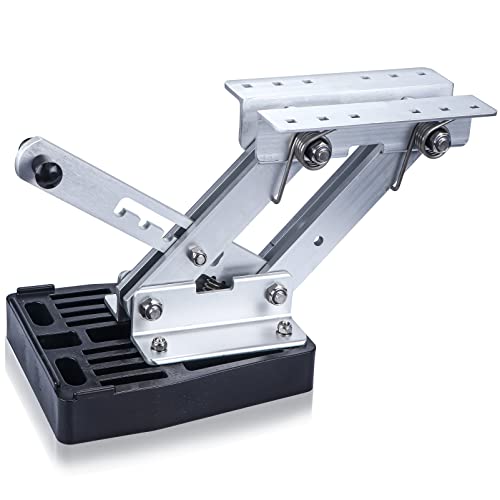
Best for: Small saltwater boats needing solid, long-lasting support. This Marinebaby bracket uses heavy-duty aluminum and a solid polypropylene mounting board with stainless steel springs for counter-weight balance. It supports 7.5–20 HP models and offers five-position height adjustment from 195 mm to 320 mm. It is ideal where a lightweight yet sturdy aluminum bracket is preferred and where frequent motor positioning changes are needed. Limitation: aluminum components may require periodic inspection for corrosion in aggressive saltwater environments.
FUTURUP Aluminum Outboard Bracket

Best for: Boats requiring broad-based stability and reinforced frame for 7.5–20 HP motors. FUTURUP features a welded stainless-steel component set and reinforced frame with a wide track body. Height is adjustable with four spring-loaded positions, aiding precise motor balance. Choose this if you value a robust frame and corrosion-resistant parts. Caution: base is plastic; ensure proper load distribution to avoid stress on the mounting surface.
Haida 2 Stroke Kicker Bracket

Best for: Simplicity and reliability in small to mid-sized boats needing a manual lift. This 304 stainless steel bracket is robust, with a plastic base and a mounting footprint of 4-7/16″ x 5-11/16″. It supports up to 20 HP and requires manual lifting to raise/lower the motor. Use this if you prioritize corrosion resistance and a straightforward, no-fuss design. Consideration: heavier bracket mass may affect ease of handling on very small vessels.
ALMULOO Heavy-Duty Universal Bracket

Best for: Transom mounting where long-term marine durability is a priority. ALMULOO uses powder-coated aluminum to resist saltwater corrosion while providing a secure connection to the transom. It is designed to support 20 HP-class motors and emphasizes a stable, high-strength connection between engine and boat. Limitation: base material is plastic in some configurations, which may limit exposure in harsh, rocky environments.
Mojiate Heavy-Duty Bracket with Adjustable Height

Best for: Active use on small boats needing flexible positioning across several heights. Mojiate’s stainless steel build with a powder-coated finish offers five vertical positions, a mounting footprint around 8″ x 8-5/8″ and a broad 8-1/4″ x 10-3/8″ overall size. Suitable for 7.5–20 HP two-stroke engines up to 52 kg (115 lbs). Choose this if you expect frequent motor height adjustments and want a robust stainless solution. Limitation: heavier stainless components may add weight to the transom assembly.
Buying Guide: Key Considerations for Outboard Engine Brackets
Material and durability matter. Aluminum brackets are lighter and resistant to corrosion when finished properly, while stainless steel brackets offer superior strength and long-term durability in saltwater use. Check corrosion resistance, mounting footprint, and the maximum motor weight the bracket supports.
Mounting compatibility. Confirm HP rating and shaft compatibility with your engine. Some brackets are designed for 7.5–20 HP and may not suit larger motors. Ensure the mounting pattern and transom thickness match your boat.
Adjustability and stability. If you frequently reposition the engine, prioritize brackets with multiple height settings and robust locking mechanisms. A wider base and reinforced frame improve stability during planing or rough water.
Installation considerations. Look for brackets with clear installation instructions, compatible mounting hardware, and a design that minimizes vibrations. Some models include wooden blocks or blocks for alignment; others rely on aluminum or stainless fasteners.
Maintenance and warranty. Consider bracket coatings (powder-coated vs. bare metal) and ease of cleaning. Periodic inspection for corrosion or cracks is advisable, especially in harsh marine environments.
FAQ
- What is the typical HP range for these brackets? Most options support 7.5–20 HP two-stroke engines, with some models accommodating up to 20 HP.
- Which bracket is best for saltwater use? Stainless steel brackets, like Haida or Mojiate stainless models, generally excel in saltwater, with aluminum brackets treated for corrosion resistance.
- Do these brackets affect boat performance? A stable bracket reduces motor wobble and mounting stress, improving handling and reducing drag caused by misalignment. Proper height adjustment helps balance weight distribution.
- Are wooden mounting blocks included? Some models may include blocks for easier installation; others rely on the user’s hardware and boat transom.
- How important is the mounting footprint? A larger footprint increases stability and reduces motor sway, which is beneficial for smaller boats with lightweight engines.
- Can I reuse my existing hardware with these brackets? It depends on the bracket’s mounting pattern and fastener dimensions. Verify compatibility before installing.