Looking for a 30 amp galvanic isolator to protect your boat’s hull and shore power system? This guide highlights five solid options, explaining who each is best for and why. Ideal buyers include weekend boaters needing reliable corrosion protection, anglers with frequent marina stays, and captains seeking easy, install-safe solutions.
Overview of recommended products:
| Product | Brand | Why It’s a Fit | Best For |
|---|---|---|---|
| ProMariner ProSafe 30 Amp (22034) | ProMariner | Reliable 30A galvanic isolation with proven performance | Boat owners needing durable, straightforward protection |
| Victron Energy Galvanic Isolator VDI-32 | Victron Energy | Prevents electrolytic corrosion by blocking low-voltage DC currents | Owners seeking dual-direction current control |
| Newmar Galvanic Isolator, 30 Amp | Newmar | Simple installation with 30A capacity | Users wanting a straightforward, compatible isolator |
| Boating Accessories New Prosafe FS Series | Boating Accessories | FailSafe technology for marina cross-boat protection | Marina-heavy crews needing enhanced protection |
| ProMariner ProSafe 30 Amp (new condition, 22034) | ProMariner | Similar trusted safety with updated condition | Budget-conscious buyers wanting standard reliability |
ProMariner ProSafe 30 Amp Galvanic Isolator — 30A Reliability

The ProMariner ProSafe 30 Amp galvanic isolator is designed to prevent galvanic corrosion by isolating shore power from a boat’s electrical system. This model is well-suited for boaters who value a proven, straightforward device with dependable performance in marina environments. It is best for skippers who want a robust, plug-and-play solution without complicated monitoring requirements. A notable limitation is that this version doesn’t advertise advanced fail-safe features beyond standard galvanic isolation, which may matter for marina-heavy operations.
Victron Energy Galvanic Isolator VDI-32 Amp

Victron Energy’s galvanic isolator is designed to block low voltage DC currents that can cause underwater corrosion. It uses dual diodes in an anti-parallel arrangement, conducting only above about 1.4 Vdc. This makes it a strong choice for boaters who want effective protection without side effects on normal AC grounding. Best for owners who want a reliable barrier against galvanic currents while maintaining straightforward installation. Caution: ensure compatibility with your shore power system’s voltage thresholds and marina requirements.
Newmar Galvanic Isolator, 30 Amp

Newmar’s 30 Amp galvanic isolator offers solid isolation with simple installation. It’s a practical pick for boaters who prioritize reliable corrosion protection and a compact form factor. Best for users who want a straightforward, no-frills solution and who value a widely available replacement path if needed. Limitation: detailed performance specs may vary by installation scenario; verify fit with your vessel’s electrical layout.
Boating Accessories New Prosafe FS Series

The Boating Accessories Prosafe FS Series introduces FailSafe technology to interrupt galvanic current flow between boats at a marina when connected to AC shore power. It maintains AC safety grounding and addresses common zinc loss issues within a boat’s bonding system. Best for marinas with multiple vessels or for users who want an added layer of protection in shared electrical environments. Better for installations where a monitored safety profile is beneficial; however, it may be more complex to install than basic models.
ProMariner ProSafe 30 Amp (New Condition)
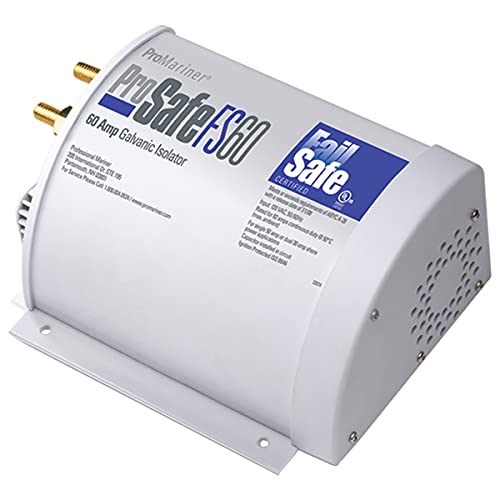
ProMariner’s newer-condition ProSafe 30 Amp galvanic isolator continues a legacy of reliable galvanic protection. It is a suitable choice for boaters who want a known quantity with updated condition considerations. Best for owners seeking a balance between cost and proven performance. Limitation: “new condition” indicates pre-owned or refreshed stock; verify warranty terms and installation compatibility with your setup.
Buying Guide: Key Considerations for 30 Amp Galvanic Isolators
- Protection Level: Look for devices that block galvanic currents effectively to prevent underwater corrosion on hulls, propellers, and shaft.
- Fail-Safe Features: Consider whether marina environments with multiple boats benefit from FailSafe, which interrupts current flow if grounding integrity is compromised.
- Installation Simplicity: Choose models that fit your boat’s bonding system and shore power configuration without requiring extensive rewiring.
- Voltage Thresholds: Devices with diodes or barriers that conduct only above a certain voltage can reduce nuisance currents in normal conditions.
- Compatibility: Verify compatibility with your shore power outlet, electrical panel, and ABYC recommendations for galvanic isolation.
- Size and Form Factor: Ensure the physical dimensions fit the available mounting space on your vessel or aboard a dock box.
Frequently Asked Questions
- What does a galvanic isolator do? It blocks low-voltage galvanic currents that can cause corrosion on underwater metals when connected to shore power.
- Do all boats need a galvanic isolator? Not all; boats in marina environments with exposed underwater metal components typically benefit from galvanic isolation.
- What is the difference between a 30A and higher-amp isolator? Higher-amp units handle greater shore power flows and may be necessary for larger vessels or more complex electrical systems.
- What is FailSafe technology? It interrupts galvanic current flow if certain safety conditions are met, providing an extra layer of protection in shared shore power setups.
- Can I install these myself? Many are designed for standard installations, but consult the product documentation and a licensed marine electrician if unsure.
- Are there maintenance needs? Generally, galvanic isolators require little maintenance, but periodic inspection for corrosion resistance and seals is sensible.