When selecting a freshwater pump for a boat, you want reliability, marine-grade safety, and the right power option for your setup. This guide highlights five top pumps that balance performance, durability, and compatibility for boats, RVs, cabins, and off‑grid living. Each pick targets different needs—from 12V DC systems for compact boats to 110V AC pumps for shore-powered setups. Read on to identify the best fit for your water system and space constraints.
| Product | Best For | Power | Key Strength |
|---|---|---|---|
| SEAFLO 33 Series 110V/115V | RVs, Boats, Cabins with Shore Power | 110V AC | Built-in NSF/UL compliance, robust 45 PSI |
| SEAFLO 55 Series 12V | Off‑grid, Small Boats, Campers | 12V DC | High flow 5.5 GPM, 60 PSI |
| Jabsco ParMax HD4-12V | Heavy‑duty marine and RV systems | 12V DC | Integrated pressure switch, quiet operation |
| ECO-WORTHY RV Fresh Water Pump 12V | Budget-friendly Marine/RV setups | 12V DC | Adjustable 35-80 PSI, self-priming |
| ECO-WORTHY 33-Series Industrial 110V | Permanent shore‑powered boats and cabins | 110V AC | 4.0 GPM, 50 PSI, smart pressure switch |
The table above helps you compare the core differences at a glance. Below are deeper dives into each option, including who it’s best for and any practical cautions.
SEAFLO 33 Series 110V/115V Fresh Water Pump

Best for shore-powered boats and cabins that require dependable 45 PSI performance with NSF/UL compliant potable water safety. This 3.3 GPM pump operates at 110V and features a smart pressure switch and self-priming capability up to 6 feet, making it a solid choice for larger boats, caravans, and off-grid spaces with access to AC power. It’s suited for persistent use in potable water systems where consistent pressure matters. Caution: When used in variable-voltage situations, ensure power stability to avoid motor chatter or abrupt cycling.
SEAFLO 55 Series 12V RV Water Pump

Best for daily-use RVs and small boats needing strong 12V performance. This diaphragm pump delivers 5.5 GPM at 60 PSI with a built-in bypass and a quiet, durable design. Suitable for compact systems with limited AC access or for off-grid living where battery power is the primary source. Caution: Consume up to 17A during peak demand; ensure battery capacity supports extended operation.
WASSERMANN RV Pump, 12V Self-priming

Best for complete kit setups on RVs and boats that want straightforward 12V operation with a 4.0 GPM flow at 45 PSI. It comes as a complete kit, including adapters and a filter, which can simplify installation in compact layouts. Caution: Ensure the included fittings match your hose sizes to avoid leaks in tight spaces.
Jabsco ParMax HD4-12V

Best for heavy-duty marine or RV water systems where reliability and quiet operation are priorities. The HD4-12V is a compact, high-durability diaphragm pump with an integrated pressure switch designed for steady, moderate-pressure delivery. Caution: This option emphasizes durability over ultra-high flow; consider your GPM needs before choosing.
ECO-WORTHY RV Fresh Water Pump 12V

Best for budget-conscious buyers who still need dependable on-demand pressure. This 3.5 GPM, 45 PSI pump features adjustable pressure from 35 to 80 PSI, self-priming up to nearly 10 vertical feet, and thermal overload protection. Caution: It may be less suited for long high-demand cycles compared with higher-end models.
ECO-WORTHY 33-Series Industrial 110V
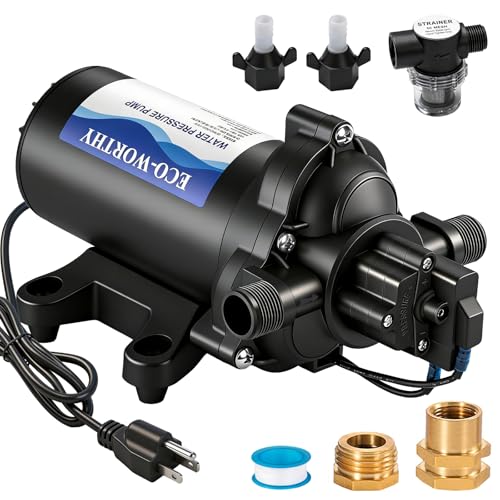
Best for permanently shore-powered boats or cabins with higher demand on 110V circuits. This 4.0 GPM, 50 PSI diaphragm pump uses a smart pressure switch and has a self-priming capability up to 9.8 feet with a lift up to 131 feet. Caution: Higher power draw means you should verify circuit capacity and marine electrical safety standards before installation.
Buying Guide: Key Considerations For Choosing A Freshwater Boat Pump
- Power Source: Decide between 12V DC (for off-grid and smaller vessels) and 110V AC (for shore-powered systems or larger boats). Consider battery capacity and existing electrical infrastructure on the vessel.
- Flow Rate And Pressure: Match GPM and PSI to your plumbing needs. Higher GPM is beneficial for multiple taps, while PSI affects how quickly fixtures reach full pressure.
- Self-Priming Ability: A reliable self-priming lift ensures the pump starts reliably after dry runs or low water levels. Look for figures around 6–10 feet or more for flexible placement.
- Materials And Safety: Diaphragm pumps with EPDM/Santoprene components are common. Check for potable-water certifications (e.g., NSF/ANSI) to ensure water safety for drinking systems.
- Warranty And Durability: A multi-year warranty indicates confidence in longevity, especially in harsh marine environments. Consider models with integrated pressure switches for easier setup.
- Installation Fit: Check hose sizes, port threads (1/2″ MNPT is common), and included fittings. Some kits include filters or adapters, which can simplify retrofits.
- Noise And Vibration: Look for quiet operation and vibration-damping mounting to minimize cockpit or cabin disruption during use.
FAQ
- What is the difference between 12V and 110V pumps for boats?
12V pumps are ideal for off-grid systems and smaller vessels with limited AC power. 110V pumps suit shore-powered setups or larger installations with higher electrical capacity.
- Should I choose a higher PSI pump or a higher GPM pump?
Choose higher PSI if you need strong water delivery to multiple fixtures or higher faucet pressure. Choose higher GPM for faster flow at taps and showers. Your system should balance both based on usage.
- Are marine pumps safe for drinking water?
Yes, models built to NSF/ANSI/CAN standards are designed for potable-water applications and comply with RV and marine plumbing requirements.
- Do all pumps require a separate pressure switch?
Many pumps come with an integrated pressure switch. If not, you may need to install a switch to prevent running dry or to control cycling.
- What maintenance is needed for these pumps?
Regularly check for leaks, inspect fittings, and ensure intake filters are clean. Some pumps have thermal protections to prevent overheating; ensure ventilation and adequate mounting.
- Can I install any of these pumps on a marine sailboat?
Yes, provided the power source and the plumbing connections match your boat’s requirements and you follow marine electrical safety guidelines.