When choosing a bilge pump around 4000 GPH, select a model that fits your boat’s size, electrical system, and maintenance needs. The best picks here cover high-capacity, reliable performance for mid- to large-sized vessels, with options for both automatic and non-automatic operation. This guide highlights five top choices and explains who each is best suited for.
| Product | Flow Rate | Voltage | Best For |
|---|---|---|---|
| SEAFLO 01 Series 4700 GPH Bilge Pump | 4700 GPH | 12V DC | Large boats or heavy water loads; high head requirements |
| Rule 56D 4000 GPH Marine Bilge Pump | 4000 GPH | 12V DC | Rugged, compact setups with 2″ discharge |
| Johnson Pumps – 40004 HD Bilge Pump | 4000 GPH | 12V DC | Versatile, mid-to-large vessels with robust construction |
| SEAFLO 13A Series 4700 GPH Non Automatic | 4700 GPH | 12V DC | Manual control options for variable scenarios |
| Rule 56D-24 4000 GPH Marine Bilge Pump | 4000 GPH | 24V DC | Higher voltage setups for 24V systems |
Below are the five top options, with quick notes on who they’re best for, along with a practical caution for each. This selection emphasizes reliability, clear performance benefits, and straightforward maintenance for American boaters.
SEAFLO 01 Series 4700 GPH Bilge Pump
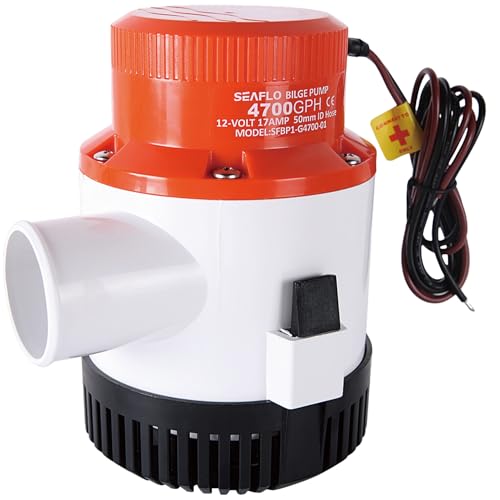
Best for high-capacity needs in larger boats, this 12V submersible pump evacuates up to 4700 GPH. It features anti-airlock protection and a 2″ outlet, making it suitable for rapid water removal after heavy rain or pump-alarm events. The 3 ft wire lead provides flexible installation, and the 4-year warranty supports long-term reliability. Caution: Higher current draw (up to 32.1A) may require an upgraded battery or wiring to prevent voltage drops in older vessels.
- Best for: Large boats, yachts, or scenarios with substantial bilge volume
- Why chosen: Powerful flow with reliable submersible design
- Limitation: Higher electrical demand may require wiring upgrades
Rule 56D 4000 GPH Marine Bilge Pump

Better for compact layouts with a strong 2″ discharge outlet, this non-automatic 12V pump delivers high capacity in a straightforward package. It is designed for demanding applications and suits boats where a manual control or float switch is preferred. Caution: Non-automatic operation means manual activation is required unless you add an external switch or float sensor.
- Best for: Boats needing a robust 2″ discharge with manual control
- Why chosen: High capacity in a compact form, straightforward install
- Limitation: Requires external control if you want automatic operation
Johnson Pumps – 40004 HD Bilge Pump

Best for mid-to-large vessels seeking a robust, high-current 12V option. The 40004 HD variant is designed to withstand marine conditions with durable construction and a compact footprint. Caution: While compact, ensure electrical system can handle sustained 4000 GPH operation without overheating on long runs.
- Best for: Vessels needing a versatile, durable 12V pump
- Why chosen: Trusted Johnson Pump build quality and 4000 GPH capacity
- Limitation: Electrical load considerations for extended pumping
SEAFLO 13A Series 4700 GPH Non Automatic

Choose this if you want maximum flow with manual operation for flexible control. This 4700 GPH pump supports marine vessels requiring rapid bilge evacuation and provides a cartridge motor design for potential serviceability. Caution: Non-automatic operation means you must actively manage pump activation when needed.
- Best for: Boats where manual control is preferred or required
- Why chosen: Highest airflow in this set, designed for quick water removal
- Limitation: Requires manual activation or added sensing device for automation
Rule 56D-24 4000 GPH Marine Bilge Pump

Best for 24V electrical systems needing robust bilge evacuation with a high flow rate. The 4000 GPH capacity is well-suited for boats with higher load and 2″ discharge. Caution: Ensure your vessel’s wiring and switch gear are compatible with 24V operation and can handle the startup current.
- Best for: 24V systems or vessels with higher electrical headroom
- Why chosen: Matches 24V configurations with strong 4000 GPH capacity
- Limitation: Requires appropriate 24V wiring and safety checks
Buying Guide
What capacity do I need?
Capacity depends on bilge volume and expected water input. For mid- to large boats, a 4000–4700 GPH pump handles typical emergencies and daily drainage effectively. Consider head height, which affects how far water must be pumped and influences the required flow at the chosen head.
What about voltage and wiring?
Most marine bilge pumps run on 12V DC, with some 24V options for larger vessels or parallel battery banks. Verify battery capacity, wire gauge, and fuse size to prevent overheating and ensure consistent performance during pump operation.
Automatic vs non-automatic?
Automatic systems use float switches or integrated sensors for hands-off operation, while non-automatic units require manual activation. If you prioritize convenience and safety, choose automatic models; for custom control or flip-switch setups, non-automatic may suffice.
Discharge and hose compatibility
Most pumps offer 1″ to 2″ discharge options. Match the outlet size to your boat’s bilge plumbing. A larger discharge can move water faster but may require additional fittings and clamps.
Durability and maintenance
Look for corrosion-resistant materials, sealed motors, and accessible service components. A warranty (like SEAFLO’s 4-year coverage) helps with long-term maintenance planning.
Installation considerations
Plan for a secure mounting location, minimal routing length, and a clean electrical ground. Confirm compatibility with existing bilge alarms and float switches if upgrading an automatic system.
FAQ
- Q: Is a higher GPH pump always better? A: Not always. It increases water removal speed but may draw more current and require larger wiring and power capacity. Match flow rate to bilge size and typical water input.
- Q: Do I need a check valve? A: A check valve can prevent backflow and water hammer in some installations, especially when the discharge line runs uphill or back into the bilge.
- Q: Should I choose automatic or manual? A: Automatic pumps with a float switch simplify operation and reduce risk during bay maintenance or storms. Manual pumps offer control for specific scenarios or testing.
- Q: Can I install any pump in any boat? A: Most are marine-rated, but verify voltage, outlet size, and mounting compatibility with your vessel’s layout and electrical system.
- Q: How often should bilge pumps be serviced? A: Inspect annually for corrosion, seals, and debris. Test the pump function regularly to ensure reliable performance when needed.
- Q: What about warranty? A: Look for a multi-year warranty and documented service support from the manufacturer or seller to ensure long-term reliability.