Direct answer: If you need secure, adjustable mounting for a 4-stroke kicker, choose brackets that offer multiple vertical positions, robust materials, and user-friendly adjustments. The top picks below include options for 4-stroke motors up to 15–35 horsepower with features like adjustable height, counterbalance springs, and heavy-duty mounting boards. This guide highlights who each product is best for and why, plus practical cautions to avoid common setup issues.
Summary table of selected products:
| Product | Best For | Key Strength | Limitations |
|---|---|---|---|
| Panther 55-0410 Auxiliary Outboard Bracket | Small to mid-size boats needing five vertical positions | Five vertical running positions, sturdy 2″ mounting board | Heavy enough for larger 4-strokes; handle weight carefully |
| Marinetech Panther Marine 55-0408SS | 4-stroke up to 15 HP or 2-stroke up to 20 HP | Twist-knob safety locks, wide stance | Best with lighter engines |
| Marinetech Panther 55-0407AL | 10″ travel for universal fit up to 15 HP | Wide compatibility, height adjustability | Includes safety cable requirement |
| Marinebaby Outboard Bracket | 2-stroke to 20 HP; stable aluminum build | 5-position height adjustment, counterbalance springs | Plastic mounting base may limit load |
| Mojiate 2-Stroke Brackets (Up To 20 HP) | Small boats needing lightweight option | Reinforced welded aluminum frame, adjustable height | Not ideal for 4-stroke motors |
Panther 55-0410 Auxiliary Outboard 4-Stroke Bracket

This heavy-duty bracket supports five vertical positions to adapt to changing water conditions or loads. It is designed to accommodate modern 4-stroke motors with longer or shorter shafts and uses a 2″-thick, extra-wide mounting board for added stability. Stainless steel torsion springs counterbalance motor weight, while a robust anodized aluminum frame provides durability. Best for small to mid-sized boats with 4-stroke engines around 10–20 HP. A potential limitation is heavier weight; ensure your transom and mounting space can handle the load.
Panther Adjustable Motor Bracket, 4-Stroke up to 35hp 55-0410

Designed for 4-stroke motors up to 35 HP, this adjustable bracket emphasizes versatility and quick height changes. It complements boats requiring reliable, multi-position alignment to optimize thrust line. Best for anglers with 4-stroke kickers who need flexibility in motor height during varied loads. The primary limitation is its higher capacity, which may be unnecessary for very small engines and could complicate mounting if space is constrained.
Mojiate Outboard Bracket for 2-Stroke 7.5–20 HP

While primarily marketed for 2-stroke motors, this stainless steel, heavy-duty bracket offers a 4-position adjustable height with a reinforced welded frame. It is best for smaller boats needing a light, reliable kicker bracket. Caution: not recommended for 4-stroke engines, as weight and torque expectations differ from 2-stroke designs.
Marinebaby 20 HP Aluminum Bracket
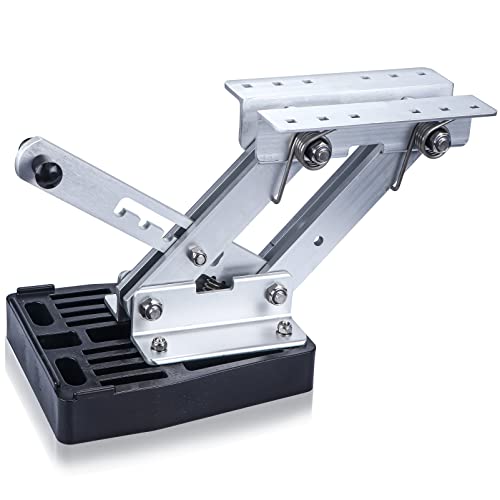
Built from marine-grade aluminum, this bracket provides 5-position height adjustment and heavy-duty counterbalance springs. It is suitable for 2-stroke motors within the 7.5–20 HP range, making it a solid choice for small to mid-sized boats needing stable support. Best for users who prioritize counterbalance features. Caution: base plastics may wear with rough use; monitor for fatigue over time.
Mojiate 2-Stroke Up To 20 HP Bracket

This bracket is compatible with 2-stroke motors up to 20 HP and features a reinforced aluminum frame with a 5-position height lock. It is ideal for small boats that require a lightweight mounting solution. If you plan to run a 4-stroke, consider other options since this unit is not designed for higher torque and weight.
Buying Guide: How To Choose The Right 4-Stroke Kicker Bracket
What motor weight and horsepower should drive my choice?
Match the bracket’s weight rating and mounting board strength to your 4-stroke motor’s actual weight and vibration profile. Heavier engines demand sturdier mounting boards and stronger fasteners.
How important is vertical travel height?
More travel and multiple vertical positions help optimize propeller bite and handle different seas or load conditions. If you frequently fish in varying depths or change loads, prefer five-position systems.
What materials deliver the best durability?
Anodized aluminum brackets with stainless steel hardware offer corrosion resistance and long-term durability in saltwater conditions. Avoid brackets with plastic bases if you regularly operate in harsh marine environments.
Are safety features worth prioritizing?
Twist-knob safety locks, counterbalance springs, and properly rated torque safeguards reduce the risk of sudden shifts and keep the motor stable at high speeds or rough water.
What installation considerations matter?
Check mounting board thickness, overall footprint, and whether the bracket requires additional safety cables or braces. Some brackets require specific mounting hardware or safety components to meet installation expectations.
How do I assess future-proofing?
Choose a bracket with higher HP ratings and wider compatibility than your current motor to allow simple upgrades without changing hardware.
Quick comparison at a glance
- Best for five-position adjustability: Panther 55-0410 Auxiliary Outboard Bracket
- Best for 4-stroke up to 35 HP: Panther Adjustable Motor Bracket (55-0410)
- Best lightweight option for small boats: Marinetech Panther 55-0408SS
- Best for 20 HP range and heavy-duty counterbalance: Marinebaby Bracket
- Best for compact, 2-stroke setups: Mojiate 2-Stroke Brackets (up to 20 HP)
Frequently asked questions
- What is a kicker motor bracket used for? It supports auxiliary motors, allowing height and angle adjustments for optimal performance and balance.
- Can I use a 4-stroke bracket on a 2-stroke motor? Some brackets are rated for both, but verify horsepower and weight ratings; otherwise, select a model designed for 2-stroke engines.
- How many positions should a good bracket offer? Five-position height adjustment is common and versatile for varying water and load conditions.
- Is safety hardware necessary? Yes, safety locks and proper mounting hardware reduce movement and improve control in rough waters.
- What maintenance is needed? Inspect fasteners, springs, and mounting board for wear; lubricate moving parts per manufacturer guidance and replace corroded components promptly.