For boaters who rely on a stable electrical system, a marine battery monitoring system provides real-time insights into voltage, current, charge state, and overall health. This guide highlights five top options suited for varying setups—from small vessels to larger boats with multiple batteries. Each pick is evaluated for ease of use, compatibility, and practical limitations. The top products are ideal for anglers, weekend cruisers, and offshore adventurers who want proactive battery management without guesswork.
| Product | Best For | Key Benefit |
|---|---|---|
| Renogy 500A Battery Monitor | Single-battery systems, 12-120V | High-accuracy shunt with alarms |
| SUPNOVA IPX7 Battery Monitor | Outdoor, all-weather boats | IPX7 waterproof protection |
| ANCEL BM300 Pro | Multi-vehicle and marine setups | Bluetooth with multi-battery monitoring |
| Victron Energy Smart Shunt | Advanced app insights | Detailed in-app metrics and alarms |
| FOXWELL BT630 | All-in-one system, DIY install | Bluetooth, broad compatibility, multiple alarms |
Renogy 500A Battery Monitor with Shunt
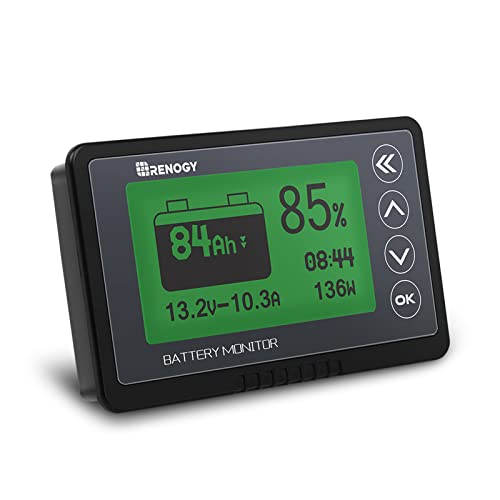
The Renogy monitor uses a shunt-based design for high-accuracy voltage and current readings. It offers programmable high and low voltage alarms and supports 12V systems with compatibility across Lead Acid varieties and Lithium chemistries. Best for: boaters who want precise real-time monitoring on a single battery bank and clear alerts to prevent over-discharge. Limitation: primarily designed for a single-battery setup; may require additional hardware for multi-bank systems.
IPX7 Waterproof Battery Monitor with Bracket

This unit features IPX7 waterproof protection and supports 7–100V systems, including 12V, 24V, and higher configurations. It provides capacity remaining indicators and a temperature alarm with a buzzer. Best for: open-water boats and marine environments where exposure to rain, spray, and humidity is common. Limitation: waterproofing is a key benefit, but battery type support and calibration details should be verified for non-standard chemistries.
ANCEL BM300 Pro Battery Monitor
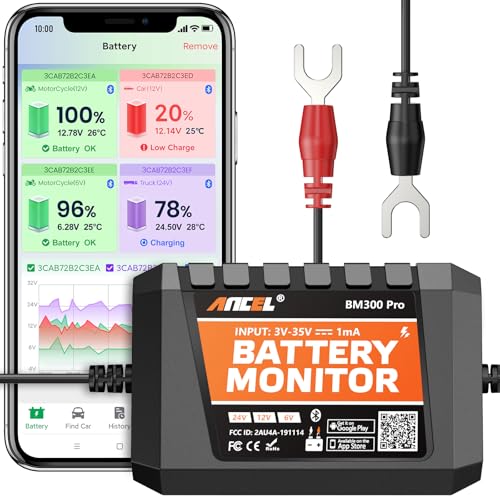
The BM300 Pro adapts to multiple voltages (6V, 12V, 24V) and powers charging and cranking tests with Bluetooth 5.3 connectivity. It can monitor up to four batteries simultaneously, with alerts triggered by voltage changes or charging issues. Best for: boaters who need a versatile monitor across diverse marine and RV systems. Limitation: 6V only supports SOC and temperature; full charging/cranking tests aren’t available on that mode.
Victron Energy Smart Battery Shunt

The Victron Smart Shunt provides in-depth app-based insights via VictronConnect, with precision shunt measurements to display state of charge, remaining time, voltage, current, amp-hours, and cycle history. Best for: boaters seeking detailed data, remote monitoring, and seamless integration with a broader Victron system. Limitation: requires the Victron ecosystem and app familiarity for full benefit.
FOXWELL BT630 Bluetooth Battery Monitor

The BT630 consolidates voltmeter, ammeter, shunt, and Bluetooth monitoring in one device, supporting up to 600A and multiple protection alarms. Best for: marine setups that want an all-in-one, easy-to-install solution with smartphone access. Limitation: initial setup may require familiarization with the Bluetooth app and calibration for accurate alarm thresholds.
Buying Guide
What should you consider when choosing a marine battery monitor?
- System voltage and battery type compatibility: Ensure the monitor supports your battery chemistry (lead-acid, AGM/GEL, LiFePO4, Li-ion) and nominal voltage (12V, 24V, or higher).
- Monitoring scope: Decide between a single-battery monitor or multi-battery support for dual or banked marine setups.
- Alarm features: Look for high/low voltage alerts, temperature monitoring, and audible or visual alarms to prevent unexpected outages.
- Connectivity: Bluetooth or app-based dashboards provide remote access; consider whether you need on-boat display or off-boat alerts.
- Protection and durability: For exposed marine environments, IP ratings, splash resistance, and rugged housings are important.
- Installation complexity: Some units install quickly with a single shunt; others may require more wiring for multiple batteries or networked components.
FAQ
- What is a battery monitor shunt and why is it important?
A shunt measures very low currents with high accuracy, enabling precise state-of-charge calculations and reliable alerts.
- Can these monitors work with lithium batteries?
Yes, most options support LiFePO4 and other lithium chemistries in addition to lead-acid types.
- Is Bluetooth monitoring sufficient for marine use?
Bluetooth provides convenient access, but consider models with additional on-boat displays or gauges if you need constant visibility without a phone.
- Do I need a separate monitor for each battery bank?
Not necessarily. Some units monitor multiple banks, while others are optimized for single-bank setups.
- What maintenance does a marine battery monitor require?
Regularly verify calibration, ensure connections are clean and corrosion-free, and check alarm thresholds to match your operating conditions.