When facing stuck or corroded boat propellers, a reliable prop puller designed for 3- and 4-blade configurations saves time and protects shafts. This guide highlights top 4 blade prop pullers suited for common shaft sizes, explains who each tool is best for, and offers practical buying tips. Ideal buyers include DIY boat owners, marina techs, and maintenance crews seeking durable, versatile pullers for regular maintenance or occasional prop swaps.
Summary at a glance:
- Best overall: RoloTippi K813 – broad hub compatibility and robust aluminum plates
- Best value: Bonbo K-812 – broad shaft range with straightforward operation
- Best for heavy-duty use: YANGCAN K813 – strong aluminum plates and long studs
- Best for limited space or light-duty jobs: Acme C Clamp 228S – compact, simple design
- Best for ski/wakeboard setups: GZZTORES PULR-PT-POINT – specialized for multiple blade configurations
RoloTippi K813 Boat Prop Puller

Best for versatile marine use and heavy-duty jobs on mid-to-large propellers. The K813 model offers ultra-wide compatibility, fitting 4-blade props with up to a 4-1/8″ hub and 3-blade props up to 3-3/4″ hub. It suits prop shafts from 1-1/2″ to 1-3/4″ and max plate distance of 6-1/2″. Constructed with 3/4″ thick aluminum puller plates and 10″ zinc-plated steel threaded rods, it resists corrosion in saltwater environments. Use caution with tight tolerances; tighten bolts evenly to avoid misalignment. Best for long-term reliability in regular maintenance programs.
- Best for: Boat owners needing broad propeller coverage and durable build
- Limitations: Heavier tool; may require more space for mounting
YANGCAN Upgraded Prop Puller

Best for high-strength pulling on larger hubs. The YANGCAN model supports 4-blade props with hubs up to 4-1/8″ and 3-blade props up to 3-3/4″, designed for 1-1/2″ shafts with a plate spacing of 6-1/2″. Built with 3/4″ thick aluminum plates and 10″ zinc-plated studs for steady, even force, reducing risk of blade bending or hub damage. Choose this if you need a robust option that handles stubborn or rusted propellers with consistent performance. Limitation: slightly higher price reflects heavy-duty construction.
- Best for: Regular use on mid-to-large props where consistent pulling matters
- Limitations: Heavier and potentially less maneuverable in tight spaces
Bonbo K-812 Boat Prop Puller

Best for common 1-1/4″ to 1-1/2″ shaft boats requiring efficient removal of 3- and 4-blade props. This puller handles up to a 3-1/8″ hub for 4-blade props and 2-3/8″ hubs for 3-blade props. It features multiple bolt-hole options for precise alignment and a max plate distance of 6-1/2″. It’s well-suited for DIYers who prioritize straightforward operation and broad compatibility. Caution: ensure even bolt tightening to avoid twisting stress and blade damage.
- Best for: Lower-profile maintenance jobs on common shaft sizes
- Limitations: Slightly narrower hub range than some heavy-duty models
Bonbo Marine Prop Puller K-812 (Alternate)

Best for similar applications as the primary Bonbo K-812 entry, offering wide compatibility for 1-1/4″ to 1-1/2″ shafts and 3- to 4-blade props. It emphasizes safe, even removal with evenly tightened bolts and a maximum plate distance of 6-1/2″. This option is particularly suitable for boat owners adding a second puller for spare use or for backup in busy marinas. Limitation: still requires careful alignment to prevent blade contact.
- Best for: Backup tool in busy workshops
- Limitations: Redundant for single-boat owners unless needed
Acme C Clamp 228S Prop Puller
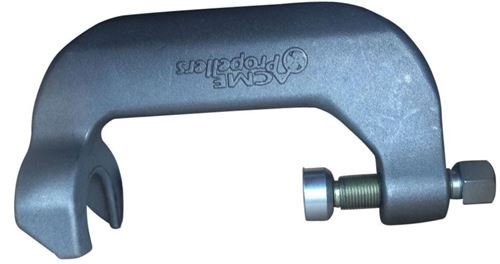
Best for compact spaces and lighter-duty jobs, the Acme 228S is designed for quick removal of typical 3- and 4-blade props. It emphasizes durable construction and straightforward removal, suitable where space is limited or where a simple clamp solution is preferred. Note: may be less robust on heavily corroded props compared to large, plate-based pullers.
- Best for: Small boats or tight engine rooms
- Limitations: May not handle the most stubborn props as effectively as larger pullers
GZZTORES Prop Puller for Ski Wakeboard Props

Best for inboard ski, wakeboard, and surf setups requiring a compact yet capable puller. This tool features thread screws for strong pulling force and an adjustable jaw opening from 4.5″ down to 3.25″, accommodating multiple blade configurations on 3/4″ to 1-1/8″ shafts. It is a practical choice for performance boats with smaller prop hubs. Caution: ensure blades clear the puller’s rear plate to avoid blade contact during operation.
- Best for: Inboard ski/wakeboard boats with smaller hubs
- Limitations: Narrower shaft range than some heavy-duty models
Buying Guide
What shaft sizes will I encounter?
Most 3- and 4-blade prop pullers in this list fit 1-1/4″ to 1-1/2″ shafts, with some models extending to 1-3/4″ or 2″. If your boat uses larger hubs, choose a model with a wider hub compatibility (4-1/8″ hub for 4-blade props).
How important is plate spacing?
Plate spacing (maximum distance between plates) affects the ability to accommodate different blade depths and hub thicknesses. A spacing of 6-1/2″ is common and suitable for many prop sizes, while larger spacing offers more clearance for stubborn props.
What material and durability should I expect?
Aluminum puller plates with steel studs offer good balance of weight, strength, and corrosion resistance. Zinc-plated components resist saltwater exposure, which is essential for regular marine use.
Is ease of use a deciding factor?
Yes. Look for simple bolt-hole alignment, even tightening guidance (half-turn increments), and the option to lightly tap with a mallet to release a stuck prop without blade damage.
When should I choose a C-clamp style puller?
C-clamp pullers are compact and easy to store, ideal for spaces with limited room or for light-duty removals. They may not perform as well on very corroded or tightly seated props compared to broader-plate, heavy-duty pullers.
What about safety?
Always ensure blade clearance before tightening. Tighten bolts evenly to avoid misalignment, and never exceed recommended plate spacing as this can cause uneven force distribution and prop damage.
Practical buying tips
- Match hub size and blade count with the puller’s specifications.
- Prefer models with corrosion-resistant finishes for saltwater use.
- Consider a backup or secondary puller if you service multiple boats or prop sizes regularly.
FAQ
- Q: Will a 4-blade prop puller work on a 3-blade prop? A: Yes, if the hub sizes are within the tool’s compatibility range and mounting holes align, many pullers handle both blade configurations.
- Q: How do I prevent damage when removing a stuck prop? A: Tighten bolts evenly in half-turn increments and tap lightly with a mallet to aid release without bending blades.
- Q: What shaft size is most common for these tools? A: 1-1/4″ to 1-1/2″ shafts are the most common, with some models supporting up to 2″ after adapter changes or plate removals.
- Q: Do I need a heavy-duty puller for every job? A: For regular maintenance and stubborn props, a heavy-duty 3- to 4-blade puller is beneficial; for light-duty or compact spaces, a C-clamp puller may suffice.
- Q: How should I store a prop puller? A: Clean, dry storage away from the elements to extend corrosion resistance and tool life.