Answering common buyer questions about bottom boat paints: these products help prevent fouling, reduce drag, and extend hull life. This guide highlights five top options suited for different boat types, environments, and maintenance preferences. Ideal for sailors, powerboat owners, and DIY hull refinishing projects, these selections balance efficacy and practicality. Below is a quick summary of the chosen products to compare at a glance.
| Product | Brand | Best For | Notes |
|---|---|---|---|
| Rust-Oleum Marine Bottom Antifouling Paint | Rust-Oleum Store | Fiberglass, Wood, Steel boats | Low-abuse antifouling with copper release; 4-hour recoat |
| SENVEN All-In-One Boat Paint (White/Black/Blue variants) | SENVEN Store | Topside, Bottom, Waterline coatings | High-gloss marine finish; durable for multiple surfaces |
| TotalBoat Underdog Marine Antifouling | TotalBoat Store | Sailboats, Power boats in salt/fresh water | Single-season protection; ablative, low odor |
| TotalBoat JD Select Ablative | TotalBoat Store | Fiberglass/Wood/Steel hulls | Self-polishing film; low VOC, easy cleanup |
| SENVEN All-In-One Boat Paint (second listing) | SENVEN Store | Hull coatings for multiple surfaces | Same premium finish with broad substrate adherence |
Rust-Oleum Marine Bottom Antifouling Paint

Features: Ideal for fiberglass, wood, or steel surfaces; slowly releases copper to deter fouling; recoat in 4 hours; launch in 16 hours; covers up to 110 sq ft. Best for boaters seeking a straightforward antifouling solution with a quick recoat window. Suitable for boats that spend moderate time in the water and want a ready-to-use antifouling option without frequent maintenance. Caution: Not all submerged conditions may suit older substrates; ensure surface prep is thorough for best adhesion.
SENVEN All-In-One Boat Paint (White/Black/Blue)

Features: All-in-One finish for topside, bottom, and waterline; adheres to marine hulls, fiberglass, wood, metal; high-gloss, durable marine finish; abrasion-resistant polyurethane; suitable for boats, canoes, pontoon, trailers, and more. Best for hulls that need a high-gloss, long-lasting finish across multiple surfaces. Choose this when you want a single coating that handles both topside aesthetics and bottom protection. Limitation: Not recommended for continuous submersion on bottoms that stay in water longer than 72 hours.
TotalBoat Underdog Marine Antifouling

Features: Economical single-season antifouling with copper biocide; effective against barnacles and mussels; suitable for fiberglass, wood, and steel; includes ablative action that wears away with water movement; fosters easier next-season prep. Best for boats used frequently in varying water conditions. Best for sailors who want a straightforward seasonal refresh with minimal buildup. Caution: Not ideal for boats that stay in saltwater for extended periods without movement.
SENVEN All-In-One Boat Paint (Second Listing)
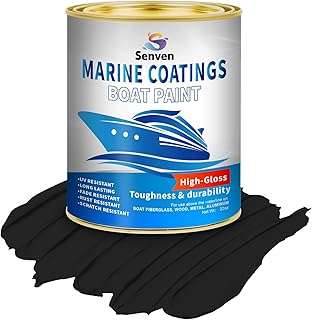
Features: All-in-One premium finish for top-side, bottom, and waterline; adheres to multiple substrates including aluminum, fiberglass, and wood; high-gloss marine-grade finish with durability beyond standard paints; not for continuous submersion on bottoms in water more than 72 hours. Best for multi-surface projects needing a cohesive look and protection across hull areas. Limitation: Similar to the first listing, prolonged immersion requires careful substrate evaluation before application.
Buying Guide
What should I consider when choosing bottom boat paint?
- Boat material and age: Fiberglass, wood, and steel substrates may require different adhesion and preparation steps.
- Water exposure: Freshwater, saltwater, and mixed environments influence antifouling longevity and recoat frequency.
- Ablative vs. hard antifouling: Ablative finishes wear away to reveal fresh biocide; hard coatings remain more durable but may require sanding for touch-ups.
- Submersion duration: Some products are not suited for long, continuous submersion; verify the expected time your hull spends underwater between maintenance sessions.
- VOC and odor: Low-VOC options aid in marinas with environmental restrictions and indoor or enclosed spaces.
- Application and cleanup: Consider products with easy cleanup and low odor if you perform maintenance yourself.
Frequently Asked Questions
- What is bottom boat paint used for?
Bottom boat paint prevents organisms from attaching to the hull, reducing drag and improving performance.
- How long does antifouling paint last before needing a recoat?
Recoat times vary by product; check the label for recommended intervals and surface prep requirements.
- Can I use top-side paint on the hull bottom?
Some all-in-one coatings are formulated for topside and bottom use, but confirm adhesion and long-term durability for underwater exposure.
- Is ablative paint better than a hard antifouling finish?
Abative coatings shed with water movement, reducing buildup; hard coatings last longer but may require more sanding during maintenance.
- Do any bottom paints require professional application?
Many are DIY-friendly with proper surface preparation; marinas may have restrictions on fumes or disposal in certain areas.
- Are there environmental considerations for antifouling paints?
Yes, some products are low-VOC and designed for marinas with stricter environmental guidelines.