If you’re preparing a hull for maintenance, you want bottom paints that strip off cleanly and protect between seasons. This guide highlights top options for boaters who need effective bottom protection, easier maintenance, and compatibility with common hull materials. Best for frequent daylight use: sailboats, powerboats, and work vessels in salt or mixed waters.
| Product | Material Fit | Key Benefit | Best For |
|---|---|---|---|
| TotalBoat Underdog Marine Antifouling Bottom Paint (Black, Gallon) | Fiberglass, Wood, Steel | Economical single-season protection with copper biocide | Frequent boaters in saltwater, sailboats |
| Rust-Oleum 396967 Marine Flat Boat Bottom Antifouling Paint (Quart) | Fiberglass, Wood, Steel | Slow copper release; easy recoat and launch schedule | Casual to moderate-use boats seeking simple maintenance |
| TotalBoat JD Select Ablative Antifouling Bottom Paint (Black, Gallon) | Fiberglass, Wood, Steel | Self-polishing ablative coating reduces buildup and keeps hull slick | Season-long protection with smooth burnish options |
| TotalBoat Inflatable Boat Bottom Paint (1 Quart) | Hypalon, PVC, Rubber inflatable boats | Water-based, flexible coating that stays with deflated tubes | Inflatable craft and tender boats |
| INTERLUX YBB379G Fiberglass BottomKote NT (Black, GAL) | Fiberglass | BottomKote NT formulation for fiberglass hulls | Fiberglass hulls seeking standard performance |
Note: The products above are representative options for various hull materials and usage patterns. For best results, confirm each product’s compatibility with your craft’s material and your local marina regulations before painting.
TotalBoat Underdog Marine Antifouling Bottom Paint (Black)
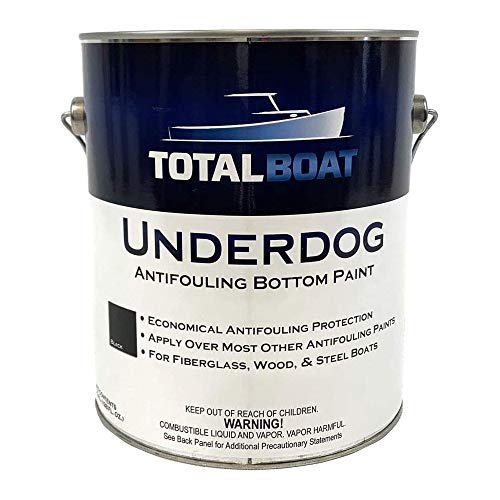
Best for: boats used frequently in saltwater. Why selected: economical single-season protection with copper biocide that prevents barnacle and mussel buildup on fiberglass, wood, and steel hulls. The formulation releases fresh biocide as water moves under the boat, helping keep the hull clean between maintenance sessions. Caution: ablative wear means paint buildup is minimized, but top layers must be refreshed each season for continued protection.
Rust-Oleum Marine Flat Antifouling Paint (Quart, Black)

Best for: fiberglass, wood, or steel boats seeking straightforward fouling prevention. Why selected: designed to slowly release copper to deter growth with practical recoat and launch timelines. Caution: performance can vary depending on water temperature and exposure; follow recoat windows to avoid adhesion issues.
TotalBoat JD Select Ablative Antifouling Bottom Paint (Black)

Best for: boats that operate in saltwater or mixed conditions and want a smooth, burnished finish. Why selected: unique hybrid film is self-polishing and minimizes bottom paint buildup, with a low odor and low VOCs profile for marinas with restrictions. Caution: as it wears away with use, periodic refinishing is required to maintain protection.
TotalBoat Inflatable Boat Bottom Paint (1 Quart)

Best for: inflatable boats, Hypalon, PVC, and rubber craft requiring flexible, defensible protection. Why selected: water-based ablative coating remains flexible after deflation, reducing risk of cracking when boats are rolled up; contains 25% copper for protection in fresh and salt water. Caution: application consistency is key to avoiding uneven coverage on rounded inflatable surfaces.
INTERLUX YBB379G BottomKote NT (Black)

Best for: fiberglass boats seeking a straightforward bottom coating option. Why selected: BottomKote NT provides a dependable fiberglass-compatible bottom paint with a simple maintenance cycle. Caution: limited data on scrub resistance; follow marina guidelines for environmental considerations when applying.
Buying Guide
What to consider when choosing boat bottom paint for stripping and reapplication:
- Hull material compatibility: fiberglass, wood, steel, and inflatable hulls require different formulations. Choose a product designed for your material.
- Water conditions: saltwater, freshwater, or mixed environments affect biocide release, burnish potential, and maintenance intervals.
- Application and cure: look at recoat windows, dry times, and VOC levels to fit marina rules and your schedule.
- Wear type: ablative (self-polishing) versus hard or hybrid films determine how often you reapply and how easily buildup is removed during sanding.
- Environmental considerations: low VOC options are preferred in marinas with restrictions; check local guidelines.
Frequently Asked Questions
- What is ablative bottom paint? It wears away as the boat moves, reducing buildup and easing next-season maintenance.
- How often should I repaint my hull with antifouling paint? It depends on usage, water type, and paint type, but seasonal refresh is common for ablatives and annual or biannual cycles for hard films.
- Can you repaint over old antifouling paint? Yes, but surface preparation is key; remove loose material and sand where needed to ensure adhesion.
- Is low-VOC always better? Lower VOCs are better for marina environments, but verify the coating’s performance under your conditions and regulations.
- Which option is best for inflatable boats? Water-based formulas formulated for Hypalon, PVC, or rubber are preferred for flexibility and deflation cycles.