Need a reliable through-hull connector to keep bilge pumps, hoses, or cable runs secure and watertight? This guide highlights five solid options suited for different boat sizes and hose diameters. Best for small to mid-size boats, the picks range from compact 3/4″ fittings to wider 1″ and 1-1/4″ options. Each product is evaluated for material durability, fit, and ease of installation to help you choose confidently for marine environments.
| Product | Size | Best For |
|---|---|---|
| YOQVQOY 3/4″ Through Hull Fitting (Black) | 3/4″ | Smaller vessels, compact hoses |
| YOQVQOY 1″ Through Hull Fitting (Black) | 1″ | Mid-sized boats with 1″ hoses |
| Moofey Through Hull Fittings, 3/4″ Straight | 3/4″ | Bilge drains and fresh water lines on boats |
| 24P Black Cable Glands (NPT, 24 pcs) | Multiple sizes | Bulkhead wiring and waterproof cable entry points |
| CROSSBODY Thru Hull Fitting (1″ White) | 1″ | White-finished installations on yachts and sailboats |
YOQVQOY 3/4-Inch Through Hull Fitting
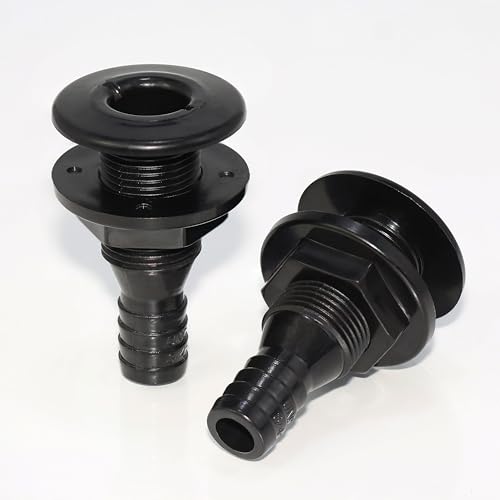
Best for small boats and bilge lines, this 3/4″ through-hull connector is designed for secure hose connections in marine environments. The material is corrosion-resistant for long-lasting performance in saltwater and fresh water. It’s sized for 3/4″ hoses, with precise dimensions to ensure a snug fit. This is a practical choice for compact installations where space is at a premium.
Who it’s best for: boat owners needing a lower-profile through-hull option for 3/4″ hoses on smaller craft. Use this when space is limited and a robust, corrosion-resistant body is required. Limitation: Not ideal for hoses larger than 3/4″ or for higher-flow applications where bigger fittings are necessary.
YOQVQOY 1-Inch Through Hull Fitting
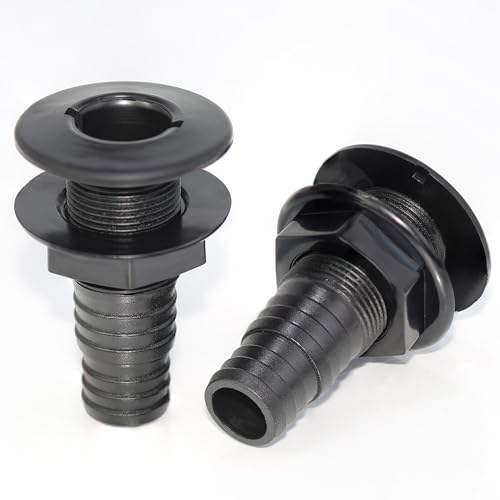
Designed for 1″ hoses, this through-hull connector offers a larger bore for higher flow or bigger hose runs on mid-sized vessels. Corrosion-resistant material supports durability in marine settings, while the generous dimensions ensure a secure seal. It’s a solid choice when you need a bit more capacity without moving to a larger 1-1/4″ fitting.
Who it’s best for: boaters with 1″ hose needs seeking a balance between flow and space. Choose this if your installation requires a sturdier 1″ option without stepping up to larger fittings. Caution: Check hose compatibility to avoid over- or under-sizing the port.
Moofey Thru Hull Fittings, 3/4 Inch Straight

This straight-through hull fitting targets bilge drainage and fresh-water hose connections on boats, emphasizing leak-proof performance in marine environments. Made from ABS for saltwater resistance, it’s designed to align with original standards so it can replace worn components effectively. Its compact profile makes it suitable for tight engine spaces or limited deck areas.
Who it’s best for: owners seeking a straightforward, reliable 3/4″ through-hull option to upgrade bilge or fresh-water lines. Limitation: ABS is durable but may not offer the same long-term UV resistance as some plastics in prolonged sun exposure; consider UV-protective housing if exposed.
CROSSBODY 2 Pcs Thru Hull Fitting – 1 Inch White

These white plastic through-hull fittings provide a secure 1″ connection with a broad flange for firm seating. The molded plastic construction emphasizes ease of installation and a clean appearance for boats where color matching matters. They offer a practical solution when white fittings complement other deck hardware.
Who it’s best for: boaters wanting a visually white-through-hull option that’s easy to fit in standard 1″ hose systems. Better for installations prioritizing aesthetics or where a broad flange improves sealing. Caution: Verify that your hose and hull surface are compatible with this molded-plastic design to avoid leaks in high-pressure scenarios.
Buying Guide: Key Considerations For Through Hull Connectors
- Material Durability: Marine fittings must endure salt, sun, and vibration. Look for corrosion-resistant materials like certain plastics or composite composites in through-hull fittings.
- Hose Size Compatibility: Confirm the fitting size (0.75″, 1″, 1-1/4″ etc.) matches your hose diameter and intended flow. Mismatches cause leaks or restricted flow.
- Installation Space: Smaller boats require compact fittings; larger vessels may benefit from larger bore fittings to maximize pump efficiency.
- Seal Integrity: Gaskets and sealing surfaces prevent water intrusion. Choose products with robust seals rated for marine exposure.
- Replacement & Availability: Consider products that replace common OEM parts and have readily available spare components.
- Aesthetic fit: If visible, select colors (white or black) that blend with deck hardware and hull finish.
FAQ: Through Hull Connectors
- What is a through-hull fitting used for?
It provides a watertight pass-through for hoses or cables, typically for bilge pumps, raw-water intake, or exhaust paths on boats.
- What size should I choose for a high-flow application?
Typically, a larger diameter such as 1″ or 1-1/4″ improves flow, but ensure your hose and hull space can accommodate it.
- Are plastic through-hull fittings durable enough for saltwater?
Yes when made from marine-grade plastics or ABS with proper UV resistance; check product specs for environmental tolerance.
- Should I use a gasket with every through-hull fitting?
Yes; gaskets or washers enhance sealing and minimize leaks, especially with fluctuating temperatures and vibrations.
- Can I replace just the gasket if needed?
Depending on the model, replacement seals may be available; verify compatibility with your specific fitting.
- Is there a risk of leaks if the hull is not perfectly flat?
Uneven surfaces can compromise seal; always prepare a clean, flat mounting surface and torque to recommended specs.