The best marine fuse block with switches combines reliable power distribution, easy installation, and durable, water-resistant design for harsh environments. This guide helps buyers choose the right panel for boats, RVs, ATVs, and trucks. The top picks below are selected for different needs: rugged durability, built‑in charging, high circuit capacity, and straightforward wiring. The buyer types best served by each product are noted alongside each section. A quick reference table of the chosen products appears after the introduction.
| Product | Best For | Key Benefit |
|---|---|---|
| Nilight 5 Gang Multi Function Waterproof Switch Panel | All‑around marine use with USB-C/PD | Integrated voltmeter and inline fuse |
| FXC Waterproof Marine Boat 4 Gang Panel | Compact setup with secure protection | Dual USB and voltmeter, circuit breakers |
| Blue Sea Systems ST Blade 6/12 Circuit Blocks | Heavy loads and multiple circuits | Negative bus, clear cover for maintenance |
| Upgrade Blue 5 Gang Marine Panel | DIY favored with voltmeter | Multiple charging ports and sign stickers |
| SeaSense 6 Gang Switch Panel | Corrosion‑resistant for harsh environments | Illuminated switches, pop-out fuse |
Nilight 5 Gang Multi Function Waterproof Switch Panel PD Type C and USB Charger Digital Voltmeter

This 12V/24V switch panel consolidates five waterproof rocker switches, a cigarette lighter socket, a PD Type C and USB charger, and a digital voltmeter. It is best for boaters and RV users who need a compact, all‑in‑one control hub. The LED voltage display provides real‑time monitoring, helping users avoid deep discharges. The pre‑wired design includes a 15A inline fuse for overload and short‑circuit protection. It’s suitable for small to medium installations where space savings and integrated power monitoring are priorities.
Who it’s best for: boaters, RV enthusiasts, and light commercial vehicles that require a single panel with charging, monitoring, and multiple controls. Choose this if you want a ready‑to‑wire unit with built‑in protection and a modern USB/PD charging option. Caution: ensure the main power supply can safely handle the combined current draw of all devices.
FXC 4 Gang Marine Boat Switch Panel With USB Ports and Voltmeter

This 4‑gang panel adds blue LED switches, a voltmeter, and dual USB ports with a cigarette lighter slot. The aluminum panel construction offers durability and strength for marine use, while separate circuit protection for each switch increases safety. Best for compact installations where users need reliable power control, USB charging, and a visible voltage readout. A note: more switches mean more wiring work; plan cabling accordingly.
Who it’s best for: drivers seeking a compact, corrosion‑resistant panel with clear status indicators and independent protection per circuit. Choose this if you want integrated protection and easy visibility in low light. Limitation: may be less suitable for very high‑demand loads due to its smaller overall capacity.
Blue Sea Systems ST Blade Fuse Block 6 Way Circuits with Negative Bus
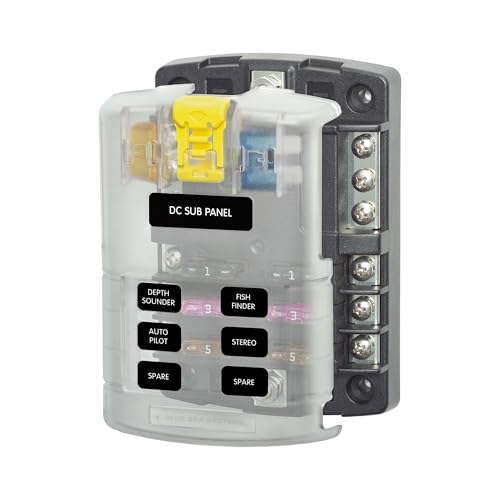
This six‑circuit fused block includes a negative bus and a clear insulating cover. It supports up to 100 amps total capacity and up to 30 amps per circuit with standard fuses, making it suitable for higher‑demand DC systems. The insulating cover helps keep circuits organized and protects fuses, while the integrated negative bus simplifies grounding. Best for: mid‑to‑large installations in boats or off‑grid setups that require robust circuit segregation. Limitation: not inherently waterproof, so consider enclosure in exposed marine areas.
Upgrade Blue 5 Gang Marine Panel With Inline Fuse and Voltmeter

This 5‑gang panel combines a voltmeter, dual USB ports, a cigarette lighter outlet, and five rocker switches with a 15A inline fuse. It’s designed for DIY installers who want clear status readouts and flexible wiring options. Best for: mid‑size marine or RV projects that need reliable power distribution with easy‑to‑read battery status. Caution: ensure the USB ports are compatible with your devices’ charging requirements and that the inline fuse rating matches the total expected load.
Blue Sea Systems ST Blade Fuse Block 12 Circuit

This 12‑circuit blade fuse block with a negative bus offers extensive circuit capacity for complex DC systems. It provides a high degree of modularity and clear labeling for large installations. Best for: boats, RVs, or off‑grid vehicles that require a large number of independently fused circuits. Limitation: more complex installation and wiring planning are required for optimal operation.
SeaSense Switch Panel 6 Gang

This 6‑gang panel features illuminated rocker switches, pop‑out fuse holders, and a corrosion‑resistant aluminum panel. It’s suitable for environments where visibility at night and corrosion resistance are priorities. Best for: marine applications or rugged vehicles where quick power control and easy fuse access matter. Limitation: illumination may vary with battery voltage, and some users prefer a dedicated fuse box for larger systems.
Marine Switch Panel Waterproof 8 Gang with Dual USB and Voltmeter
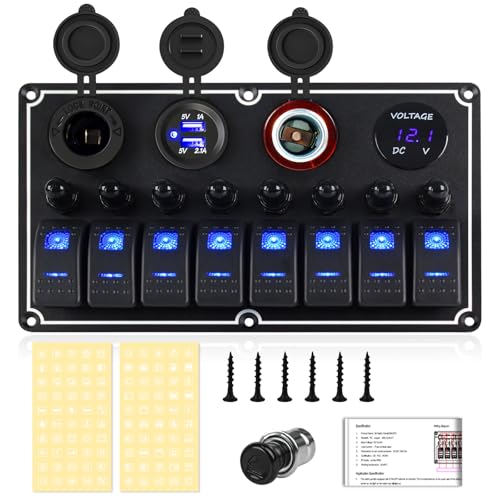
This 8‑gang panel adds dual USB ports, a voltmeter, and a cigarette lighter socket, all in a waterproof package. It is positioned for boats, RVs, and vehicles that require multiple power outlets in a compact footprint. Best for: users needing many control points without a separate fuse box. Caution: with eight loads, ensure wiring routes and fuse sizing accommodate cumulative demand.
FXC Pre-Wired 5 Gang Rocker Switch Aluminum Panel

This panel includes a 40A inline fuse per switch and a blue LED illuminated design. It’s designed for marine and automotive use, with one main inline fuse per switch to protect each circuit. Best for: users who want strong protection per circuit and a ready‑to‑wire panel for 12V or 24V systems. Limitation: higher current loads across all switches may necessitate careful power budgeting to avoid overloading the fused circuits.
Buying Guide: Key Considerations For Choosing a Marine Switch Panel
- Power capacity: Assess total amperage you expect to draw across all circuits. Panels with higher total capacity support more devices without tripping.
- Protection per circuit: Individual circuit breakers or fuses reduce risk if one circuit faults. Look for separate protection on each switch when possible.
- Voltage monitoring: A built‑in voltmeter helps manage battery health in boats and RVs. Decide if you need DC only or DC with USB/PD charging.
- Water and corrosion resistance: Marine environments demand splash‑proof panels and corrosion‑resistant materials. Consider IP ratings or sealed housings where exposure is high.
- Ease of installation: Pre‑wired options with clear wiring diagrams save time. Check included mounting hardware and the availability of spare fuses.
- Connectivity: USB ports (including QC/PD) add charging convenience but verify output compatibility with devices you own.
- Layout and labeling: Clear labeling and optional DIY stickers help long‑term maintenance and quick troubleshooting.
- Expansion potential: If you anticipate future upgrades, choose a block with more circuits or a negative bus to simplify grounding.
Frequently Asked Questions
- What is a fuse block and why is it important in marine systems? A fuse block distributes power across multiple circuits and provides protection against overloads and short circuits, which is essential for safe marine electrical systems.
- Should I choose a panel with a voltmeter? A voltmeter helps monitor battery health and voltage levels in real time, which is valuable for boats and RVs with multiple devices.
- Is waterproofing essential for every switch panel? In marine environments, splash resistance and sealed components reduce corrosion and corrosion‑related failures. For dry installations, rugged but non‑sealed panels can suffice.
- Can I mix USB charging and traditional 12V outlets on the same panel? Yes, many panels integrate USB ports with 12V outlets and switches, but ensure total current does not exceed the panel’s rating.
- Do I need a separate fuse block for many circuits? For larger systems, a dedicated fuse block or distribution panel helps organize circuits and maintain safety, especially when running high‑demand loads.
- How do I size the inline fuses? Match fuse ratings to the maximum expected current of each circuit, and use higher ratings only if the wiring and devices justify it.