If you’re shopping for a bilge alarm float switch, you want devices that reliably detect rising water and activate pumps promptly. The top picks below are designed for marine use, with ignition protection, solid seals, and easy installation. This guide highlights five options that balance safety, durability, and straightforward operation. The buyers most likely to benefit are boat owners needing automatic bilge pumping or alert systems, offshore crews seeking reliable high-water alarms, and DIY boaters wanting solid, maintenance-friendly switches. A quick comparison table is included to help you decide at a glance.
| Product | Best For | Key Benefit |
|---|---|---|
| ULTRA Bilge Pumpswitch Sr. Float UPS-01 | Small to mid-size boats needing fast activation | High water alarm and ignition-protected design |
| Rule 40A Rule-A-Matic Plus | Rugged boats with debris-prone bilges | Integrated impact-resistant cover |
| QWORK 2 Pack Heavy-Duty Float Switch | Boats requiring two switches or backup | Ultrasonic welded, moisture-tight seals |
| Spy Spot Automatic Float Switch with Buzzer Alarm | Residential, marine, or RV setups needing audible alert | Buzzer alarm and universal voltage compatibility |
| Rule 35A Marine Rule-A-Matic Switch | Standard bilge installations | Mercury-free, easy installation |
ULTRA Bilge Pumpswitch Sr. Float UPS-01

This ignition-protected bilge switch ensures safe operation in fuel-rich marine environments. It provides positive action with no time delays or electronics, delivering reliable activation of a bilge pump. The internal relay is rated at 30A, suitable for many boat pump loads. A built-in high water alarm sensor triggers at a 3-inch level, offering early warning of rising water and helping prevent flooding.
Best for: smaller to mid-size vessels that need a single, dependable automatic activation plus a high-water alert.
Caution: The 3-inch alarm threshold may be too high for boats with very shallow bilges; ensure the sensor placement aligns with typical water rise on your craft.
Rule 40A Rule-A-Matic Plus Bilge Pump Float Switch

This switch features a sleek, rugged design with an integrated impact-resistant cover to guard against debris and jamming. It supports automatic bilge pump operation and is built for challenging marine conditions. Its mercury-free construction adds a safety advantage on board. Installation is straightforward, making it a popular choice for anglers and cruisers alike.
Best for: boats in debris-prone bilges where protection from jams is a priority. Avoid this if you need a compact, ultra-lightweight sensor solution for tiny bilges.
QWORK 2 Pack Heavy-Duty Float Switch

These 12/24/32VDC float switches are designed for heavy-duty marine use, with 20A at 12V, 10A at 24V, and 8A at 32V. Ultrasonic welding creates a secure, leak-proof seal, enhancing durability in rough conditions. The two-pack option is ideal for vessels that need redundancy or multiple bilge zones controlled from separate locations.
Best for: boaters needing a robust, voltage-flexible solution with backup capability. Choose this if you want two switches in one purchase. Limitations: higher amperage draws should be matched to pump specs to avoid overloading the circuit.
Spy Spot Automatic Float Switch With Buzzer Alarm

Spy Spot delivers automatic water level control with a buzzer alarm for immediate alerts. It supports 12V, 24V, or 110V pumps, making it versatile for industrial, marine, and residential setups. The sealed, waterproof design helps resist corrosion and water intrusion in harsh environments.
Best for: users who want audible alerts in addition to automatic pumping, useful for cramped bilges or remote installations. Caution: ensure the buzzer volume is appropriate for your boat’s cabin or cockpit noise levels.
Rule 35A Marine Rule-A-Matic Switch
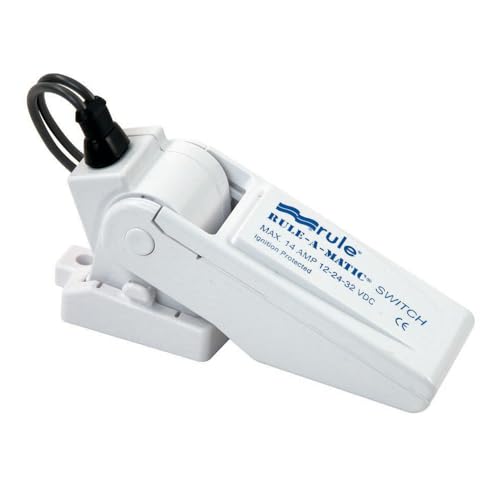
The Rule 35A switch provides reliable automatic bilge control with a mercury-free design. It emphasizes durable, corrosion-resistant components and straightforward installation. This model is a solid choice for standard bilge setups where long-term reliability is essential for routine boating operations.
Best for: straightforward bilge control in typical boats, where a reliable, easy-to-install switch is desired. Limitation: it lacks built-in alarm features, so consider a separate alert system if you need notifications.
Buying Guide
What to consider when choosing a bilge alarm float switch:
- Voltage compatibility: Ensure the switch matches your boat’s electrical system (12V, 24V, or 32V) to avoid misoperation or wiring issues.
- Current rating: Match the switch’s amperage support to your pump’s draw. Oversizing offers a safety margin; undersizing risks failure to activate.
- Alarm features: Decide if you need an audible/visual alarm in addition to automatic pumping. Some models include built-in buzzer or high-water alerts.
- Environmental protection: Look for ignition protection, moisture-tight seals, and corrosion resistance for marine environments.
- Installation and maintenance: Prefer switches with simple wiring and clear instructions. Consider redundancy if you operate in harsh or remote areas.
- Reliability cues: Ultrasonic welding seals and solid-state sensing reduce mechanical failure points and maintenance needs.
FAQ
- What is a bilge switch with alarm best used for? It provides automatic pump activation and visible or audible alerts when water rises, reducing manual checks and potential flooding.
- Which switch is best for a small sailboat? The ULTRA UPS-01 or Rule 35A are good starting points for compact applications with straightforward wiring.
- Do I need two switches on a boat? If you have dual bilge compartments or long runs, two switches offer redundancy and improved reliability.
- Can these switches handle high water quickly? Most models are designed to activate pumps promptly; verify pump current and switch rating to ensure compatibility.
- Are mercury-free options important? Mercury-free designs reduce environmental risk and are generally safer for marine installations.
- Do alarms require separate wiring? Some models include alarms; others require separate indicators or a central monitoring system.