Find the right boat lift battery tray to keep your deep-cycle batteries secure, safe, and well-ventilated. This guide highlights five top choices that fit a range of boat lifts and battery sizes. Best for anglers needing simple two-battery setups, best for all-weather reliability, and best for corrosion resistance, these options help you choose with confidence.
Overview at a glance: the table below summarizes the five selected trays, focusing on capacity, mounting style, and notable strengths.
| Product | Best For | Key Benefit | Limitations |
|---|---|---|---|
| Extreme Max 3001.3285 Under-Canopy Battery Hanger | Single-battery setups | Hangs from boat lift canopy; all-aluminum | May require canopy compatibility check |
| Extreme Max 3005.4128 Hanging Dual Battery Tray | Two-battery configurations | Hangs from canopy; dual-battery design | Weight adds to canopy load |
| Attwood USCG-Approved 9091-5 | Group 27 batteries | Meets ABYC E-10 and USCG; adjustable | Hardware not included |
| Attwood 9096-5 USCG-Approved 24 Series | Group 24 batteries | Heavy-duty adjustable hold-down | All-black plastic with metal fasteners not included |
| Attwood 9097-5 Heavy-Duty Adjustable Tray | Group 24 batteries | All-plastic; rust-proof; adjustable | Plastic tray may flex with very large batteries |
Extreme Max 3001.3285 Under-Canopy Battery Hanger

Best for: boaters needing a simple, single-battery solution that hangs from the canopy. The design leverages all-aluminum construction for corrosion resistance and light weight, making it easier to service. This tray is noted for secure hanging rather than bulk mounting, which reduces clutter on deck.
Why selected: The unit’s hanging setup minimizes deck intrusion while providing a stable mount for one deep-cycle marine battery. Its all-aluminum build resists corrosion in harsh marine environments, and the hanger concept aligns well with boats that have canopy support points suitable for a single battery fix. A potential limitation is canopy compatibility and capacity to handle larger or heavier batteries.
Caution: Verify canopy mounting points and weight limits before installation to avoid overloading the lift structure.
Extreme Max 3005.4128 Hanging Dual Battery Tray
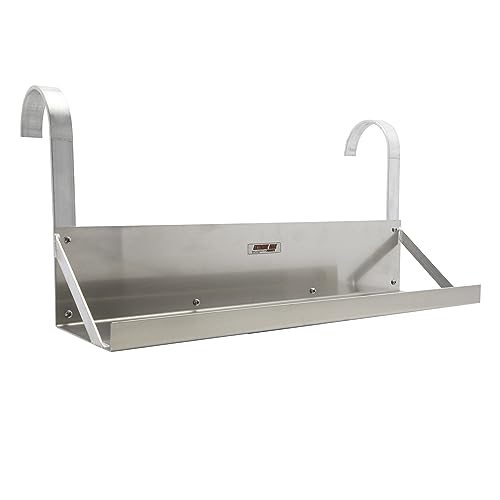
Best for: owners who need two batteries mounted in a compact, canopy-hanging arrangement. The dual tray design saves space and keeps batteries organized, which is useful on smaller boats or crowded bilge areas.
Why selected: This tray supports two deep-cycle batteries and uses an all-aluminum construction that resists corrosion. The hanging approach reduces deck clutter and allows easier battery access. A limitation is that it adds weight to the canopy area and may impact balance on smaller vessels.
Caution: Ensure the canopy frame can safely support the combined weight of two batteries plus the tray assembly.
Attwood USCG-Approved 9091-5 Adjustable Hold-Down Tray

Best for: Group 27 batteries or similar sizes where ABYC and USCG compliance are priorities. This tray includes an adjustable-height crossbar and retaining bolts, enabling a secure hold across variations in battery height.
Why selected: The unit adheres to safety standards and offers adjustable support, making it a versatile choice for vessels requiring compliant mounting. The product text notes that mounting hardware is needed, so buyers should plan for screws or fasteners compatible with their boat’s structure.
Limitations: Requires additional fasteners not included in the package, which could affect upfront costs and installation time.
Attwood 24 Series Tray With Strap

Best for: Group 24 batteries in a heavy-duty marine setting that benefits from a secure strap and rigid tray. The design emphasizes restraint to minimize movement during transit and rough seas.
Why selected: It shares Attwood’s emphasis on durability and ease of use, offering a strap to further stabilize the battery. The tray is built from high-impact polypropylene that resists corrosion, which suits long-term marine exposure. A potential limitation is the absence of included strap hardware in some listings, so buyers should check what’s provided.
Attwood 9096-5 Group 24 Heavy-Duty Tray

Best for: Group 24 batteries requiring rugged, adjustable support. The tray is built to endure marine environments with heavy-duty plastic, offering reliable performance and corrosion resistance.
Why selected: The design is purpose-built for stability and adaptability, including an adjustable crossbar. It avoids metal components that could rust, which is advantageous on saltwater boats. Limitation: Some setups may require additional mounting hardware or hardware customization to fit specific boat interiors.
Buying Guide: How to Pick The Right Boat Lift Battery Tray
What battery size fits your tray?
Check the battery group size (e.g., Group 24, Group 27) and the tray’s stated compatibility. A tray that’s too small may restrict venting and pose a safety risk.
Where will you mount it?
Decide if you prefer a canopy-hanging tray or a deck-mixed tray. Hanging designs save deck space but add canopy load; deck-mount trays can be bulkier but place less stress on canopy structures.
Material matters
All-aluminum trays resist corrosion and are lighter. Heavy-duty plastic trays resist rust but may be less rigid for very large batteries. Consider saltwater exposure and maintenance access when choosing materials.
Safety and standards
USCG and ABYC compliance are important for motorboats and commercial vessels. Look for trays with adjustable hold-downs, integrated straps, and compatible fasteners to meet safety guidelines.
Installation considerations
Account for included hardware, required screws or bolts, and the ease of service. Some trays require separate fasteners or straps, which affects total cost and installation time.
Environmental and space considerations
Ventilation holes help compensate for heat and gas buildup. Ensure the tray’s footprint aligns with your boat’s available space and does not interfere with other equipment.
Maintenance and longevity
Materials that resist rust, corrosion, and UV degradation will last longer in marine environments. Periodic checks for loosened bolts and wear on straps prevent unexpected battery movement.
FAQ
- Q: Can I use a general-purpose battery tray on a boat lift?
A: It depends on size compatibility and marine suitability. Choose trays rated for marine use and check for corrosion resistance and strap availability. - Q: Are these trays suitable for solar-powered boats?
A: They work for marine batteries, including deep-cycle varieties used in solar setups, provided the physical dimensions and weight are appropriate. - Q: Do trays come with mounting hardware?
A: Some listings require separate fasteners or straps; verify included items before purchase. - Q: What maintenance is recommended?
A: Regularly inspect straps and fasteners, clean surfaces to prevent corrosion, and ensure vents remain unobstructed. - Q: How do I choose between single and dual battery trays?
A: If you need redundancy or longer run times, dual trays are better. For compact boats or lighter setups, a single tray may suffice. - Q: Do these trays comply with USCG standards?
A: Several options are USCG-approved or ABYC-standard compliant; verify specific model documentation before installing.