Answering the demand for reliable radio with AIS, this guide highlights top fixed-mount VHF radios that include AIS and other safety features. These models are best for serious boaters, offshore anglers, and crew who want real-time vessel awareness and robust communication. The selections below balance built‑in AIS, GPS, NMEA2000 compatibility, and user-friendly interfaces to help you pick the right unit for your craft. A quick buyer table follows the introduction to compare core specs at a glance.
| Product | AIS / DSC | GPS/NMEA2000 | Best For |
|---|---|---|---|
| STANDARD HORIZON Fixed Mount VHF/GPS/AIS/NMEA2000 | AIS | GPS, NMEA2000 | Cruisers needing integrated navigation data |
| ICOM M94D 21 USA VHF Marine Transceiver | DSC & AIS Receiver | Integrated GPS (optional data via radios) | Boaters prioritizing DSC safety and AIS visibility |
| Garmin 0100209800 VHF 215 AIS | AIS | GPS ready (built‑in GPS on some kits) | Navigation-centric users who value Garmin ecosystem |
| Uniden UM725GBT Marine VHF Radio | DSC, AIS (via GPS) | GPS built-in | Budget-conscious boats needing modern safety features |
| Lowrance VHF Marine Radio with DSC, AIS-RX | AIS-RX, DSC | Link-9, basic GPS data | Lowrance ecosystem users seeking integrated compatibility |
STANDARD HORIZON Fixed Mount VHF/GPS/AIS/NMEA2000

Features: Reliable fixed mount VHF with NMEA2000, AIS and internal GPS. This setup is ideal for skippers who want an all‑in‑one navigation and safety solution on larger vessels. The integrated AIS helps monitor nearby traffic and supports DSC calls through compatible systems. Best for cruisers who value a single, cohesive install and straightforward data sharing across devices.
Best for: Boats that require seamless data exchange between AIS, GPS, and VHF channels. Choose this if you want a compact, fixed unit that reduces the need for multiple dashboards.
Limitation: Hardware reliance on compatible NMEA2000 networks means standalone use without network integration is limited.
Icom M94D 21 USA VHF Marine Transceiver

Features: Built-in AIS & DSC safety; 6W transmit power with long battery life (BP-306, 2400 mAh) and up to 10 hours typical operation; loud 1500 mW audio output for clear calls in noisy environments. This model emphasizes safety with integrated AIS visibility and DSC call capability, plus dependable power for longer trips.
Best for: Boats that need reliable AIS reception and DSC safety with portable backup battery availability. Choose this if you want strong audio quality and extended operating life on the water.
Caution: Battery life can vary with transmission load and features used; plan for charging intervals on longer trips.
Garmin 0100209800 VHF 215 AIS

Features: AIS integration with a slate gray chassis and accent band. This option is noted as a solid overall performer in the Garmin family, blending navigation features with AIS awareness for safer passage near traffic. It’s positioned for users who prefer Garmin’s user interface and compatible charting ecosystems.
Best for: Garmin ecosystem users who want AIS visibility in a familiar platform. Choose this if you prioritize seamless charting and device interoperability.
Limitation: Specific model variants may require additional Garmin networking or display modules for full functionality.
Uniden UM725GBT Marine VHF Radio

Features: Bluetooth connectivity, IPX8 waterproof rating, NOAA weather channels with alerts, DSC distress, built-in GPS, and NMEA0183/NMEA2000 data input/output. This radio blends modern smart features with safety capabilities and wide channel access, suitable for multi‑purpose use on coastal to offshore trips.
Best for: Budget-minded buyers who want modern safety features plus smartphone connectivity. Choose this if you need weather alerts and GPS without a high price tag.
Limitation: Some users may find the Bluetooth pairing workflow less intuitive on first use; ensure device compatibility with other onboard systems.
Lowrance VHF Marine Radio with DSC, AIS-RX

Features: DSC, AIS receiver, Link-9 support; two-channel capability noted in product data. This option is suitable for those who already use Lowrance chartplotters or networks and want AIS reception alongside DSC for improved situational awareness.
Best for: Users invested in the Lowrance ecosystem who want a compact VHF with AIS receive features. Choose this if you value ecosystem compatibility and straightforward AIS-RX reception.
Limitation: Limited information on full AIS transmission capability; verify compatibility with your existing network before purchase.
Cobra MR F77W GPS Fixed Mount VHF
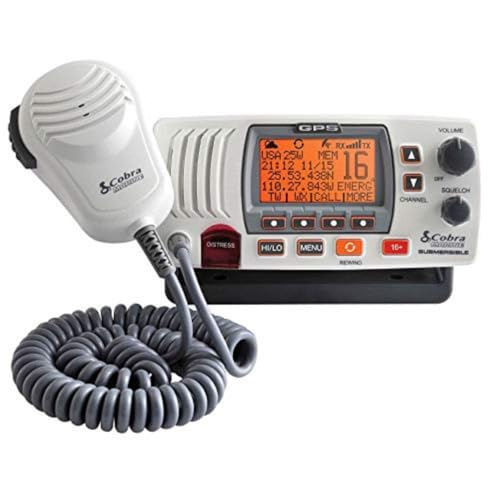
Features: Built‑in GPS receiver for rapid distress signaling, 1 or 25 watt operation for short or long-range communication, submersible design, LCD display, noise‑cancelling microphone, NOAA weather, signal strength meter, and channel scanning. The Cobra model emphasizes immediate GPS location signaling and rugged reliability.
Best for: Mariners seeking robust water‑ready performance with quick GPS location sharing and weather updates. Choose this if you need a straightforward, versatile fixed mount with strong weather features.
Limitation: Submersible rating is helpful in rough conditions but verify the exact IP rating for your deployment environment and confirm compatibility with other onboard devices.
Buying Guide
What features matter most? Decide between AIS visibility, DSC safety, built‑in GPS, and network compatibility (NMEA2000/NMEA0183). AIS helps you see nearby vessels; DSC enables direct distress signaling. If you navigate with charts, a GPS‑integrated radio or a device in the Garmin/Lowrance ecosystem may streamline data sharing.
Fixed mount vs portable: Fixed mounts save space and offer permanent integration; portable options provide flexibility but may lack some network capabilities. Consider vessel size and mounting availability when choosing a unit.
Network compatibility: If you have an existing NMEA2000 or NMEA0183 network, prioritize radios that can share GPS, DSC, and AIS data across devices. This improves situational awareness on every display and console.
Power and acoustics: Look for sufficient transmit power (1W to 25W in general), and high‑quality audio output to stay audible in marina noise or engine rooms. Longer battery life matters for handheld or semi‑portable components; fixed mounts depend on ship power systems.
Weather and safety: NOAA weather channels and alerts add valuable foresight during storms. Ensure the radio supports the weather needs of your area and boating style.
FAQ
- What is AIS on a marine radio used for?
AIS provides real-time vessel traffic information and collision avoidance data, helping you see nearby ships and plan safer routes.
- Do I need DSC on a VHF radio with AIS?
DSC enables distress signaling and direct calls to other stations. It’s recommended for safety on larger vessels or offshore trips.
- Is GPS necessary in a VHF radio?
GPS allows quick location sharing for distress calls and supports coordinated navigation when connected to chartplotters or displays.
- Can I mix radios from different brands on the same network?
Compatibility varies; prefer radios that support common standards (NMEA2000/NMEA0183) to ease data sharing across devices.
- What should I consider for coastal vs offshore use?
Coastal use prioritizes weather alerts and reliable communication; offshore use benefits from robust AIS visibility, strong power, and durable construction.
- How important is a built‑in GPS?
Built‑in GPS speeds distress signaling and improves location accuracy on DSC calls or when sharing position with others.