Answer: These top-rated cranking and dual-purpose lithium marine batteries are designed to reliably start large outboards while powering onboard electronics. They’re best for bass boats with high starting demands and space-saving goals. This guide highlights five strong options, explains who they’re best for, and helps you compare features like starting power, capacity, and built‑in safety.
| Product | Best For | Key Benefit | Capacity / CCA |
|---|---|---|---|
| LiTime 12V 165Ah Dual Purpose (B0DM5JQLGH) | Large bass boats needing both cranking and power for devices | 2-in-1 functionality with safe cross-brand use | 1200 CCA / 165 Ah |
| LiTime 12V 165Ah Dual Purpose (B0FS86D9CW) | Cross-brand boats, space savings | Same 2-in-1 concept plus 15% emergency reserve | 1200 CCA / 165 Ah |
| Norsk Lithium 12V 180Ah Heated Marine | Cold-weather deployments | Built-in heating for winter starts | 1200 CCA / 180 Ah |
| Mighty Max MM-G24M 90Ah | Smaller boats or add-on battery for electronics | Dual-purpose, robust for cranking and deep cycle | 550 CCA / 700 MCA |
| Redodo 12V 20Ah U1 Marine Cranking | Compact setups, trolled spots for emergency starts | 800 CCA with strong startup power in a small form | 800 CCA |
Note: For bass boats, bigger capacity and higher CCA typically translate to more reliable starts, especially on cold mornings or when electronics draw power during long days on the water. If you rely on multiple devices (sonar, trolling motors, pumps), prioritize a dual-purpose battery with deep-cycle capability and a built-in protection system.
LiTime 12V 165Ah Dual Purpose Lithium Marine Battery

Overview: This 2-in-1 LiFePO4 battery powers outboard cranking and marine devices, reducing the need for separate starter and deep-cycle packs. It’s designed for cross-brand compatibility with common outboards like Mercury, Honda, Suzuki, and Evinrude. The ABYC-compliant installation standard supports safer, worry-free use when wiring across brands.
- Best for bass boats seeking space savings without sacrificing starting power.
- Selected for its 1200 CCA starting power and 165 Ah capacity, enabling reliable starts in cooler conditions.
- Limitations: Cross-brand compatibility guidance may require professional installation for some installations.
LiTime 12V 165Ah Dual Purpose Lithium Marine Battery (Another Variant)

Overview: Similar to the first LiTime option, this model emphasizes 2-in-1 functionality with the same high 1200 CCA and 165 Ah capacity. It also notes an emergency reserve of 15%, beneficial for longer trips with heavy electronics consumption.
- Best for: Bass boats with electronics-heavy setups where reserve power matters.
- Why chosen: Adds an emergency cutoff to preserve starting power.
- Limitations: Higher upfront cost versus traditional lead-acid equivalents.
Norsk Lithium 12V 180Ah Heated Marine Battery

Overview: This heated marine battery is designed for reliability in cold weather, delivering up to 1200 A pulse discharge for strong cranking. The larger 180 Ah capacity supports additional loads beyond starting, making it a solid choice for bass boats operating at dawn patrols or in chilly water.
- Best for: Cold climates or mornings when batteries stall without heat-enabled operation.
- Why chosen: Integrated heating helps maintain performance in sub-freezing temperatures.
- Limitations: Higher price point; weight and size might require careful mounting considerations.
Mighty Max Battery MM-G24M, 90Ah
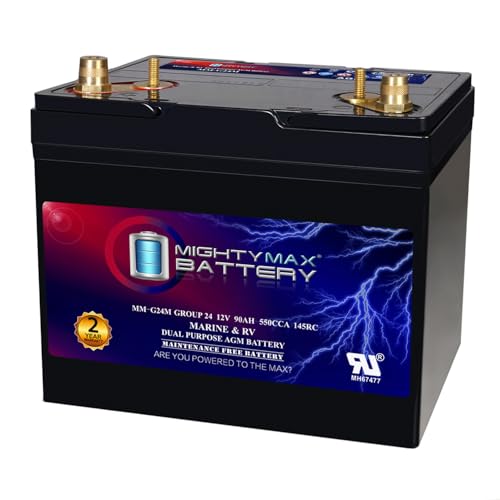
Overview: A compact, dual-purpose marine battery with 90 Ah capacity and 550 CCA. Suitable for smaller bass boats or as an auxiliary power source for electronics and trolling motors, while still offering dependable cranking for mid-sized engines.
- Best for: Smaller rigs where space is limited and electronics demand is moderate.
- Why chosen: Balanced start power and deep-cycle capacity in a slim form.
- Limitations: Lower overall capacity compared to larger 165–180 Ah models; may require a dedicated starter battery for biggest engines.
Redodo 12V 20Ah U1 Marine Cranking Battery

Overview: A compact U1 format battery delivering 800 CCA, designed for quick starts on smaller engines or as a second battery for starting backups. Features robust cell technology and practical design for challenging marine environments.
- Best for: Lightweight bass boats or as a backup starting option on longer trips.
- Why chosen: High starting power in a small footprint, plus robust cell construction.
- Limitations: Limited capacity means not ideal as a primary starter on very large outboards.
Redodo 12V 20Ah LiFePO4 Starting Battery (U1)

Overview: This 20Ah unit provides 800 CCA and is designed for cranking 200hp outboards and similar loads, with prismatic cells for durability and a sheet metal design to resist swelling. Suitable as a backup or auxiliary battery on mid-sized boats.
- Best for: Boats needing a compact, reliable starting option with quick replacement potential.
- Why chosen: Strong startup credentials in a compact form factor; durable construction.
- Limitations: Not a primary power source for heavy electronics over long trips.
12V 300Ah Pro Series LiFePO4 Dual Purpose Battery (Epoch Pro)

Overview: A heavy-duty dual-purpose 300Ah battery designed for marine use with a built-in BMS and strong cranking capabilities (up to 1000A for short bursts). Suitable for large bass boats with high electrical demands, including bow thrusters or multiple electronics systems.
- Best for: Large bass boats needing long-lasting capacity and robust cranking in a single unit.
- Why chosen: High capacity paired with strong short-term cranking and a protective BMS.
- Limitations: Heavier and larger than smaller lithium options; installation space is a factor.
Buying Guide: How To Choose The Right Bass Boat Cranking Battery
What matters most for bass boats is reliability, start power, and the ability to run electronics without a mid-day power drop. The following questions help you choose wisely.
- What starting power do I need? Look for 1200 CCA or higher for cold starts and large outboards. If you routinely fish in cold mornings, prioritize higher CCA and, ideally, a model with heating.
- What capacity is appropriate? For modern bass boats with sonar, trolling motors, and lighting, 150–180 Ah is a solid target. Smaller boats can get by with 90–100 Ah if you balance power use carefully.
- Is dual-purpose better than separate batteries? Dual-purpose (cranking and deep cycle) models save space and weight while simplifying installation. They’re convenient but ensure the BMS and safety features meet your needs.
- Do I need heating or remote monitoring? Heating helps in cold climates; Bluetooth monitoring and OTA/app updates are useful for real-time status and safety.
- What about installation and compatibility? ABYC-compliant standards improve cross-brand safety. Always confirm compatibility with your outboard brand and your boat’s wiring setup.
Safety and Installation Tips
- Have a professional install if you’re combining batteries from different chemistries or brands.
- Use proper mounting to minimize vibration and protect terminals from corrosion.
- Regularly inspect connections and battery health to prevent unexpected failures.
FAQ
- Q: Do I need a separate deep-cycle battery if I buy a dual-purpose battery? A: Not always; dual-purpose batteries can handle both starting and powering electronics, but ensure your load calculations don’t exceed the battery’s cycle life and capacity.
- Q: Are lithium batteries heavy to install on boats? A: Lithium batteries are lighter than lead-acid equivalents, making installation easier on most boats, though mounting and wiring should follow safety guidelines.
- Q: Can heating be used during transit? A: Heating is designed for cold climates; consult the manufacturer’s guidance for operation in transit and storage.
- Q: How do I know if a battery will fit my bass boat? A: Check the physical dimensions, terminal type, and brand compatibility, then confirm with a professional installer if necessary.
- Q: Is Bluetooth monitoring essential? A: It’s optional but helpful for real-time status and energy management on longer trips or when you rely on multiple devices.
- Q: Should I consider a pro-rated warranty? A: Warranties vary; consider coverage length and what it includes when selecting a model.