If you need fast water removal on a boat, these emergency bilge pumps are designed to evacuate water quickly and reliably. This guide highlights options for different boat sizes and scenarios, from simple hand pumps for small craft to high-capacity electric pumps for larger vessels. Best fits include compact portability for kayaks and dinghies, and robust, automatic models for larger boats or frequent conditions. The following quick-reference table compares five top picks to help you decide which model suits your needs.
| Product | Brand | Best For | Why It Stands Out |
|---|---|---|---|
| Manual Bilge Pump with 39″ Hose | Better Boat | Small craft, emergency access | High 20 GPM with long discharge hose; built-in filter helps stay primed |
| SEAFLO 4700 GPH Bilge Pump | SEAFLO | Larger boats needing rapid drainage | Very high flow; strong for large volumes |
| Automatic Submersible 1100 GPH | MAXZONE | Automatic bilge pumping on mid-sized boats | Auto float switch built-in for hands-off operation |
| SEAFLO 2000 GPH Bilge Pump | SEAFLO | Reliable daily use on boats | Solid mid-range flow with anti-airlock design |
| Rule 2000 GPH Bilge Pump | Rule | Quiet operation on small to mid boats | Long-life motor and corrosion-resistant construction |
Manual Bilge Pump for Boats with 39″ Hose
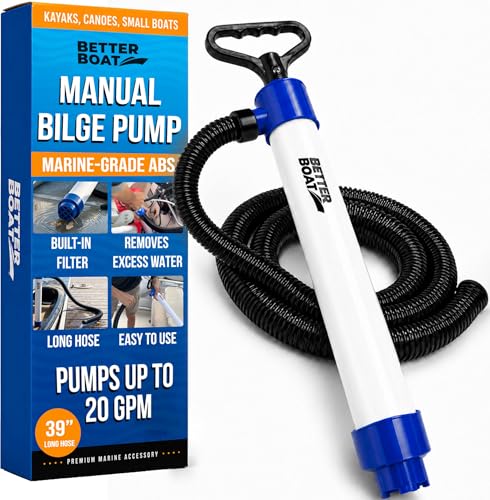
The Better Boat manual pump moves water quickly with a 20 GPM rate and a 39-inch discharge hose. It features an intake with a built-in filter to block leaves and debris, helping maintain prime in dirty water. The long hose allows directing water away from your boat, over a gunwale, or into a bucket. This pump is best for small craft, kayaks, canoes, and emergency spill management where manual operation is feasible. Caution: manual pumping requires physical effort and may be slower than electric options in high-volume flooding.
SEAFLO 01 Series 4700 GPH Bilge Pump
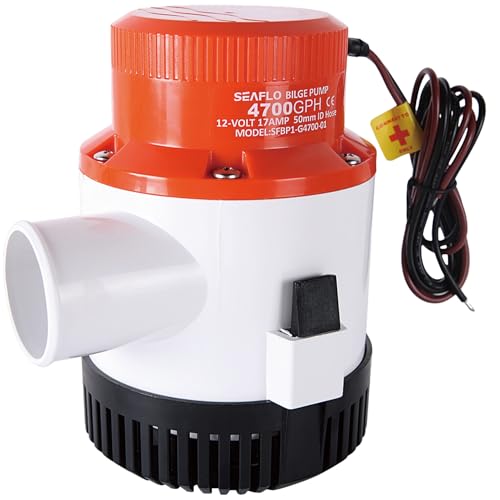
The SEAFLO 4700 GPH pump delivers high-capacity water removal for larger vessels. It is a 12V submersible pump with a 2″ outlet and a 4-year warranty. The model is designed for heavy-duty bilge evacuation, ideal when rapid drainage is essential after heavy rain, wave overtopping, or hull breaches. Pros include fast water removal and durable construction; the primary trade-off is higher power draw and size, which may require a dedicated power source and mounting space.
Automatic Submersible Boat Bilge Water Pump 12v 1100gph Auto

The MAXZONE automatic bilge pump includes a built-in float switch for hands-off operation, with a modest 1100 GPH flow rate and a compact 1-1/8″ outlet. It’s suitable for mid-sized boats where automatic response is preferred, and space is limited. Best for boats that require reliable automatic performance during rain or wake events, or as a backup pump. Limitation: lower flow compared with high-capacity models, so it may take longer to drain very large bilges.
Attwood WaterBuster Portable Pump
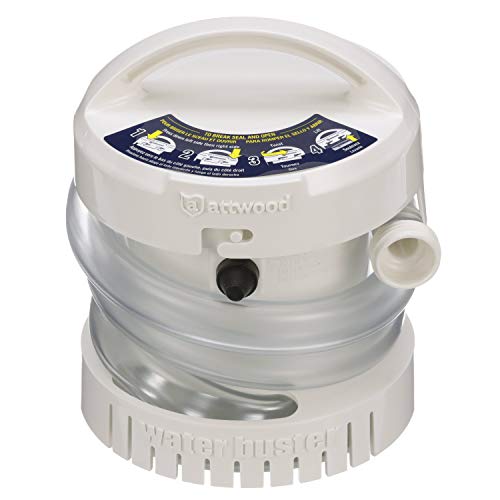
This portable, battery-powered pump by Attwood operates without an external power source, suitable for quick, temporary water removal on deck or in small spaces. It uses up to five hours of operation on three D-sized alkaline batteries, making it ideal for emergency dry runs or locations without power access. Best for emergency response in remote areas; caution with battery life and replacement availability in extended emergencies.
SEAFLO 01 Series 2000 GPH Bilge Pump

The SEAFLO 2000 GPH pump balances performance and efficiency with a 1-1/8″ outlet and a 4-year warranty. It’s designed for reliable continuous use in boats and marine applications, featuring anti-airlock protection. Choose this if you want a dependable mid-range option that avoids the very high power needs of bulkier pumps while delivering solid evacuation capability. Caution: not as fast as the 4700 GPH unit when facing heavy flooding scenarios.
WASSERMANN 2000GPH Prime Bilge Pump

The Wassermann 2000GPH Prime Bilge Pump offers anti-airlock protection and a robust 12V motor with a 4.7 ft power cord. It is designed for continuous operation and reliability in harsh marine environments. This model is best for boats that require steady performance with minimal maintenance, though it may be heavier and require secure mounting. A caution is that higher-flow models may demand more power and space onboard.
Buying Guide
- Flow rate needs: For small craft or occasional use, 1100–2000 GPH is typically enough. For larger boats or frequent flooding, 2000–4700 GPH models offer faster evacuation.
- Power source: Manual pumps require effort; automatic submersible pumps use 12V DC power. Battery-powered portability is useful when power is unavailable.
- Outflow design: Outlets with larger diameters (1-1/8″ to 2″) move more water per hour but require compatible hoses and fittings.
- Prime and anti-airlock features: Pumps with anti-airlock and built-in filters reduce clogs and preserve prime, especially in dirty bilges.
- Size and installation: Ensure mounting space, wiring, and wire gauge suit the selected pump. Consider noise and vibration if near living spaces.
- Durability: Look for corrosion-resistant housings and robust seals for saltwater use. A long warranty can indicate reliability.
- Automatic vs manual: Automatic pumps minimize response time during emergencies; manual pumps provide a simple backup in case of power loss.
Frequently Asked Questions
- What bilge pump do I need for a small boat? A manual or 1100–2000 GPH automatic pump is typically sufficient for small boats, with easier installation and lower power demands.
- Which bilge pump is best for automatic operation? Pumps with built-in float switches, like the MAXZONE model, offer hands-off operation ideal for unattended water intrusion.
- Is a high-flow pump always better? Not always. High-flow pumps move water quickly but require more power and space; match flow to boat size and expected flood scenarios.
- What maintenance is needed for bilge pumps? Regularly inspect inlet filters, clean debris, and test pumps for prime and operation. Replace worn wiring or corroded components.
- Can I use a bilge pump for pools or basements? Some pumps are designed for general water removal; check the hose size and corrosion resistance for non-marine use.
- Do these pumps require professional installation? Most bilge pumps are DIY friendly, but ensure proper wiring, fuse protection, and secure mounting to avoid movement during operation.