Answering the common buyer query for midsize outboard options, this guide highlights practical motors for boats that don’t require full 125 horsepower but want solid performance, reliability, and easy handling. The selected models suit recreational anglers, small to mid-size boat owners, and weekend voyagers who value balance between power and efficiency. Each option is assessed for durability, control, and suitability for different watercraft sizes.
Summary of chosen products:
- NAZEAOB 18HP Outboard Motor — Best for heavy boats needing strong midrange power.
- COFECO Hangkai 12HP Outboard Motor — Best for compact boats seeking reliable three-gear control.
- FXEIPOL 9HP Outboard Motor — Best for light craft and inflatables needing efficient, compact power.
- RYIRSHOH 18HP Outboard Motor — Best for corrosion resistance and versatile three-gear control.
- PERFERATE 12HP Outboard Motor — Best for smooth cruising with CDI ignition and water cooling.
NAZEAOB 18HP Outboard Motor

Features: High-Quality aluminum alloy for durability, corrosion resistance, and long-term use; 2-stroke 18-horsepower engine operating at 4,500–5,500 RPM for strong propulsion; maximum load capacity listed at 2,204 pounds, enabling versatile use.
Best for: Heavier boats or vessels that benefit from robust midrange power and a sturdy build. Choose this if you need reliable thrust for faster cruising with heavier loads.
Caution: Heavier loads can reduce top speed; plan weight distribution accordingly and monitor fuel efficiency at higher loads.
COFECO Hangkai 12HP Outboard Motor
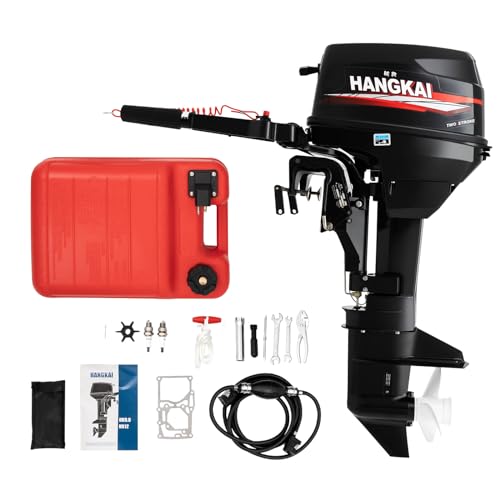
Features: 2-stroke 12HP engine with CDI ignition and water cooling; three gears (forward, neutral, reverse) with infinite speed adjustment; cruise at a constant speed for different boating experiences; lightweight design for easy handling.
Best for: Small to mid-sized boats or inflatables where reliable three-gear control and steady cruising matter most. Good for anglers and casual sailors seeking simple, dependable power.
Caution: Three-gear systems may require more attention to throttle management on choppy water to maintain stability.
FXEIPOL 9HP Outboard Motor
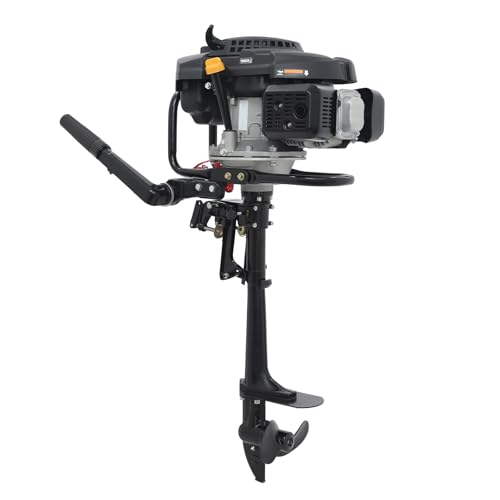
Features: 4-stroke 9HP with 224cc displacement, air-cooled system; 11.81 mph top speed with efficient fuel use; tilt functionality and 360° rotation; CDI ignition and front-end reverse gear via 180° rotation.
Best for: Lightweight boats, canoes, kayaks, and inflatable craft needing compact yet capable propulsion with straightforward control.
Caution: Lower horsepower means slower top speeds on heavier craft; ensure boat weight and gear align with performance expectations.
RYIRSHOH 18HP Outboard Motor
Features: Durable aluminum alloy with corrosion-resistant coating; 18HP two-stroke engine at 4500–5500 RPM; three gears (F-N-R) with a long shaft design for flexible mounting and performance.
Best for: Rigid-hull and larger small boats that require consistent, strong propulsion with versatile gear options and good load-bearing capacity.
Caution: Similar to other midrange motors, heavier loads can impact acceleration and fuel economy; balance weight distribution for optimal efficiency.
PERFERATE 12HP 2 Stroke Outboard Motor
Features: 12HP two-stroke engine with 169cc displacement; water cooling system and CDI ignition; three-speed cruising with constant-speed option; compatible with moderate-size boats for steady performance.
Best for: Anglers and boaters seeking reliable, mid-range propulsion with efficient cooling and easy starting in varying water conditions.
Caution: As with other two-stroke motors, require proper oil mixing and maintenance to sustain performance and longevity.
Buying Guide
What should I consider when choosing a mid-range outboard motor?
Power needs depend on boat size, load, and desired cruising speed. Motors in the 12–18HP range offer a balance of thrust, efficiency, and maneuverability for small to mid-sized craft.
Which features impact performance the most?
Engine type (two-stroke vs four-stroke), cooling system, and gear options (forward/neutral/reverse) significantly affect reliability, throttle response, and flexibility on different water conditions.
How important is the shaft length?
Long shafts help clear transoms on deeper boats and reduce cavitation in rough water. Short shafts fit smaller transoms but may require mounting adjustments for optimal thrust.
What maintenance matters most?
Regular lubrication, cooling system checks, and CDI ignition maintenance are essential. For two-stroke engines, proper oil-to-fuel mixture is crucial for longevity and performance.
Best practices for choosing among these options?
- Choose higher horsepower if you frequently carry heavier loads or require faster cruising.
- Prefer models with solid corrosion resistance for saltwater use.
- Prioritize three-gear designs if you value precise speed control and cruising versatility.
- Consider weight and portability if you need frequent transport or storage flexibility.
Quick comparison
| Model | HP | Displacement | Gear Options | Best For |
|---|---|---|---|---|
| NAZEAOB 18HP | 18 | 246cc | F-N-R | Heavier loads, fast cruising |
| COFECO Hangkai 12HP | 12 | 169cc | Forward/Neutral/Reverse | Compact boats, reliable cruising |
| FXEIPOL 9HP | 9 | 224cc | Forward/Neutral/Reverse | Inflatables and light craft |
| RYIRSHOH 18HP | 18 | 246cc | F-N-R | Versatile mounting, strong thrust |
| PERFERATE 12HP | 12 | 169cc | Three-speed | Steady cruising, CDI ignition |
Frequently Asked Questions
- What is a practical horsepower range for small- to mid-sized boats?
– For most small boats, 12–18HP provides balanced propulsion, good control, and reliable performance for calm to moderate conditions. - Do I need a long shaft motor for larger boats?
– Yes, long shafts help clear the lower unit and avoid cavitation on deeper transoms; verify your boat’s transom height before purchasing. - Is a CDI ignition system important?
– CDI ignition offers quick starts and reliable combustion, which is beneficial for frequent on/off use and variable conditions. - Should I prefer 2-stroke or 4-stroke engines?
– Two-stroke engines are lighter and often simpler, while four-stroke engines are typically quieter and fuel-efficient; choose based on maintenance willingness and usage. - What maintenance should I plan for these motors?
– Regular lubrication, cooling system checks, spark/ignition checks, and fuel/oil mix (for two-stroke engines) are essential for longevity. - Can I upgrade to a higher HP later?
– Upgrading usually requires a different transom setup and alignment with boat rating; consult your boat’s manual or a professional.