Answering the buyer’s search for reliable marine strainers and filters, this guide highlights top inline strainers and water intake filters designed for saltwater environments. Ideal for boaters, yacht owners, and RV travelers who rely on clean water for pumps, engines, and faucets, these selections emphasize durability, easy maintenance, and flexible installation. The following five products are chosen for versatility, material quality, and practical filtering mesh sizes. A quick summary table follows to help compare at a glance.
| Product | Mesh / Screen | Best For | Notes |
|---|---|---|---|
| SEAFLO Raw Sea Water Filter/Intake Strainer | Not specified (multi-size options in line with hose sizes) | Harsh saltwater intakes on larger vessels | Versatile hose compatibility and marine-grade construction |
| SAFBY 3/4″ Female NPT In-Line Strainer (100 Mesh) | 100 mesh | High-flow filtering for small to mid-size systems | Mass flow design; easy disassembly |
| SAFBY 3/4″ Female NPT In-Line Strainer (40 Mesh) | 40 mesh | Pre-filtering where larger debris is common | Similar build to 100 mesh variant |
| Groco ARG-755S Intake Strainer | Basket with 2 mm holes | Heavy-duty marine intakes with easy maintenance | Stainless basket and easy screw-on cap |
| LDCRE Twist-On Water Pump Strainer (2 Pack) | 80 mesh | RV/marine pumps needing a simple two-pack solution | Transparent bowl for visual check |
SEAFLO Raw Sea Water Filter/Intake Strainer

The SEAFLO model is designed to protect marine plumbing by filtering raw sea water before it enters critical equipment. It accommodates multiple hose sizes, including 1 inch, 1-1/4 inch, and 1-1/2 inch diameters. This makes it a versatile choice for various boat configurations. Its corrosion-resistant construction is tailored for saltwater use, helping to extend pump life and reduce maintenance. Best for boats with mixed hose fittings or as a primary intake filter for raw water systems. A potential limitation is the need to verify compatibility with specific hose IDs before installation.
Best for: Larger vessels or setups requiring flexible hose compatibility and robust raw water protection.
Why chosen: Combines versatile installation with durable, marine-grade materials.
Caution: Confirm the exact hose size on your system to ensure a proper fit and seal.
SAFBY 3/4″ Female NPT In-Line Strainer (100 Mesh)

This inline strainer uses a 100 mesh stainless steel filter screen to maximize debris capture while maintaining flow. The design features a simple twist-off bowl for quick cleaning and a nylon top with a clear nylon bowl for visibility. It is best for smaller to mid-size marine systems or as a pre-filter in locations prone to fine debris. Choose this if you want high filtration without sacrificing flow. A limitation is the mesh size may require more frequent cleaning in sandy or algae-prone environments.
Best for: Systems needing high-precision filtration without sacrificing flow.
Why chosen: Easy maintenance and clear bowl aid in scheduled cleaning.
Caution: 100 mesh can clog faster in turbid water; plan for accessible cleaning intervals.
SAFBY 3/4″ Female NPT In-Line Strainer (40 Mesh)

This 40 mesh variant provides coarser filtration for debris-heavy environments where rapid flow is essential. It pairs a twist-off bowl with a clear nylon bowl, allowing quick checks and access for cleaning. Best for intake lines where larger particles are the primary concern, reducing maintenance time. Limitations include less effective filtration of fine sediment and silt compared to higher mesh options.
Better for: Environments with larger debris and a need for higher flow.
Why chosen: Simpler cleaning and robust construction for rough water conditions.
Caution: Not ideal for fine sediment or algae-heavy intakes where finer filtration is needed.
Groco ARG-755S Intake Strainer

The Groco ARG-755S uses a #304 stainless steel basket with 2 mm holes, providing durable debris filtration for marine intakes. It includes O-rings on mating surfaces and a screw-on cap for straightforward maintenance. This option suits installations requiring a robust basket filter with reliable seals. A potential drawback is the need to ensure compatibility with existing mounting and piping layouts on smaller boats.
Best for: Heavily used or long-life marine systems where a secure, easily serviced basket is valued.
Why chosen: Sturdy stainless basket and accessible maintenance through a screw-on cap.
Caution: Ensure the cap and O-rings are compatible with your mounting hardware to prevent leaks.
LDCRE Twist-On Pump Strainer (2 Pack)
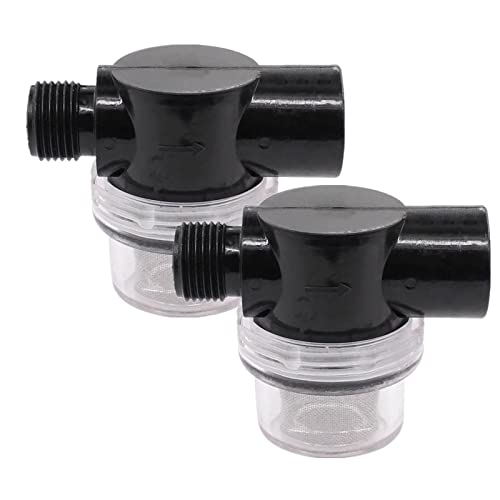
This 2-pack features an 80 mesh stainless steel screen and a twist-on design compatible with 1/2 inch NPSM inlet and outlet fittings. It is intended for RV and small marine pumps, including Shurflo or WFCO models. The transparent bowl allows quick visual checks for debris, and the design facilitates fast cleaning. It is best for users who want a simple, economical solution for smaller pumps. A limitation is the 60 psi water pressure constraint noted in the design notes, which may affect use on higher-pressure systems.
Best for: Smaller boats or RVs needing an affordable, easy-to-install strainers.
Why chosen: Two-pack value and easy visibility for maintenance.
Caution: Not recommended for high-pressure applications beyond the stated range.
Buying Guide: Key Considerations For Marine Strainers And Filters
- Mesh size: Choose based on debris type and flow needs. Finer meshes like 100 or 80 may trap fine sediment but require more frequent cleaning; coarser meshes such as 40 trap larger debris with less frequent cleaning.
- Material and environment: Stainless steel baskets and screens are standard for saltwater, offering corrosion resistance. Consider full assemblies with O-rings and splash-proof bowls for reliable marine performance.
- Installation and compatibility: Verify inlet/outlet sizes (NPT, NPSM) and hose diameters. Ensure the mounting space suits a screw-on cap or twist-on design for easy maintenance.
- Maintenance: Look for features like transparent bowls or removable bowls to simplify inspection and cleaning during routine maintenance.
- Maintenance interval planning: Environments with algae, sand, or silt require more frequent checks. Plan access to the filter bowls for quick servicing between trips.
- Versatility: Some strainers support multiple hose sizes or fit various pump brands. This flexibility can reduce stocking needs for spare parts.
- Application scope: Separate primary raw-water intakes from pre-filters to protect pumps and engines, especially on longer solo trips or offshore conditions.
FAQ
- What mesh size is best for marine water filters?
Answer: It depends on debris risk. Higher mesh sizes like 100 provide finer filtration but require more frequent cleaning; lower mesh sizes like 40 allow faster flow with larger debris. - Are inline strainers suitable for saltwater and freshwater?
Answer: Yes. Marine-grade inline strainers are designed for saltwater, but verify compatibility with your system’s hose sizes and fittings. - How often should I clean strainers on a boat?
Answer: Cleaning frequency depends on water quality and usage. In sandy or algae-prone waters, inspect and clean weekly during trips; in clear water, check every few weeks. - Can I reuse strainers after cleaning?
Answer: Yes, most strainers are designed for multiple cleanings. Inspect for wear on gaskets and bowls and replace if damaged. - What installation considerations help prevent leaks?
Answer: Use compatible fittings, ensure correct torque on hose clamps, and verify O-ring integrity at mating surfaces to prevent leaks. - Do I need multiple strainers on a single boat?
Answer: It can be beneficial to place a coarse strainer at the raw water intake and a finer screen closer to critical equipment to balance flow and protection.