Answering the question most buyers have when outfitting a pontoon is simple: choose compact, reliable outboard motors that match the boat size, fuel efficiency, and ease of use. This guide highlights five suitable options for shallow-to-mid sized pontoons, focusing on engines with 10–15 HP range or comparable small-power alternatives. Each pick targets different boat types and needs, such as inflatables, rubber boats, and light aluminum pontoons. Use the buying table below to compare key details at a glance.
| Product | Power Type | Best For | Why This Choice |
|---|---|---|---|
| BJTDLLX Short Shaft 12 HP | 2-Stroke | Small inflatable or light pontoon | Good cooling, simple installation, three-speed forward/neutral/reverse |
| LIWBYYG 12HP 169CC | 2-Stroke | Rubber boats and light pontoons | High power for size, fuel economy features, intelligent cruise |
| SMC YCN5654BX Boat Lift Motor | Electric Lift Motor | Boats with hoist systems | Direct mounting, easy wiring, strong lift performance |
| Ireliajob 4 HP 4-Stroke | 4-Stroke | Inflatable and small dinghies | Water cooling, CDI ignition, smooth throttle |
| LIWBYYG 169CC 12HP | 2-Stroke | Rubber boats and light pontoons | Low water resistance design, efficient fuel use, intelligent cruise |
BJTDLLX Short Shaft 12 HP Outboard

The BJTDLLX 12 HP two-stroke outboard delivers 661–1763 pounds of thrust and speeds of 8–30 km/h. It uses water cooling for consistent performance and features a vented design to extend service life. Best for small inflatable or light fiberglass pontoons needing reliable, straightforward propulsion with a simple tiller control.
Who it’s best for: boaters who want a compact, affordable engine with easy installation and three forward/neutral/reverse gears. Limitation: power is limited to small vessels; larger pontoons may require higher HP.
LIWBYYG 169CC 12HP Outboard (Short Shaft)
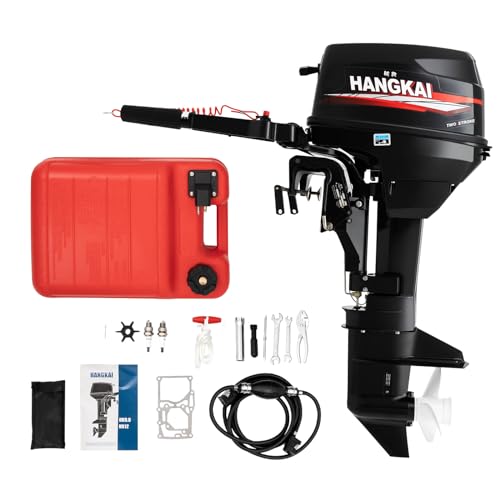
This 169cc 12HP motor emphasizes power for small pontoons and rubber boats with water cooling and a CDI ignition system. Its three-blade propeller reduces water resistance, while the external fuel tank supports longer runs between fills. It suits pontoons needing stronger push than typical 6–9 HP units and who value cruise control capabilities.
Who it’s best for: boaters seeking higher thrust in a compact package and improved fuel economy. Limitation: external fuel tank increases setup, and the unit is still a two-stroke design requiring mixing oil and gas.
SMC YCN5654BX Boat Lift Motor

Unlike standard outboards, this lift motor is designed to power hoists on boats, featuring a 56C direct-mount frame and straightforward wiring. Best for pontoons with a hoist or lift system, ensuring quiet, reliable operation during docking and storage. It provides a stable, purpose-built solution for boat lifting rather than propulsion.
Who it’s best for: boaters needing a dedicated lift motor rather than propulsion. Limitation: not a propulsion engine for moving the boat itself.
Ireliajob 4 HP 4-Stroke Outboard
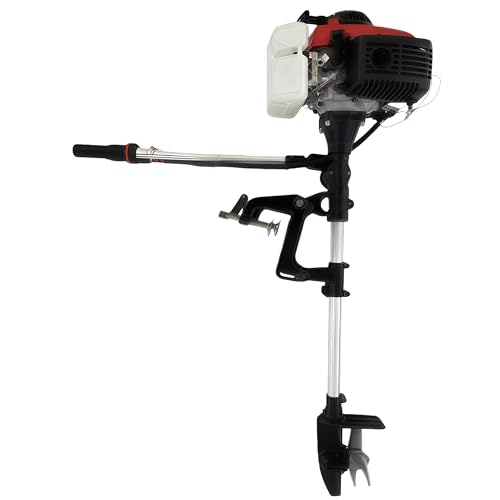
The 4 HP four-stroke motor provides steady thrust and features a built-in water cooling system for extended use. CDI ignition ensures reliable starts, and the throttle lever is designed for precise control. This option is well-suited for lightweight inflatable boats and small pontoons where efficiency matters.
Who it’s best for: casual anglers or family boats that require predictable power with low maintenance. Limitation: significantly less propulsion for larger pontoons or heavy loads.
LIWBYYG 169CC 12HP Outboard (Second Variant)
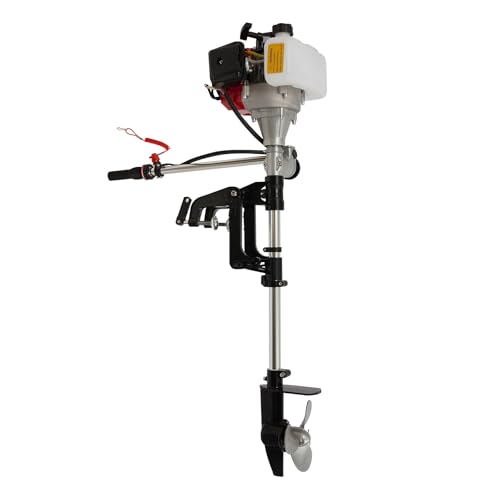
This 169cc 12HP two-stroke engine emphasizes efficiency with a streamlined three-blade propeller and a CDI ignition system. It offers an energy-saving performance advantage and a sizable fuel tank to extend operation between refuels. It’s a robust option for rubber boats and light pontoons requiring more bite than typical 4–9 HP units.
Who it’s best for: boaters needing more power without moving to a larger engine class. Limitation: two-stroke design requires oil mixing and more maintenance than four-stroke models.
Buying Guide
What to consider when selecting a pontoon motor:
- Boat size and weight: Match horsepower to the pontoon’s weight rating and desired cruise speed.
- Type of pontoon: Inflatable, light aluminum, or fiberglass pontoons have different propulsion needs.
- Fuel versus electric: Gas engines provide lighter weight and higher power; electric lift motors serve hoists but do not propel the boat.
- Fuel efficiency: Look for engines with CDI ignition and efficient fuel consumption to reduce running costs.
- Cooling system: Water cooling is common in two-stroke and four-stroke engines for stable performance in prolonged use.
- Installation and maintenance: Short shaft models fit shallower transoms; ensure compatibility with mounting hardware and tilting adjustments.
- Reliability and serviceability: Choose brands with readily available spare parts and simple maintenance routines.
Technical Quick Comparisons
- Best for small pontoons: 12 HP two-stroke engines offer strong thrust in compact packages.
- Better for rubber boats: 169cc variants strike a balance of power and efficiency.
- Choose this if you need a lift motor: Electric lift motors optimize hoisting tasks rather than propulsion.
- Avoid this if you require long-distance cruising on a heavy pontoon: Higher HP engines are more appropriate for larger pontoons.
FAQ
- What size engine should I choose for a small pontoon? A 6–12 HP range typically suits light to mid-weight pontoons, depending on boat length and payload.
- Do two-stroke engines require more maintenance? Yes, they generally require oil mixing and more frequent maintenance than four-stroke engines.
- Is a lift motor different from a propulsion motor? Yes; a lift motor powers a hoist system, while a propulsion engine drives the boat.
- What is CDI ignition? CDI provides precise spark timing for easier starts and smoother operation.
- Can I install any engine on any pontoon? Compatibility depends on shaft length, mounting pattern, and transom height; check manufacturer specs.
- Should I choose a air-cooled or water-cooled engine? Water cooling helps prevent overheating on longer runs; air-cooled is simpler but may overheat sooner.