Answering the need for reliable boat loading, launching, and trailering, these power winches are designed for different boat sizes and duty levels. The right pick depends on your boat weight, preferred control method, and whether you value quick power, quiet operation, or backup manual options. Below are five strong options chosen for diverse towing and loading scenarios, each with clear strengths for specific buyers.
| Product | Best For | Key Strength |
|---|---|---|
| Megaflint Trailer Winch | Boat owners needing dual-mode operation | 30% higher power, Dyneema rope |
| Extreme Max 3006.8918 | Heavy loads and versatility | 11,000 lbs rolling capacity, high power |
| Bravex Trailer Winch | Compact trucks and trailers requiring reliability | Electric braking, dual direction |
| Nilight Boat Trailer Winch (3500 lbs) | Budget-friendly, portable use | Dual control, waterproof design |
| VEVOR Electric Boat Winch | Smaller boats up to 2000 lbs | Push-and-pull control, manual option |
Megaflint Trailer Winch — Reversible 6000 lbs Capacity

The Megaflint model supports power-in, power-out, and freewheel modes with a 12V DC system. It uses Dyneema Fiber rope, which is lighter and reportedly stronger than steel cable of a similar diameter. This winch is designed for boats up to 6000 lbs, offering higher winching power than a standard 6000 lbs unit by about 30%. The low-noise operation is beneficial in quiet harbor settings. Best for boat owners who want a versatile, high-power option with the flexibility of manual and electric operation.
- Best for: boat owners needing versatile control and higher power at a 6000 lbs class rating.
- Why selected: Dual operation modes support different loading scenarios; synthetic rope reduces snag risk and is easier to handle.
- Caution: Longer-term use may require rope care to prevent fraying; verify mounting compatibility for your trailer.
Extreme Max 3006.8918 Reversible Electric Boat Winch

This winch delivers a strong pull with a 11,000 lbs rolling capacity and 9,900 lbs marine capacity, plus 3,500 lbs pulling capacity for heavy applications. It uses a steel cable rated at 5.5 mm × 11 m, offering durability in saltwater conditions. The motor delivers roughly 30% more pulling power than standard models, and its high-power design suits larger boats or frequent loading tasks. Best for: users prioritizing high rolling capacity and robust power in a mid-to-large trailer setup.
- Best for: heavier boats and frequent, demanding winching tasks.
- Why selected: Significant power increase over standard models; durable steel cable for rugged use.
- Caution: Steel cable can be heavier and prone to corrosion without proper maintenance.
Bravex Trailer Winch 6000LBS — Reversible 12V DC
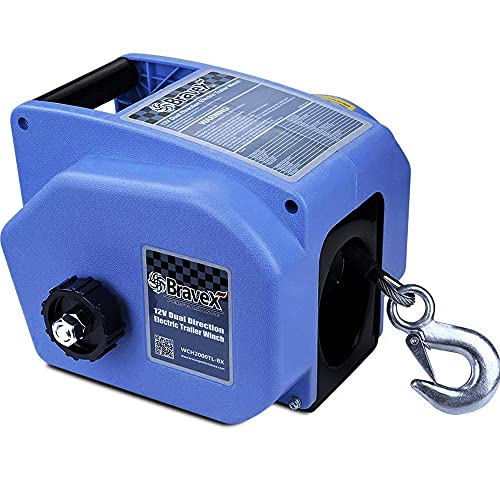
The Bravex unit emphasizes a 30% higher power motor versus comparable models, with dual-direction electric winching and a manual hand crank for emergency operation. It includes an electric automatic braking system and maintains relatively low noise (<75 dB at 12 inches). This model is well-suited for boat trailers and light trucks requiring reliable control and a fail-safe manual option. Best for: users who want smooth operation, a strong braking system, and a built-in manual fallback.
- Best for: safe, controlled loading with an optional manual alternative.
- Why selected: Electric braking adds safety during winching; dual operation covers both electric and manual needs.
- Caution: Higher power winding may require careful mounting and wiring to prevent overload.
Nilight Boat Trailer Winch 3500 Lbs — Portable Electric Winch

Nilight’s 3500 lbs portable winch provides dual-direction operation with electric and manual options. It features a low-noise design with a remote and hand crank for emergencies. The 3-stage planetary gear system supports a range of small to mid-size boats and trailers, with a waterproof connection for exposed environments. Best for: boaters seeking a compact, budget-friendly winch with flexible control options.
- Best for: budget-conscious buyers needing portability and reliable dual control.
- Why selected: Good balance of power, control, and portability for smaller trailers.
- Caution: Power rating is best for lighter loads; plan for potential scaling if boat size grows.
Nilight Boat Trailer Winch 3500 lbs — Synthetic Rope Version

This Nilight model mirrors the 3500 lbs class with a synthetic rope, offering similar dual-direction control and wireless/wired remote options. The synthetic rope can be easier to handle and reduces corrosion risk in marine environments. Best for: boat owners who want lighter rope material and versatile control without sacrificing power.
- Best for: those prioritizing rope material over traditional steel, and remote operation.
- Why selected: Synthetic rope improves handling and maintenance in saltwater conditions.
- Caution: Ensure compatibility with trailer mounting and rope length for your setup.
VEVOR Electric Boat Winch — 2000 Lbs
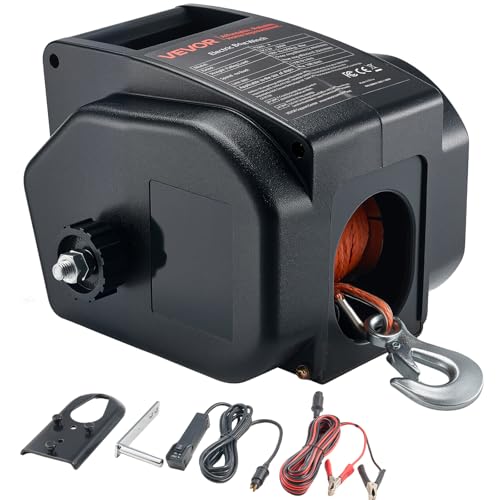
The VEVOR model provides up to 2000 lbs of pulling power with a reversible 12V DC motor. It includes a wired remote control and hand crank, enabling operation even when power is unavailable. This makes it a practical option for smaller boats or lighter trailer setups. Best for: owners of compact boats seeking dependable, space-efficient winching with manual redundancy.
- Best for: smaller boats and occasional use where a simple, reliable unit is preferred.
- Why selected: Combines power, control options, and back-up manual capability in a compact package.
- Caution: Not suitable for heavier boats or frequent heavy-duty use.
Buying Guide: Key Considerations For Your Boat Winch
Choosing the right power winch for your boat involves balancing load ratings, control methods, and mounting compatibility. Consider the following practical questions:
- What is my maximum boat weight, including trailer, and is the rolling rating sufficient for loading on inclines?
- Do I prefer dual operation (electric and manual), and is a remote control important for my setup?
- Is synthetic rope or steel cable better for my environment and maintenance routine?
- Will I need a back-up manual option in case of power loss or electrical issues?
- How important is noise level and braking system in my trailer setup?
Other practical considerations include motor power versus actual winching needs, mounting compatibility with your trailer’s frame, and the availability of sufficient power supply on-site. For saltwater use, rope material and corrosion resistance are critical. If you frequently launch and retrieve heavier vessels, prioritize higher rolling capacities and robust braking.
Frequently Asked Questions
- What is the difference between rolling and marine pulling capacities?: Rolling capacity refers to the winch’s ability to move the boat on a trailer, while marine pulling capacity indicates the load in pulling the boat onto or off watercraft surfaces; use the higher number for sedentary loads on trailers.
- Is synthetic rope safer than steel cable?: Synthetic rope is lighter and easier to handle, with less risk of snap-back injuries; it can be more susceptible to UV damage and requires proper inspection.
- Do I need a winch with a manual crank?: A manual crank provides operation when power is unavailable, increasing reliability for remote locations or power outages.
- How should I maintain a boat winch?: Regularly inspect rope, check connections, keep the motor and gears clean, and lubricate moving parts per manufacturer guidelines.
- Can I use a winch on a small boat trailer?: Yes, but ensure the unit’s rating matches the boat’s weight and that mounting is secure and compliant with trailer specs.
- What mounting considerations matter?: Ensure the winch is securely bolted to a reinforced trailer frame designed to handle the load, with proper clearance for rope or cable path and a compatible remote control setup.