Answering your search for reliable rear boat trailer straps, this guide highlightsTop picks designed to keep sterns secure during transport. These straps are best for boaters who tow frequently, use various trailer types, or need quick-adjustment options. The list focuses on 2-inch wide, 43–48 inch long models with strong breaking strengths and user-friendly features. Whether you haul a pontoon, wake boat, jet ski, or small craft, these options balance reach, toughness, and ease of use. Below is a quick at-a-glance summary to help you compare quickly.
| Product | Length | Width | Break Strength | Best For |
|---|---|---|---|---|
| Rhino USA Boat Trailer Straps (2-Pack) | 4 ft (adjustable 13.5″–48″) | 2″ | Not stated in features | Versatile, universal fit |
| BoatBuckle G2 Transom Tie Downs | 43″ | 2″ | 2500 lbs | Heavy-duty, retractable |
| MEILI Heavy Duty Transom Straps | 48″ | 2″ | 1200 lbs | Simple, quick-release |
| Seamander Boat Tie Downs | 48″ | 2″ | Not stated in features | Universal fit, adjustable |
| Reese Powersports Transom Tie Downs | 43″ | 2″ | 833 WLL / 2500 lbs break | Secure, slip-free |
Rhino USA Boat Trailer Straps (2-Pack)

Best for: Universal boat trailer use with multiple vessel types. These straps are 2 inches wide and 4 feet long when fully extended, with adjustable length from 13.5 inches to 48 inches. They are marketed as American-owned with US-based customer support, which can reassure buyers who value domestic service and family-operated brands. The design emphasizes universal fitment across trailers with tie-down points, making them suitable for pontoon boats, wake boats, and personal watercraft. A potential limitation is that the exact break strength isn’t listed in the features, so verify compatibility with your trailer load before use.
BoatBuckle G2 Transom Boat Tie Down Straps

Best for: Boaters needing a retractable, one-handed tightening solution. The G2 pair provides 2500 lbs break strength, with a 43-inch reach. The retractable ratchet system helps keep straps tidy and reduces wind flapping during travel. It’s ideal for trailers that benefit from quick adjustments and stored straps. A limitation to note is that the system is retractable, which may require occasional maintenance to keep the mechanism smooth.
MEILI Heavy Duty Transom Straps
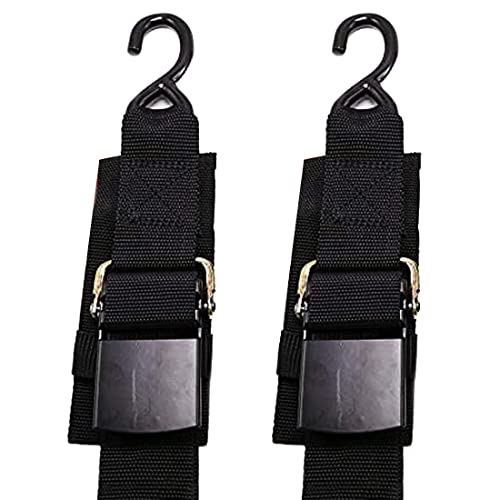
Best for: Users seeking simple, tool-free operation. These 2″ by 48″ straps have a quick-release buckle and vinyl-coated S-hooks to minimize boat surface scratching. The flip-buckle mechanism tightens securely with a single action, eliminating bulky ratchets. The data notes a 1200 LBS capacity, making them suitable for a wide range of trailer loads. A caution: ensure your trailer anchor points are compatible with the buckle system before purchase.
Seamander Boat Tie Downs

Best for: Boaters needing a universal fit that works across standard trailer tie-down systems. With a 2-inch width and 48-inch length, these straps feature an upgraded buckle and attachment system that includes S-hooks and clips designed to handle heavy loads. The flex-ready design supports a wide range of craft, including pontoons and PWCs. A potential limitation is that the precise break strength isn’t stated in all features; check the product listing for the exact rating before loading a heavy vessel.
Reese Powersports Transom Tie Downs

Best for: Durable, heavy-use trailer setups requiring strong protection against slippage. This pair offers 833 lbs working load limit and 2,500 lbs break strength, with a 2-inch width and 43-inch length. They emphasize secure, slip-free transport and safety against over-tightening. A note: while the spec includes high break strength, real-world tension should still follow manufacturer guidelines to avoid hull damage.
Buying Guide
What to consider when choosing rear boat trailer straps
Load capacity and break strength should align with your boat’s weight and trailer type. Look for straps that fit your trailer’s tie-down points and offer compatible hooks or quick-release mechanisms. Length flexibility matters for large vessels; 48 inches is common, with some models extending to 4 feet when extended.
Which features improve ease of use
- Retractable ratchets reduce wind flapping and tangling.
- Quick-release buckles simplify one-handed operation.
- Vinyl-coated or anti-scratch hooks protect boat finishes during attachment.
- Easy mounting options on trailers (some models include mounting hardware or drilled holes).
Durability and environment considerations
Look for UV-resistant webbing and corrosion-resistant hardware for salty or freshwater use. Stainless or coated steel components resist rust, extending strap life in marine environments.
Maintenance and safety tips
- Inspect straps for wear, fraying, or stretched webbing before each trip.
- Replace any strap with damaged buckles or hooks to prevent failure on the road.
- Store straps dry and away from chemical exposure to prevent webbing degradation.
Who should buy which type
Retractable straps are best for frequent trailers and quick releases. Standard tie-down straps with buckles suit casual weekend boaters who want a simple setup. If you need to mount the strap on a trailer without existing holes, models with easy mounting options or hardware included are preferable.
Quick reference: selecting by vessel type
- Pontoons and wake boats: consider longer, robust straps with higher break strength.
- Jet skis and small craft: compact 43″ to 48″ options with easy release mechanisms.
- Frequent travelers: retractable systems minimize fiddling and keep gear tidy.
FAQ
- Q: How long should trailer straps be for a typical boat? A: 43″ to 48″ lengths cover most small to mid-sized watercraft; some applications benefit from up to 4 feet when adjustable.
- Q: Are retractable straps safer than fixed ones? A: They offer quicker operation and reduced wind flapping, but require maintenance to keep the mechanism smooth.
- Q: Can straps damage hulls? A: Choose vinyl-coated hooks and anti-scratch features to minimize damage on contact points.
- Q: Do straps need mounting hardware? A: Some models include hardware or drilling guidance; others require trailer-specific mounting points.
- Q: What is a safe working load limit? A: The working load limit should be well below the boat’s weight and trailer rating; always follow the manufacturer’s guidelines.
- Q: How many straps should I use per vessel? A: Use at least two straps, positioned at the stern and another secure point, to prevent shifting.