Answering the common question, these 40-gallon and near-40-gallon marine fuel tanks are designed to provide ample capacity for longer trips without frequent refueling. This guide highlights five suitable options, including in-deck and topside tanks, with notes on ideal boat types and potential limits. The best pick depends on your boat’s layout, fuel system, and mounting needs. The following summary table compares capacity, mounting style, and best-use scenarios to help you choose quickly.
| Product | Brand | Approx. Capacity | Mounting Style |
|---|---|---|---|
| Moeller Marine Below Deck Permanent Fuel Tank (40-Gallon) | Moeller | 40 gallons | Below deck |
| Sierra Topside Tank, 24 Gal | Sierra | 24 gallons | Topside |
| Moeller Topside Fuel Tank, 22 Gallon | Moeller | 22 gallons | Topside |
| 40 Gallon Fuel Transfer Tank with Wheels | caqeg | ~48 gallons | Portable/transportable |
| Scepter 12 Gallon Portable Marine Gas Tank | Scepter | 12 gallons | Portable |
Moeller Marine Below Deck Permanent Fuel Tank (40-Gallon)

The Moeller 40-Gallon Below Deck Tank is designed for permanent installation in the bilge area. It features a machined aluminum 3/8 inch withdrawal fitting with a 360° swivel poplock for easy hose hookup, and corrosion-resistant materials suitable for ethanol and biodiesel blends. This tank is best for boaters seeking a large, stable, under-floor fuel solution with minimal exterior footprint. Choose this if your vessel has a suitable below-deck cavity and you want a clean, integrated fuel system. A potential limitation is the need for professional installation and space planning to avoid interference with other systems.
Sierra Topside Tank, 24 Gal

The Sierra 24-Gallon Topside Tank offers a compact, surface-m-mounted fuel option. Its Red tank color helps with visibility, and the 24-gallon capacity is suitable for mid-range runs on smaller to mid-size boats. Best for boats where access to the deck is straightforward, and where a topside tank can be easily refueled from storage or a rack. Limitations include its smaller capacity relative to a full 40 gallons and potential mounting constraints on boats with tight deck spaces.
Moeller Topside Fuel Tank, 22 Gallon

Moeller’s 22-Gallon Topside Tank is a good option for boats built before 2011 or those needing a lightweight, rotationally molded tank with UV-stabilized resin. Its dimensions fit typical topside mounting footprints and support a simple, reliable fuel feed. Best for boats with topside access and a preference for a lighter, non-belly tank. A caveat is the smaller capacity compared to a full 40-gallon setup.
40 Gallon Fuel Transfer Tank with Wheels
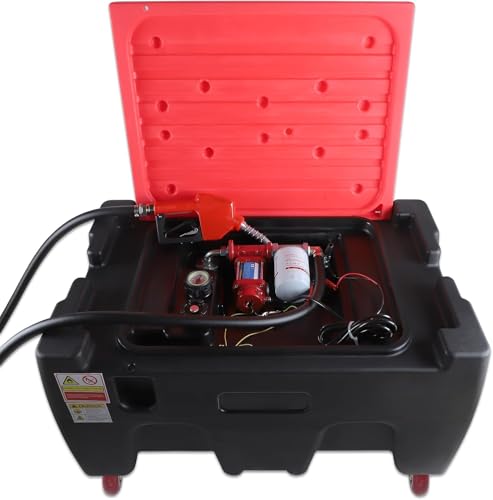
This portable transfer tank holds about 48 gallons and includes a 12 GPM 12V DC pump for efficient fuel transfer. The design supports fuel storage and on-site transfer, ideal for boaters who need to shuttle fuel between containers or stations. Best for mixed-use vessels that require flexibility in fueling, but limiters include the need to transport and secure a larger, heavier tank on uneven surfaces and the need for a separate pump setup.
Scepter 12 Gallon Portable Marine Gas Can

The Scepter 12-Gallon Portable Gas Tank is compact and portable, with a built-in fuel gauge and a 2-way vented cap. It is suitable for boats needing extended running time without committing to a large fixed tank. Best for smaller boats or as a supplementary tank when space is limited. This option is limited by its smaller capacity and the need to manage a separate container for longer trips.
Buying Guide
What mounting style should I choose?
Below-deck tanks save deck space and deliver a clean look, but require proper installation access and a secure mounting environment. Topside tanks are easier to install and refuel but occupy deck space and can be exposed to weather. Portable tanks offer maximum flexibility but require secure transport and stable placement during use.
What capacity suits my boat?
Consider your typical trip duration, fuel consumption, and engine type. A 40-gallon class is ideal for mid-sized boats and longer days on the water, while 24-gallon and 22-gallon options fit smaller boats or as primary/backup tanks depending on usage. For very long trips or high-demand engines, pairing a main tank with a portable reserve can be practical.
Are materials important?
Look for rotomolded or machined aluminum fittings with UV-stabilized resins and ethanol/biodiesel compatibility. Materials influence durability, corrosion resistance, and compatibility with common marine fuels and additives.
What about installation and maintenance?
Below-deck tanks require professional installation and space planning. Topside tanks are more DIY-friendly if mounting space is available. Regular inspection of fittings, hoses, and vents is essential to prevent leaks and vapor buildup.
What safety considerations apply?
Use proper venting and anti-siphon measures. Ensure secure mounting to prevent movement while underway. Verify compatibility with your engine and fuel system to avoid mating incompatible fittings or surge pressures.
What combination could work best?
For many boats, pairing a fixed 40-gallon below-deck tank with a smaller topside or portable tank covers fuel needs across varied trips. If space is tight, a 22- or 24-gallon topside tank may provide the best balance of capacity and accessibility. Select a portable option if your operations demand fuel transfers or multi-vehicle use.
FAQ
- Q: Can I install a 40-gallon tank on any boat?
- A: Installation depends on available space, hull design, and access. Some boats require professional installation for below-deck tanks.
- Q: Is a portable tank sufficient for long trips?
- A: Portable tanks offer flexibility but may require more planning for long trips and refueling stops.
- Q: Which material resists ethanol blends?
- A: Tanks with ethanol-resistant resins and corrosion-resistant fittings are preferred for ethanol blends.
- Q: Do all tanks come with gauges?
- A: Many portable tanks include built-in gauges; fixed tanks may require an external sender or gauge installation.
- Q: How do I maintain a fuel tank?
- A: Regularly inspect fittings, clean vents, and check for leaks; replace seals and gaskets as needed.