Direct answer: 1-1/2 inch thru-hull fittings are used to connect below-deck plumbing to through-hull outlets for bilge, livewell, and overflow systems. This guide compares 5 common options to help boaters pick durable, corrosion-resistant choices for different hulls and mounting requirements. Best for pontoon and small to mid-size boats, these fittings vary by material, base diameter, and hose compatibility. The following selections emphasize longevity, ease of installation, and compatibility with 1-1/2″ ID hose.
Overview of top picks
| Product | Material | Best For | |
|---|---|---|---|
| Attwood 3875-3 1.5″ Polypropylene | Polypropylene | Budget projects, above-waterline drainage | White finish; lightweight |
| Attwood 66551-3 Stainless Steel | Stainless Steel | Heavy-duty applications, thick hulls | Standard length thread for tough seals |
| NRC&XRC Marine Grade Stainless | 316 Stainless Steel | Durability and corrosion resistance | CUSTOM gasket option available |
| SEACHOICE 90-Degree Thru-Hull | Plastic (high-impact) | Easy routing in tight spaces | One-nut design |
| SEAFLO 1½” Thru Hull (2-Pack) | Polypropylene | UV, saltwater resistance for bilge/outlets | White; corrosion-resistant polymer |
Attwood 3875-3 1.5″ Polypropylene Straight Thru-Hull Connector

Material and design: polypropylene construction resists chemicals and salt exposure. Hose size is 1 1/2″ I.D.; stem length is 3 1/2″; max hull thickness 1 1/4″.
Best for: budget installations and above-waterline drainage where cost matters. Why selected: lightweight and corrosion-resistant for simple plumbing paths. Limitation: polypropylene may be less robust under heavy mechanical strain than stainless steel.
Attwood 66551-3 Stainless Steel Barbed Standard Length 1-1/2″
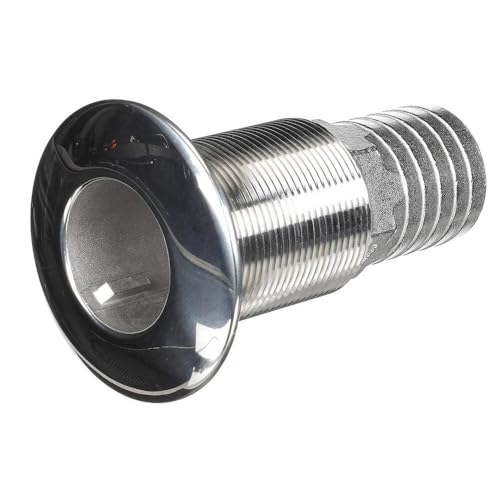
Material and design: stainless steel with full-thread length for thick hulls; hose size 1-1/2″ I.D. Flange diameter 3″.
Best for: boats with thicker hulls and where higher strength seals are needed. Why selected: robust stainless construction supports long-term use. Limitation: heavier and may require careful torque to avoid galling with nuts.
NRC&XRC Marine Grade Stainless Short Straight 1-1/2″ ID Thru-Hull

Material and design: marine-grade 316 stainless steel, solid metal slab; customized gasket improves install ease. Flange OD 2-3/4″ (70 mm); thread length about 1.9″ (48.5 mm).
Best for: demanding marine environments where long-term corrosion resistance matters. Why selected: durable and customization-friendly. Limitation: shorter overall barb length may affect clamp spacing in some hull configurations.
SEACHOICE 90-Degree Thru-Hull Connector

Material and design: durable high-impact plastic; designed for easier applications where hose is difficult to route. One-nut application and back nut compatibility.
Best for: tight routing scenarios where a 90-degree angle helps. Why selected: simplifies installation in confined spaces. Limitation: plastic may be less forgiving under heavy mechanical stress than metal fittings.
SEAFLO 1½” Thru Hull Fitting (2-Pack)
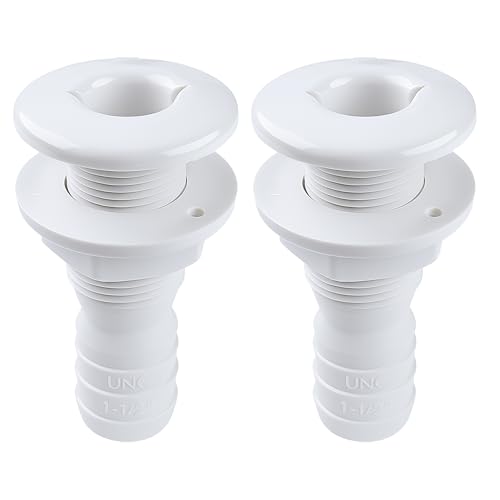
Material and design: polypropylene; rated for marine performance with corrosion resistance and above-waterline sealing. Height 102 mm; D diameter 75 mm; 2-pack for multiple applications.
Best for: bilge and overflow outlets where two fittings are desired. Why selected: reliable plastic construction with resistant properties. Limitation: polypropylene may not suit all high-load mounting scenarios; ensure hull thickness compatibility.
Buying Guide
What to check before buying
- Material: Choose stainless steel for heavy-duty use and corrosion resistance; polypropylene or plastic works for budget projects or lighter loads.
- Hull thickness compatibility: Verify max hull thickness to ensure a proper seal without overtightening.
- Thread type and length: Ensure the thread length accommodates your hull structure; some designs have standard threads for thicker hulls.
- Hose compatibility: Confirm hose ID fits 1-1/2″ hoses; consider barb length for secure clamps.
- Mounting environment: Coastal or saltwater use favors stainless steel; inland fresh water can tolerate polymer options.
- Angle and routing: 90-degree or straight options affect installation paths and space constraints.
- Gasket and gasket customization: Some models offer adjustable gaskets for easier sealing on varied hull materials.
Frequently Asked Questions
- What is a thru-hull fitting used for on boats?
– It connects hull plumbing to external ports for bilge, livewell, or overflow systems. - Which material lasts longest in saltwater?
– Stainless steel options offer superior corrosion resistance in saltwater environments. - Do I need a gasket with all thru-hull fittings?
– Most installations require a gasket or seal; some designs include integrated sealing surfaces. - Can I install a 1-1/2″ thru-hull on any hull thickness?
– Check the maximum hull thickness specified by the fitting to ensure a proper fit. - Is a 90-degree fitting easier to install?
– In tight spaces, a 90-degree angle can simplify routing and reduce hose bending stress. - Should I buy a two-pack or single fitting?
– A two-pack is convenient for systems with dual outlets or for future replacements.