Find the right power and reliability for your boat with a compact, 100-horseoutboard mindset. This guide highlights motors that align with a 100 HP range, plus practical notes on use, maintenance, and best-fit scenarios. Ideal buyers include anglers needing solid planing speed, small- to mid-sized boat owners seeking dependable propulsion, and enthusiasts who want a balance of power and efficiency. A quick comparison table below helps you scan key specs at a glance.
Quick Comparison Table
| Product | Power | Fuel Type | Best For | Limitations |
|---|---|---|---|---|
| COFECO Outboard Motor | 6.5 HP (4.8 kW) | Gasoline | Lower max power than true 100 HP range | |
| BJTDLLX Short Shaft | 12 HP | Gasoline | Not a high-end midrange option | |
| LIWBYYG 169CC | 12 HP | Gasoline | Data emphasizes efficiency; not 100 HP | |
| KTYHNPM 4 Stroke | 7.5 HP | Gasoline | Smaller power band | |
| Newport NT300 Electric | 3 HP equivalent / 1300W | Electric | Limited range by battery |
COFECO Outboard Motor, 6.5 HP 123CC
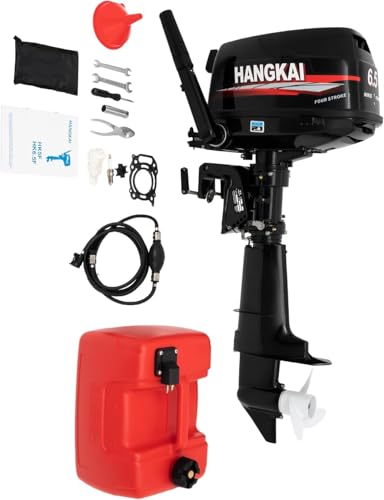
Best for compact, budget-minded boats where dependable power is needed without the weight of a larger engine. The COFECO 4-stroke 6.5 HP engine delivers up to 4.8 kW and uses a CDI ignition system with water cooling for steady performance. Its manual start keeps maintenance simple and cost-effective, making it a practical option for small skiffs, dinghies, or fishing vessels where maneuverability and cost per hour matter most.
Best for: Inland anglers, freshwater boats, learners who want straightforward operation. Choose this if you need reliable, low-throttle propulsion without advanced electronics. Avoid this if you require higher top-end speed or long-range highway skipping on big seas. Common caution: ensure your engine fits your transom length and boat capacity.
BJTDLLX Short Shaft Outboard Motor

Best for small craft requiring a compact, light, reliable engine with modern cooling and CDI ignition. The 2-stroke, 12 HP BJTDLLX provides 661-1763 pounds of thrust and 8-30 km/h speeds, supported by water cooling and a robust aluminum build. A three-speed cruise (forward/neutral/reverse) offers flexible maneuvering, making it ideal for inflatables, tenders, and lightweight sailboats where quick power delivery matters.
Best for: Small, portable boats and learners who want quick planing and simple maintenance. Choose this if you need high-speed shifts with straightforward throttle control. Limitations: Two-stroke design may require more frequent fuel management and maintenance checks than a modern four-stroke counterpart.
LIWBYYG 169CC 2-Stroke Outboard Motor
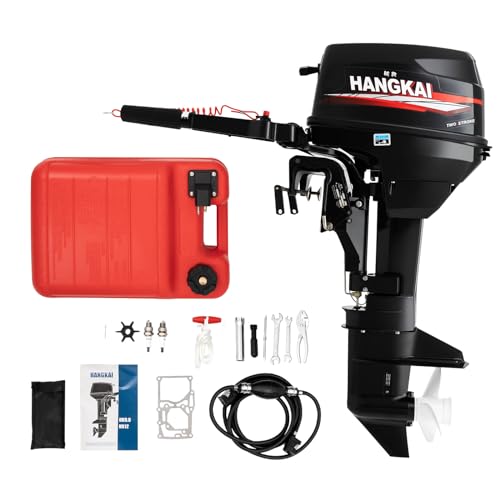
Best for robust, mid-range power in a compact package with efficient fuel use for a 12 HP class. This 169cc two-stroke motor emphasizes a fuel economy edge (CDI ignition and a reported low-per-hour consumption) alongside a three-blade propeller that reduces water resistance. The aluminum construction and water cooling support durability in varied water conditions, making it a solid option for rubber boats and small workboats.
Best for: Medium-weight boats needing reliable acceleration and consistent througput. Choose this if you want a balance of power and efficiency. Limitation: Two-stroke designs generally require more fuel and oil mixing upkeep compared to four-strokes.
4 Stroke 7.5HP Outboard Motor
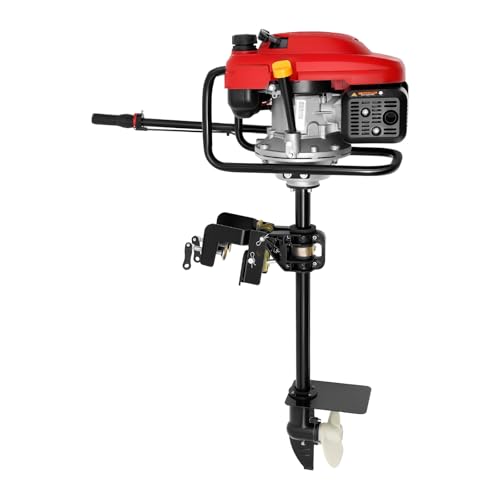
This 4-stroke engine delivers 3.5 kW of power with a focus on stability and heat management. A continuously variable transmission design provides smooth gear changes for comfortable cruising. With multiple cooling vanes and an air-cooling system, it emphasizes durability during extended use on small to mid-sized boats, balancing ease of use with dependable performance for everyday boating and fishing trips.
Best for: Casual cruisers and anglers who prioritize smooth shifts and simple maintenance. Choose this if you want a compact, easy-to-handle power option. Limitation: May offer less raw top-end speed compared with higher-horsepower units.
Buying Guide
- Power needs vs. boat size: Match engine horsepower to your boat’s weight, hull design, and typical load. Heavier boats require more thrust for planing and faster acceleration.
- Fuel type and efficiency: Four-stroke engines are cleaner and typically more fuel-efficient over time; two-stroke options may deliver more power per weight but require oil mixing and maintenance.
- Transom compatibility: Check shaft length (short vs. long) and mount compatibility with your boat’s transom to avoid misalignment and vibration.
- Maintenance accessibility: Engines with CDI ignition and water cooling are generally straightforward to service. Consider engines with readily available parts and local service options.
- Noise and emissions: Electric outboards provide quiet operation and zero emissions, ideal for lakes and protected waterways but with range considerations.
Frequently Asked Questions
- What is a typical 100 HP outboard motor used for? It powers mid-sized boats for fishing, day cruising, and utility work, offering reliable planing speed with moderate fuel consumption.
- Are two-stroke engines still a good option? They can deliver more power-to-weight, but require more maintenance and fuel/oil mixing compared to four-stroke engines.
- Is electric propulsion suitable for larger boats? Electric outboards work well for small to mid-sized craft and quiet applications, but battery capacity limits range on larger vessels.
- How important is shaft length? Correct shaft length prevents propeller ventilation and ensures proper alignment with the boat’s hull.
- Should I choose a motor with CDI ignition? CDI ignition provides reliable starting and efficient combustion, beneficial in variable conditions.
- What maintenance should I plan for? Regular checks of cooling systems, fuel lines, and spark or ignition systems help maintain efficiency and prevent failures.