Answering the needs of boaters and PWC owners seeking reliable 10W-40 marine oil. This guide highlights five top products for 4-stroke marine engines, explaining who each one is best for, and why. It covers outboard, sterndrive, and inboard applications, with notes on corrosion protection, heat tolerance, and wear resistance. The info helps you compare options based on engine type, operating conditions, and maintenance needs.
| Product | Brand | Type | Why It Stands Out |
|---|---|---|---|
| Quicksilver 10W-40 4-Stroke Marine Engine Oil, 1 Gallon | Quicksilver | Full-synthetic | Excellent high-RPM heat tolerance; strong corrosion and wear protection. |
| Quicksilver 10W-40 4-Stroke Marine Engine Oil, 1 Quart | Quicksilver | Full-synthetic | Compact option with same protection; convenient for smaller engines or tops-ups. |
| Liqui Moly Marine PWC Oil SAE 10W-40 | 4 L | Liqui Moly | Synthetic blend | Outstanding corrosion protection and engine cleanliness; versatile for marine craft. |
| Yamaha Yamalube 10W-40 Mineral 4W WaterCraft Hi-Performance Oil | Yamaha Motor | Mineral | Marine-spec formula for high-revving watercraft engines; strong corrosion protection. |
| Valvoline 4-Stroke Marine Full Synthetic Engine Oil 1 Quart | Valvoline | Full-synthetic | Enhanced wear protection for extreme heat and RPM; robust rust defense. |
Quicksilver 10W-40 4-Stroke Marine Engine Oil, 1 Gallon

- Designed for all 4-stroke marine outboard motors and inboard/sterndrive engines.
- Formulated to protect against corrosion and excessive wear.
- Built to withstand heat and stress of high-RPM operation.
Best for: Boat owners with larger engines that operate at high RPMs and in hot conditions. This full-synthetic option provides robust protection and reliability for long days on the water.
Why selected: It mirrors marine-specific performance needs, offering corrosion resistance and wear protection tuned for marine cooling and load profiles.
Caution: Ensure correct viscosity selection for seasonal temperature changes in your area.
Quicksilver 10W-40 4-Stroke Marine Engine Oil, 1 Quart

- For 4-stroke marine engines including outboards and inboards.
- Offers protection against corrosion and wear; supports high-RPM operation.
- Compact packaging convenient for small engines or maintenance kits.
Best for: Owners who want a precise, smaller-volume option for routine changes or topping up in mid-season maintenance.
Why selected: Shares the same protective profile as the gallon variant, with a focus on practicality for smaller systems.
Caution: Ensure you’re not mixing with non-marine-grade oils for cross-compatibility concerns.
Liqui Moly Marine PWC Oil SAE 10W-40 | 4 L

- Excellent corrosion protection and engine cleanliness.
- Optimum lubrication under varied operating conditions.
Best for: Marine personal watercraft and small boats where corrosion resistance and cleanliness are critical under saltwater exposure.
Why selected: Known for robust protection in high-moisture environments and consistent lubrication performance.
Caution: Verify viscosity compatibility with your specific engine model and riding conditions.
LIQUI MOLY Marine 4T Motor Oil SAE 10W-40 | 4 L
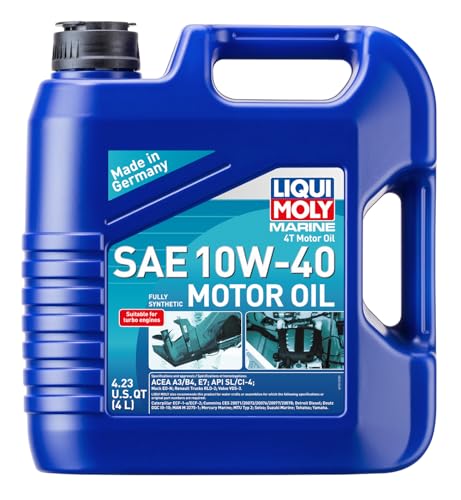
- Rapid oil penetration and strong corrosion protection.
- Optimum stability to aging for marine engines.
Best for: Owners seeking a balance of fast lubrication and long-term engine protection in saltwater or mixed-water racing and cruising.
Why selected: Emphasizes rapid film formation and longevity under marine storage and operation conditions.
Caution: Check engine manufacturer recommendations for this grade to ensure full compatibility.
Valvoline 4-Stroke Marine Full Synthetic Engine Oil 1 Quart

- 50% stronger wear protection to meet extreme heat and RPM demands.
- Up to 8X better rust defense; moisture in marine environments is managed.
Best for: Boaters operating in extreme heat or high-RPM conditions, or storing engines in environments with moisture exposure.
Why selected: Marine-focused formulation aims to reduce rust and wear during frequent high-load cycles.
Caution: As with all synthetics, follow oil change intervals and OEM recommendations to maximize protection.
Buying Guide
What to consider when choosing 10W-40 marine oil
- Engine type and size: Large outboards vs. small four-stroke engines may prefer different packaging volumes and formulations.
- Operating conditions: High heat, high RPM, saltwater exposure, and long idle periods all influence oil choice.
- Oil type: Full synthetic generally offers better wear and heat protection; mineral or synthetic blends may suffice for less demanding use.
- Protection features: Corrosion inhibitors, rust defense, and engine cleanliness help extend life in marine environments.
- Change intervals and OEM guidelines: Always align with manufacturer recommendations for viscosity and approvals.
How to compare products quickly
- Look for explicit corrosion protection and wear protection claims tailored to marine engines.
- Consider packaging size relative to your maintenance plan (gallon vs. quart).
- Avoid oils that are automotive-focused unless explicitly approved for marine use.
Common questions buyers ask
- What does 10W-40 mean for marine oil? It indicates viscosity at cold startup (10) and high-temperature performance (40). This helps a marine engine start more easily and maintain film strength at operating temperature.
- Is full synthetic better than mineral for marine engines? Full synthetic generally offers superior heat resistance, wear protection, and long-term stability in demanding conditions, but may be costlier.
- Should I use the same oil in all engines on my boat? Not necessarily; engines have different tolerances and oil guidelines. Use oils approved by the engine manufacturer for each unit.
- Can I mix brands? Mixing is not recommended unless the manufacturer explicitly allows it; consistency helps maintain protective film and additive balance.
- How do I choose between quart and gallon sizes? Choose based on maintenance frequency and available storage space; quart bottles are convenient for mid-season top-ups, gallons for routine changes.
- What about marine-specific additives? Some oils include corrosion inhibitors and anti-wear additives; verify if your engine requires any special additives or OEM-approved formulations.