Find the right 120 amp hour marine battery by evaluating depth of cycle life, weight, and protection features. This guide helps boat owners choose 100–165–200Ah LiFePO4 and AGM options best suited for trolling motors, house power, and start power. Ideal for anglers, weekend boaters, and RV enthusiasts seeking longer life and safer chemistry. The top picks below are selected for reliability, expandability, and compatibility with Group 31 standards where applicable. A quick comparison table follows to highlight key specs at a glance.
| Product | Type | Best For | Approx. Ah |
|---|---|---|---|
| Rvpozwer 12V 100Ah LiFePO4 Battery | LiFePO4 | Balanced trolling motor and house power | 100 |
| LiTime 12V 165Ah Dual Purpose Lithium Marine Battery | LiFePO4 | High-capacity start and storage | 165 |
| BUKNUWO 12.8V 100Ah LiFePO4 Battery | LiFePO4 | Clean energy with high utilisable capacity | 100 |
| Rvpozwer 12V 200Ah LiFePO4 Battery | LiFePO4 | Large off-grid or heavy trolling power | 200 |
| Interstate Batteries Marine/RV 12V 100Ah AGM | AGM Lead-Acid | Dual-purpose cranking and trolling | 100 |
Rvpozwer 12V 100Ah LiFePO4 Battery

The Rvpozwer 12V 100Ah LiFePO4 battery offers deep cycles with a built-in 120A BMS. Best for boaters needing long-lasting power for trolling motors and onboard electronics. Selected for its 100Ah capacity and expandable potential in a single-series setup. Choose this if you want strong daily use with reliable cycle life without carrying heavy lead-acid weight.
Who it’s best for: anglers and weekend sailors who want dependable, long-lived lithium power for both motor start and accessories. Limitation: 100Ah may be less suitable for larger livewell systems or extended off-grid power without parallel configurations.
LiTime 12V 165Ah Dual Purpose Lithium Marine Battery

This 165Ah LiFePO4 battery supports both engine cranking and onboard electrical needs in one unit. Its 1200 CCA starting power helps cold starts, while the high capacity suits trolling motors and electronics. Best for boaters needing higher energy reserves without extra battery boxes. Selected for high energy density and ABYC-friendly cross-brand compatibility.
Who it’s best for: owners with higher power demands or those upgrading from lead-acid who want fewer batteries on board. Limitation: Higher capacity comes with greater initial cost and weight compared to 100Ah options.
BUKNUWO 12.8V 100Ah LiFePO4 Battery

The BUKNUWO 12.8V 100Ah LiFePO4 battery emphasizes high utilization with a 95% capacity use and a robust 100A BMS. It supports 4000 cycles at 100% DOD and up to 15000 cycles at 60% DOD, with expandable series/parallel connections. Best for compact spaces where high energy density and safety are essential.
Who it’s best for: compact power users and solar-ready boats needing scalable storage. Limitation: 100Ah may be insufficient for very long off-grid stays without parallel configurations.
Rvpozwer 12V 200Ah LiFePO4 Battery
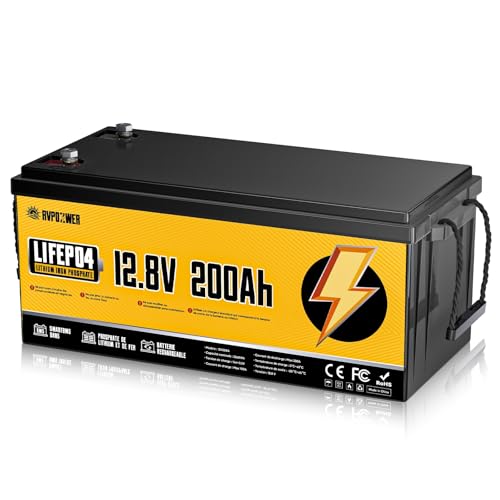
The 200Ah LiFePO4 option from Rvpozwer delivers expansive capacity with a 200A BMS and long cycle life. Best for heavy power needs, multi-day autonomy, and high-draw trolling motors. Selected for its large energy reservoir and scalable use in series for higher voltages.
Who it’s best for: boaters or RV users who require substantial storage for extended outings. Limitation: higher price and weight, plus potential space constraints on smaller vessels.
Interstate Batteries Marine/RV 12V 100Ah AGM

Interstate’s dual-purpose AGM battery delivers reliable starting power and trolling motor endurance. It’s built to endure rugged marine conditions and offers improved recharge rates compared to conventional AGM batteries. Best for users needing a straightforward, rugged lead-acid option with dual-use capability.
Who it’s best for: boaters who prefer a familiar AGM chemistry and straightforward maintenance. Limitation: not a lithium option, so cycle life and weight will be higher than LiFePO4 competitors.
Buying Guide: Key Considerations for 120 Ah Marine Battery Purchases
- Chemistry choice: LiFePO4 batteries offer longer cycle life, lighter weight, and better efficiency than AGM lead-acid, but at a higher upfront cost. Consider total cost of ownership and space on board.
- Capacity needs: 100–165Ah suits most trolling motor setups and house loads. If you run high-draw devices or extended off-grid periods, a 200Ah option may be preferable.
- Cycle life and BMS: Look for a Smart BMS that protects against overcharge, over-discharge, and short circuits. Higher cycles translate to longer battery life in marine use.
- Weight and space: Lithium options are significantly lighter than lead-acid and save valuable deck or cabin space. Plan for weight distribution on the boat hull.
- Series/parallel expandability: If you anticipate future power needs, choose batteries that can be combined in series or parallel to scale voltage and capacity safely.
- Compatibility: Ensure the battery is compatible with your trolling motor, boat’s electrical system, and any ABYC guidelines for cross-brand use.
FAQ: Quick Answers for 120 Ah Marine Battery Buyers
- What is the advantage of LiFePO4 over AGM for marine use? LiFePO4 offers longer life, lighter weight, faster charging, and better safety features, reducing maintenance and replacement frequency.
- Can I use multiple 100Ah batteries to reach 200Ah? Yes, in series or parallel configurations, but ensure BMS and manufacturer guidelines allow it and that wiring is correctly matched.
- What should I consider for cold-start power? Look for batteries rated with high CCA or MCA; LiFePO4 options typically provide solid cold-start characteristics, though specs vary by model.
- Is it safe to mix battery types on the same system? It’s generally not recommended due to different voltage, charging profiles, and cycle life. Use matched chemistries where possible.
- Do lithium batteries require special chargers? Use chargers designed for LiFePO4 chemistry to ensure proper charging voltages and safety features.
- How do I decide between 100Ah and 165Ah? If you need longer operation between charges or higher energy reserves for electronics-heavy setups, 165Ah provides more headroom without repeated recharges.