Find reliable 24V to 12V marine converters that keep essential boat systems powered safely. This guide highlights suitable options for different boat sizes and power needs, from high-current DC-DC units to compact, low-load regulators. Ideal buyers include: offshore cruisers needing steady 12V for navigation gear, fish-finders and lighting power, and RV or solar setups on boats that run on 24V.
The table below compares five strong picks across common use cases. Use it to quickly compare output, protection features, and suitable environments.
| Product | Output | Max Current | Protection Highlights | Best For |
|---|---|---|---|---|
| Klnuoxj 24V to 12V 30A Buck | 12V | 30A | Undervoltage, overload, overcurrent, overheat, short-circuit | Medium power marine electronics |
| THLY 24VDC to 12VDC Buck Converter | 12V | 30A | Overload, over-voltage, short circuit, overheating | LEDs, GPS, CCTV on boats |
| Victron Orion 24/12-Volt 70A | 12V | 70A | Remote on-off, high efficiency, versatile charging mode | High-demand 12V systems |
| Victron Orion-Tr 24/12-Volt 20A | 12V | 20A | IP43 protection, high efficiency | Dual-battery or modest 12V loads |
| Nilight 24V to 12V 240W | 12V | 20A | Waterproof, anti-shock, 96% efficiency | Harsh marine environments |
Klnuoxj 24V To 12V 30A Waterproof Buck Converter

The Klnuoxj DC 24V to 12V 30A buck converter provides a compact, robust option for mid-range marine power distribution. Input is 24V, output is 12V with a maximum 30A load, delivering up to 360W. Built-in protections cover undervoltage, overload, overcurrent, overheat, and output short-circuit. Best for boat electronics that require dependable 12V power in a 24V system, such as navigation gear or cockpit lighting. A potential limitation is the fixed 12V output; if your system requires precise 12.0V under varying loads, you’ll want to verify stability under peak draw.
- Best for: Boats with 24V primary systems needing a solid 12V feed for mid-range devices.
- Why selected: Strong protection suite and straightforward wiring suit rugged marine use.
- Caution: Ensure input supply remains within tolerance to avoid voltage dips.
THLY 24V to 12V DC Buck Converter With LED Display

This THLY converter emphasizes real-time monitoring with an LED voltage display, allowing quick checks of 12V output. It supports up to 30A continuous current and includes an intelligent MCU safety chip for overload, over-voltage, overheating, and short-circuit protection. It’s well-suited for marine lighting, GPS trackers, CCTV, and other sensitive 12V devices where immediate status visibility matters. Note that under no-load conditions, a minor voltage deviation may occur, which is normal and does not affect actual output.
- Best for: Mariners who prefer live voltage feedback for 12V systems.
- Why selected: Real-time monitoring aids reliability in dynamic marine environments.
- Caution: Expect small no-load voltage drift; it does not reflect load health.
Victron Energy Orion 24/12-Volt 70 Amp DC-DC Converter
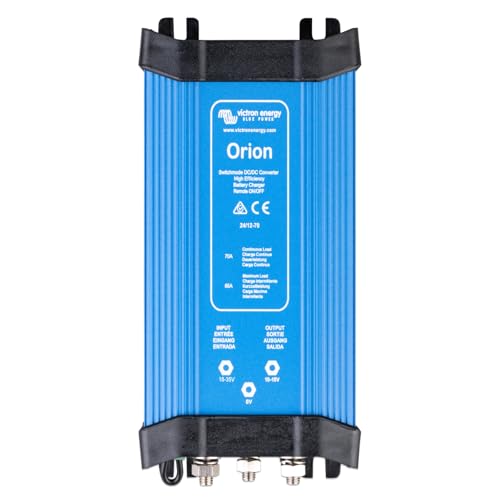
The Victron Orion 24/12-Volt DC-DC converter delivers high current at 12V with 92% efficiency. It can manage DC 24V inputs within a broad range (18-35V) and provides a remote on-off connector to avoid heavy input wiring. This unit is ideal for boats with heavy 12V loads, such as multiple navigational devices or power-hungry accessories, and it can function as a charging option for a 12V battery within a 24V system. The non-isolated design is common in marine setups, offering robust performance when properly integrated.
- Best for: High-demand 12V circuits on larger boats or systems that need reliable, high-current conversion.
- Why selected: High efficiency and versatility in remote control enable flexible installation.
- Caution: Non-isolated design requires careful grounding and system integration to avoid ground loops.
Victron Energy Orion-Tr DC-DC Converter 24/12-Volt 20A

The Orion-Tr model provides 20A at 12V with IP43 protection for splash resistance, making it suitable for areas near damp environments or where occasional spray is possible. It’s designed for dual-battery setups and can also act as a charger when used with appropriate configurations. Output remains stable and efficient, reducing heat in compact engine rooms or cabins. The 24/12-Volt configuration harmonizes with many standard boat electrical systems.
- Best for: Boats needing a reliable 12V supply with space for a compact converter in a dual-battery arrangement.
- Why selected: IP43 protection and efficiency help preserve electronics in marine conditions.
- Caution: Ensure total load does not exceed the 20A rating to avoid overheating.
EKYLIN 24V To 12V 30A Waterproof Step Down Converter

This EKYLIN unit is designed for heavy-duty use, with an IP67 waterproof aluminum alloy shell and silicone sealing. It accepts 24V to 40V inputs and outputs 12V at up to 30A (360W). The rugged construction suits trucks, boats, solar setups, and other environments demanding durable protection against moisture and vibration. It includes intelligent protections against overvoltage, overload, undervoltage, overcurrent, overheating, and short circuits, and highlights a cautious note to use a stable DC input for best results.
- Best for: Harsh marine or outdoor environments needing a rugged, waterproof converter.
- Why selected: IP67 waterproofing and durable aluminum shell are well-suited for boats exposed to salt spray and rough conditions.
- Caution: Requires stable input power to avoid transient voltage issues on sensitive gear.
Nilight 24V To 12V 240W Regulator

The Nilight regulator provides 12V output at up to 20A (240W) with a rugged waterproof and anti-shock aluminum shell. With high conversion efficiency and a focus on durability, it’s appropriate for golf carts, scooters, trucks, and boats requiring dependable 24V to 12V conversion in challenging environments. It’s a solid choice when 12V loads are moderate and environmental protection is a priority.
- Best for: Environments demanding waterproof, shockproof operation with solid efficiency.
- Why selected: Combines compact form with durable protection for marine or outdoor use.
- Caution: 20A maximum means higher-demand devices should be assessed for cumulative load.
Buying Guide
Key considerations when selecting a 24V to 12V marine converter include current needs, environmental protection, and how the unit will integrate with the boat’s electrical system.
- Power needs: Estimate total 12V device draw. Choose a converter with a comfortable headroom above your peak load to avoid overheating.
- Protection features: Look for undervoltage, overvoltage, overcurrent, short-circuit, and overheating protections to safeguard sensitive devices.
- Environmental durability: For boats, IP ratings or waterproof housing prevent corrosion and water ingress in cabin, deck, or engine rooms.
- Regulation type: Isolated vs non-isolated designs affect grounding and charging behavior. Non-isolated units are common in marine setups but require proper system planning.
- Remote control and monitoring: Some models offer remote on-off, LED displays, or MCU safety features. Consider whether real-time monitoring helps your installation.
- Installation space: Compact footprints fit tight engine rooms; note mounting and connector accessibility for maintenance.
- Input range tolerance: Verify that the converter accepts your boat’s actual 24V source range and any variances caused by alternator load or battery state.
FAQ
- What is the difference between isolated and non-isolated 24V to 12V converters?
Answer: Isolated converters provide galvanic isolation between input and output, which can aid grounding and reduce noise; non-isolated units are common in marine setups and typically more compact and cost-effective but require careful wiring. - Can I run high-current 12V devices from a 24V system?
Answer: Yes, with a suitable 24V to 12V converter rated above the total current of the 12V devices, consider heat dissipation and protection features. - Do marine converters require special grounding?
Answer: Follow the manufacturer’s installation guidelines and marine electrical codes to ensure proper grounding and to avoid interference with navigation equipment. - Is IP protection important for marine converters?
Answer: Yes. IP ratings (such as IP43 or IP67) indicate resistance to moisture, dust, and ingress, which is beneficial in boats exposed to spray or rain. - What happens if a converter is overloaded?
Answer: Overload protection typically shuts down output or limits current to prevent damage; choosing a unit with sufficient headroom helps maintain reliability. - Should I use a regulator for LED strips on a boat?
Answer: Yes, a dedicated 24V to 12V regulator with proper current rating ensures stable 12V for LEDs and avoids voltage dips that can shorten LED life.