Find the right 25-inch shaft outboard motor for reliable long-distance boating and smooth handling. This guide highlights models best suited for long-shaft applications, such as larger inflatables, keel-equipped small boats, and deeper-water cruising. The selected options prioritize long-shaft design, water cooling, and CDI ignition systems to support extended use. Target buyers include anglers, coastal cruisers, and seasonal boaters seeking steady propulsion with durable construction. Below is a quick summary of the top picks to compare at a glance.
| Product | Key Benefit | Best For |
|---|---|---|
| BJTDLLX Short Shaft Outboard Motor, 12 HP | Lightweight, compact 2-stroke with water cooling | Small boats, inflatable dinghies |
| CBhfmljd 2 Stroke 18HP Outboard Motor, Short Shaft | High horsepower in compact form, 360° steering | Kayaks, small boats |
| COFECO Outboard Motor, 4 Stroke 6.5 HP | Efficient 4-stroke design, CDI ignition | Budget-conscious, lightweight cruising |
| BJTDLLX 2 Stroke 18HP Outboard Motor, Long Shaft | Long-shaft design, strong power, ample fuel capacity | Medium boats needing longer reach |
| The ROP Shop Water Pump Kit for 25″ Shaft Outboard | Essential maintenance for 25″ shaft systems | Owners of 25″ shaft motors |
BJTDLLX 2 Stroke 18HP Long Shaft Outboard Motor

Brand: BJTDLLX. Features a 2-stroke 18HP engine with a long shaft design (suitable for deeper water and longer mounting). The 4500-5500 rpm range supports strong thrust, while a 6.34-gallon fuel tank provides longer endurance. The unit uses a water cooling system and CDI ignition for reliable operation. Pros include robust power and extended range; a potential limitation is higher fuel consumption typical of two-stroke designs. Best for boaters needing long-shaft reach and solid mid-range speed. Consider this if you operate medium-sized inflatables or boats that require extended propulsion without frequent re-provisioning.
Best For: Long-Shaft Power Users
- Power: 18HP two-stroke
- Long shaft for deeper mounting
- Water cooling and CDI ignition
Caution: Two-stroke engines generally require more routine maintenance and mixed fuel. Ensure proper oil mix and cooling checks before extended runs.
CBhfmljd 2 Stroke 18HP Outboard Motor, Short Shaft

Brand: Cbhfmljd. This 2-stroke 18HP engine emphasizes strong horsepower with a compact footprint and a 360° steering rotation. It includes a dive into reverse without gear shifting, plus a start-in-gear protection feature. The unit is designed for reliable performance with a noise-conscious operation. Best for: compact boats needing agile handling and high power in a small frame. Limitation: as a short shaft model, it may not suit deeper water mounting where a long shaft is standard.
COFECO Outboard Motor, 4 Stroke 6.5 HP
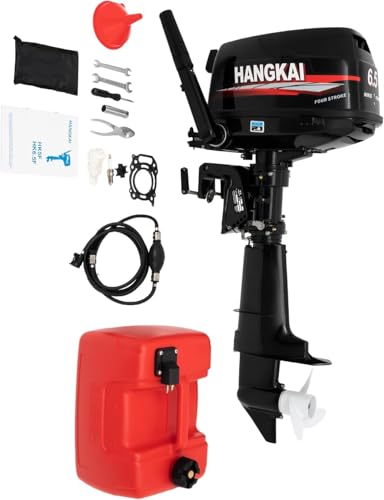
Brand: COFECO. A 4-stroke 6.5 HP motor with CDI ignition and water cooling, designed for robust, fuel-efficient cruising. It provides a balanced option for light-to-moderate loads with dependable ignition and steady operation. Best for budget-minded buyers or smaller demand cruising. Caution: lower horsepower means slower acceleration and top speed; may not suit larger or heavy-duty boats.
BJTDLLX Short Shaft Outboard Motor, 12 HP

Brand: BJTDLLX. This 12HP 2-stroke model features a water cooling system and CDI ignition. It provides moderate thrust suitable for small craft or tender boats. Best for light-duty use where space is limited and longer shaft mounting is not required. Caution: 12HP may be underpowered for heavier inflatable boats or larger vessels.
Buying Guide: 25-Inch Shaft Outboard Motor Essentials
- What is a 25″ shaft and why does it matter? Long shafts help mount engines higher on boats with deeper transoms or planning hulls, improving propeller clearance and trim control for stable handling in rough water.
- Power and fuel type: Do you need 2-stroke or 4-stroke? Two-stroke engines generally offer higher power-to-weight and simpler mechanics but require fuel-oil mixing and more maintenance; four-stroke engines tend to be quieter and more fuel-efficient.
- Cooling and ignition: Water cooling reduces overheating during prolonged use. CDI ignition provides quick starts and reliable sparking; ensure your chosen model matches local fuel quality and maintenance readiness.
- Fuel capacity and range: Larger tanks extend operational range between fill-ups. Factor your typical voyage length and spare fuel needs into the selection.
- Mounting compatibility: Confirm shaft length (long vs short) aligns with your boat transom height and mounting hardware. A 25″ shaft is intended for deeper installations; verify hardware compatibility before purchase.
- Maintenance accessories: Consider whether you need spare impellers, gaskets, or service kits. The ROP Shop kit can support 25″ shaft maintenance and timely replacements.
Is a 25-inch shaft necessary for all boats?
Not for every boat. Long shafts are preferred for higher transoms or planing boats to ensure adequate propeller clearance and performance.
What maintenance does a 25″ shaft engine require?
Regular oil checks, cooling system inspections, fuel quality management, and periodic impeller and gasket replacements are common maintenance tasks.
Which is better for beginners, 2-stroke or 4-stroke?
4-stroke engines are generally easier to maintain and more fuel-efficient, while 2-stroke engines offer higher power-to-weight and simpler construction.
Can I mount a 25″ shaft engine on inflatable boats?
Yes, but ensure the transom height and mounting hardware are compatible and that the vessel can handle the engine’s weight and thrust.
What should I consider about fuel capacity?
Higher capacity provides longer range. Balance tank size with boat weight, center of gravity, and fuel availability.
Are CDI ignition engines easier to start?
CDI systems typically provide quicker, more reliable starts and smoother operation under varying conditions.