Answer: A 3-bank boat battery charger is ideal for boaters who need fast, independent charging for multiple 12V batteries while on the water or dock. The top options below are best for liveaboard crews, anglers, and weekend boaters who want robust, weatherproof charging with battery-type flexibility (lead-acid, AGM, LiFePO4). This guide highlights five capable 3-bank models and explains who each is best for, plus practical considerations for selecting the right one.
Summary at a glance:
| Product | Max Per Bank | Best For | Key Strength |
|---|---|---|---|
| NOCO Genius GEN5X3 | 5 A | Owners needing compact, feature-rich onboard charging | Temperature compensation and versatile modes |
| FirstPower Pro 10X3 | 10 A | High-demand boats with 24/7 charging needs | IP68 waterproof, 3 independent modes |
| SOARFLY 3 Bank 30A | 10 A | Deep-cycle and LiFePO4 capable setups | Three independent banks, intelligent modes |
| NOCO GENPRO10X3 | 10 A | Premium, harsh-environment boating | Compact design, robust protection |
| Minn Kota 315D | 5 A | Digital control and easy indicators | Temperature compensation and precise charge |
NOCO Genius GEN5X3: 3-Bank, 15A Onboard Battery Charger
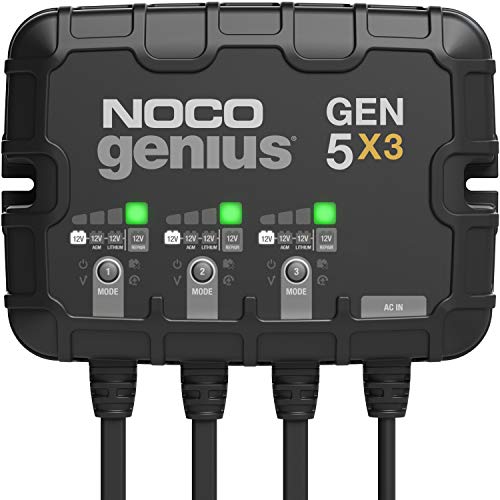
Best for boat operators who want a compact, powerful charger with flexible mode options. Each bank delivers up to 5 A, enabling simultaneous charging of multiple battery types while maintaining heat-aware operation. The GEN5X3 supports 12V lead-acid, AGM, and lithium batteries, with a dedicated 12V Repair Mode for maintenance and recovery operations.
Who it’s best for: smaller to mid-sized boats that need a space-saving, highly capable onboard charger. Why selected: top-tier NOCO reliability, three independently controlled banks, and temperature compensation help maintain optimal battery health in variable marine conditions.
Caution: Despite compact size, proper mounting and ventilation are still required to manage heat during peak charging. Data indicates multiple modes per bank; ensure correct mode selection for LiFePO4 versus lead-acid to avoid improper charging.
FirstPower Pro Upgraded 10X3, 30A 3-Bank

This charger provides 10 A per bank across three banks, delivering a robust 30 A total. It is built for 12V SLA/AGM, LiFePO4, and calcium batteries with IP68 waterproof rating. Independent bank control and a Force Mode allow recovery charging for deeply discharged packs.
Who it’s best for: anglers and liveaboards who require continuous 24/7 charging with resilient waterproofing. Why selected: strong all-around performance, independent bank operation, and dead-battery recovery support enhance on-water reliability.
Caution: Some users may prioritize ultra-compact form factors; this unit is larger due to higher per-bank output and IP68 protection, so ensure fit in the available space on the vessel.
NOCO Genius GENPRO10X3: 3-Bank, 30A Onboard Charger
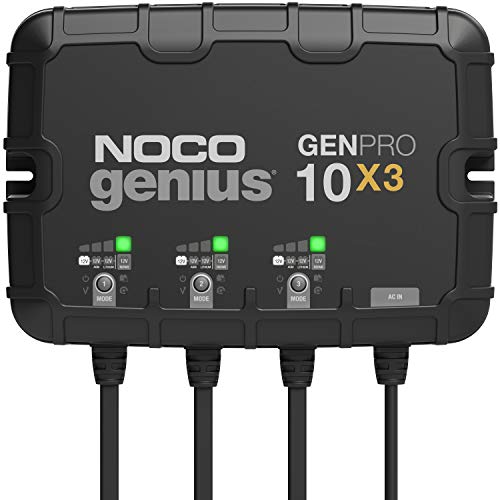
Engineered for harsh marine environments, the GENPRO10X3 offers three independent banks at up to 10 A each (30 A total). It supports 12V lead-acid, AGM, LiFePO4, and deep-cycle batteries with selectable modes per bank and a dedicated Repair Mode for dead or dormant packs.
Who it’s best for: bigger boats, fleets, or crews needing high-capacity simultaneous charging with robust protection. Why selected: best-in-class size-to-power ratio with advanced protection features and reliable NOCO engineering.
Caution: The higher output may require careful cable routing and adequate ventilation to manage heat during prolonged charging sessions.
Minn Kota 1823155 MK 315D Digital On-Board Charger

Weather-aware and digitally controlled, this three-bank charger provides a simplified, easy-to-read charging process with digital indicators. It performs automatic temperature compensation and LED status updates to guide maintenance decisions on the water.
Who it’s best for: boaters who value straightforward operation and clear charge-stage indicators. Why selected: reliable Minn Kota design, strong temperature compensation, and clear state feedback help minimize battery management guesswork.
Caution: Some users may prefer more customizable charging modes; this unit emphasizes ease of use over extensive configurability.
Buying Guide: Key Considerations For 3-Bank Marine Chargers
How many banks do you need? A true 3-bank charger can independently manage three 12V batteries, making it ideal for boats with multiple deep-cycle batteries or separate starting and house banks.
What battery types will you charge? If you operate LiFePO4 or calcium batteries, ensure the charger supports those chemistries, not just lead-acid or AGM. Some models offer LiFePO4 and calcium modes in addition to SLA/AGM.
What is the required per-bank current? Higher amperage per bank enables faster charging, but may require more space and heat management. Choose 5 A, 10 A, or 15 A per bank based on battery capacity and usage patterns.
Waterproof ratings matter. IP68-rated units excel in submersible or splash-prone environments, reducing worry about exposure near decks or bilge areas.
Temperature compensation and safety features help protect batteries. Look for voltage or temperature-sensing adjustments, overcharge protection, and a dedicated repair or recovery mode for deeply discharged batteries.
Installation and space. Measure mounting area and verify that the charger’s footprint fits your bilge or cabinet. Some units are more compact but may trade some features for space savings.
FAQ
- What is the advantage of a 3-bank charger on a boat? It allows independent charging for three batteries, reducing charge interference and improving overall battery health on boats with multiple banks.
- Can these chargers work with LiFePO4 batteries? Yes, many models advertise LiFePO4 compatibility in their modes, but verify supported chemistries before purchase.
- Is IP68 waterproof rating important? Yes, for marine environments. It indicates strong resistance to water intrusion, which is beneficial in wet or submerged conditions.
- What about dead batteries? Some chargers offer a Force or Repair Mode to begin charging deeply discharged cells and recover them.
- Do I need professional installation? Not always, but ensure proper wiring, fuse sizing, and ventilation. If unsure, consult a marine electrician.
- How do I choose between 5 A, 10 A, or 15 A per bank? Match the bank current to your battery capacity and charging time goals; higher per-bank current speeds charging on large or frequent-use batteries.