Answering the needs of boaters seeking compact, portable fuel solutions, a 3-gallon outboard motor gas tank offers a reliable balance of capacity, portability, and ease of use. This guide highlights five top options, each with different strengths—durability, compatibility, disposal of fumes, and handling. Ideal for small outboards, dinghies, or as a spare tank, these units are best for saltwater or freshwater use depending on build materials. The quick-reference table below helps you compare core features at a glance.
Quick product snapshot
| Product | Capacity | Best For | Key Benefit |
|---|---|---|---|
| Attwood 8803LP2 | 3 Gallons | Harsh environments, long trips | Automated vacuum valve for steady flow; automotive-grade multi-layer construction |
| AloneGoer 3 Gallon | 3 Gallons | Yamaha outboards, high-perf needs | HDPE-EVOH-HDPE barrier reduces fuel permeation; UV and salt spray resistant |
| LIZHOUMIL 3 Gal | 3 Gallons | Budget-friendly, easy transport | Clear fuel gauge and built-in filter; ergonomic I-shaped handle |
Below you’ll find five selected options with quick takeaways to help you choose the best tank for your boat and engine setup. Each entry notes who it’s best for, why it stands out, and a practical caution to consider.
Attwood 3-Gallon Portable Marine Fuel Tank

The Attwood 8803LP2 uses automotive-grade, multi-layer construction designed to withstand pressure in closed fuel systems. Best for boaters who need reliable performance in extreme environments, including temperature swings and heavy use. It features an automatic vacuum valve for steady fuel flow without manual venting. This tank is ideal for small to mid-size inflatables or as a spare tank for longer outings. A limitation is that the automatic venting assumes standard fuel system connections; verify compatibility with your fittings before use.
AloneGoer 3 Gallon Tank For Yamaha Outboards
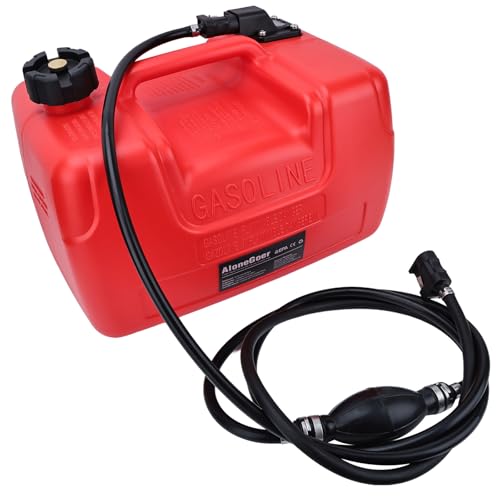
Best for Yamaha outboards and other small engines that benefit from a robust barrier system, this 12L/3G model uses an HDPE-EVOH-HDPE barrier to drastically reduce fuel permeation. It also offers UV stabilization and salt spray resistance for marine use. It’s a solid pick for a spare tank on saltwater boats or inflatable craft. A potential caveat is that the hose and connector compatibility should be confirmed with your Yamaha or engine model before buying.
LIZHOUMIL 3 Gallon Portable Gas Tank
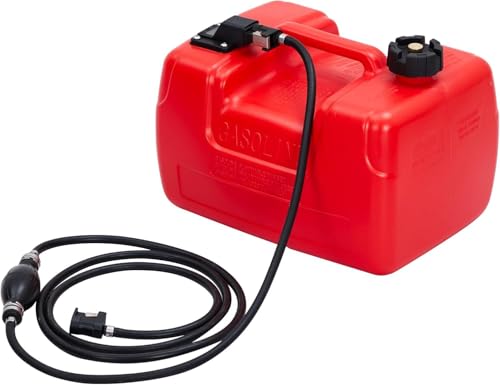
Best for casual boaters who want a budget-friendly option with practical touches, this tank includes a transparent fuel gauge and an integrated filter. The ergonomic I-shaped handle aids carrying and refueling on deck. It’s well-suited for small powerboats and dinghies where ease of transport matters. A limitation is that the gauge is visual only; it does not provide precise digital readings.
PeakPursuit 3 Gallon Portable Tank With Hose

Designed for easy transport, this PeakPursuit option emphasizes an ergonomic I-shaped handle and a 9.8 ft hose for flexible placement on the boat. It includes a level gauge and a simple dual-venting system, suitable for boats that need reliable refueling with a standard 0.3-inch hose diameter. Best for deck boats and small sport vessels. Watch for storage size: it may take more space than compact models when fully filled.
PeakPursuit Marine Tank With Transfer Line

This PeakPursuit model emphasizes durability with a focus on a clear fuel level indicator and built-in filtration for cleaner fuel feed. The I-shaped handle and 12L capacity are well-suited for regular refueling on smaller to mid-sized vessels. A consideration is ensuring the hose and fittings align with your engine’s fuel intake to avoid leaks or pressure issues.
Buying Guide
What to consider when choosing a 3-gallon outboard fuel tank:
- Compatibility: Check hose length, inner diameter, and fittings to match your engine’s fuel line and deck fittings.
- Durability: Look for HDPE or multi-layer constructions; UV stabilization helps extend life in sun-exposed areas.
- Ventilation: Dual-venting systems and vented caps reduce vapor buildup but require proper use during fueling.
- Fuel containment: Barrier technology (HDPE-EVOH-HDPE) can dramatically reduce permeation, saving fuel and reducing odors.
- Portability: Ergonomic handles, under-seat storage compatibility, and overall weight influence on ease of transport.
- Monitoring: Built-in gauges help track fuel levels; choose gauges that suit your preference for visual vs. digital readings.
Choosing by use-case:
- Saltwater and harsh environments: Prioritize UV stabilization, corrosion resistance, and multi-layer barriers.
- Small outboards or inflatable boats: A compact size with a light carry weight and a secure cap helps simplify refueling on deck.
- Spare tanks: Look for easy storage, straightforward hose connections, and compatibility with common Yamaha or other marine fittings.
Important safety notes: Always store fuel away from heat sources, ensure proper venting when refueling, and inspect hoses for wear before each trip. For applications near living spaces or enclosed compartments, verify local regulations about portable fuel storage and venting requirements.
FAQ
- Q: Are all 3-gallon tanks EPA & CARB compliant? A: Many models are designed to meet EPA and CARB standards, but always confirm the certification in the product listing or documentation.
- Q: Which tank is best for a Yamaha outboard? A: The AloneGoer option explicitly mentions compatibility with Yamaha connectors, making it a strong match for Yamaha outboards.
- Q: Do these tanks come with hoses? A: Several include hoses or specify standard hose compatibility; check each product’s features to confirm included accessories.
- Q: Can I store these under seats? A: Some models feature compact dimensions and under-seat-friendly profiles, but verify dimensions for your boat’s storage space.
- Q: What should I do to prevent fuel permeation? A: Look for multi-layer barrier technology such as HDPE-EVOH-HDPE and ensure proper ventilation during fueling.
- Q: How long does a 3-gallon tank typically last for a small outboard? A: It depends on engine size, load, and speed; use the tank’s gauge to estimate remaining fuel during trips.