Yes, a 36-volt charger can efficiently power your boat’s LiFePO4 or lead-acid systems. This guide highlights five purpose-built options for boaters who need reliable, safe charging in harsh marine environments. Each pick targets different battery chemistries and installation needs, from compact onboard banks to high-current fast charging. Best for complex 36V setups are listed, with who they suit and why they’re selected. Read on to compare features, limitations, and ideal use cases at a glance.
| Product | |||
|---|---|---|---|
| NOCO Genius GEN5X3 | 3-bank, 12V banks (Total 15A) | Marine systems with mixed batteries | Independent bank control with multiple modes |
| NOCO Genius PRO GENPRO10X3 | 3-bank, 12V banks (Total 30A) | High-capacity deep-cycle sets | Higher overall current per bank |
| RALBIL 36V 25A | 36V LiFePO4 charger | Fast LiFePO4 charging on boats | 25A high-current, efficient LiFePO4 charging |
| LiTime 36V 15A | LiFePO4 36V charger | Portable, flexible on boats | Smart 3-stage charging with activation feature |
| KAISAL 36V 18A | 36V LiFePO4 charger | Wide compatibility for various 36V systems | 5-stage smart charging with status indicator |
NOCO Genius GEN5X3: 3-Bank 15A Marine Charger
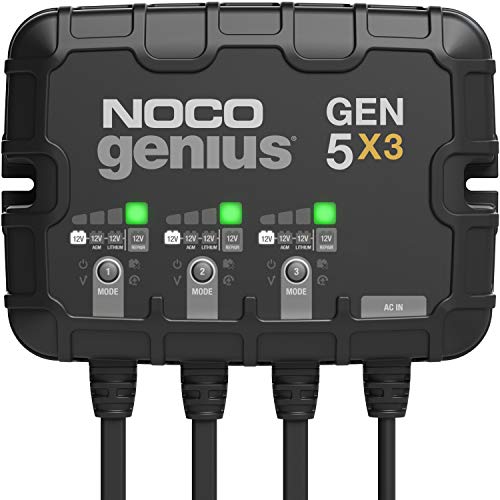
Best for mixed-battery boats needing independent bank control. The GEN5X3 provides three banks totaling 15A, with 5A per bank. It supports 12V lead-acid and lithium options, plus AGM and repair modes. Independent charging for starter, deep-cycle, and trolling battery banks makes it suitable for boats with varied needs.
Why chosen: compact, corrosion-resistant marine design with temperature compensation to protect sensitive cells. Caution: installation requires space for three banks and wiring complexity.
Best for: boats with multiple battery types and a need for per-bank monitoring and maintenance.
NOCO Genius GENPRO10X3: 3-Bank 30A Marine Charger
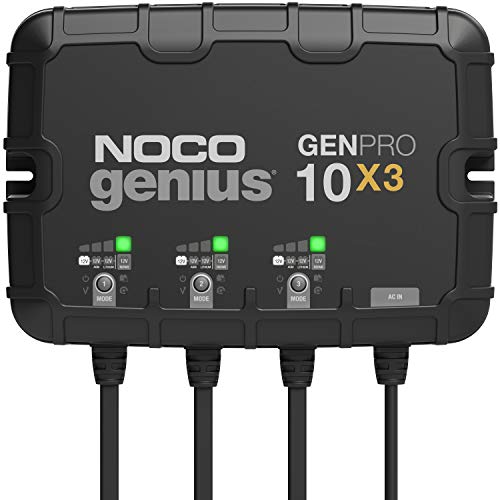
Best for higher-demand 12V battery banks aboard boats. The GENPRO10X3 delivers 30A total (10A per bank) and supports 12V, AGM, and Lithium modes with a Repair Mode. It’s ideal for larger boats or systems with multiple deep-cycle batteries needing faster overall charging.
Why chosen: stronger per-bank output improves charging times for demanding setups. Caution: higher power draw may require robust shore power or alternator support; check wiring and space for three banks.
Best for: vessels with substantial 12V battery capacity and a need for faster maintenance charging.
RALBIL 36V 25A LiFePO4 Charger

Best for fast LiFePO4 charging on 36V systems. This charger delivers 43.8V at 25A, suitable for golf carts, trolling motors, boats, and RVs using LiFePO4. It emphasizes efficiency and compact installation with two mounting options.
Why chosen: high-current LiFePO4 charging in a compact form factor. Caution: not compatible with lead-acid chemistries; verify battery type before use.
Best for: LiFePO4-based 36V configurations requiring quick top-offs and strong efficiency.
LiTime 36V (43.8) 15A LiFePO4 Charger
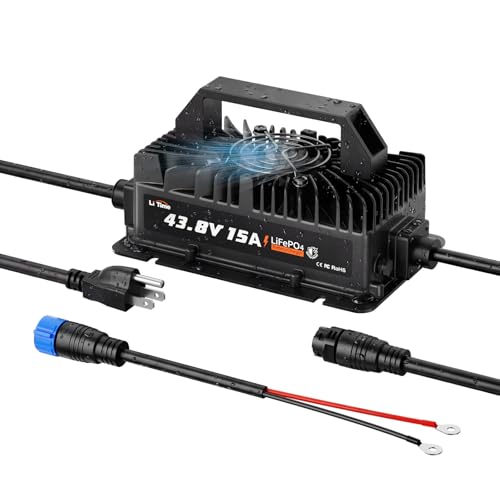
Best for portable, flexible LiFePO4 charging with activation feature. This 36V charger uses a 3-stage approach and includes a battery activation function to wake up deeply discharged packs. Its IP66 rating and rugged housing suit marine environments.
Why chosen: activation function helps recover sleeping batteries, and the rugged build suits outdoor boat use. Caution: activation feature may extend charging time on severely depleted packs.
Best for: boats with LiFePO4 packs that occasionally reach deep-discharge states and require wake-up charging.
KAISAL 36V LiFePO4 Charger

Best for broad compatibility across 36V LiFePO4 systems. This charger handles a wide range of 36V applications—from golf carts to trolling motors and boats. It uses a 43.8V, 18A output and provides color-coded status indicators for easy monitoring.
Why chosen: versatile connectivity and clear status indications aid in straightforward maintenance. Caution: designed primarily for LiFePO4; confirm battery chemistry before use.
Best for: owners seeking a versatile LiFePO4 charging solution with simple status insights.
Buying Guide: 36V Boat Battery Chargers
- Battery chemistry: Confirm LiFePO4 vs. lead-acid, AGM, or multi-chemistry support. Some chargers are chemistry-specific and won’t work safely with others.
- Current and bank configuration: Decide between single-bank vs. multi-bank; higher per-bank current reduces charging time for large packs.
- Protocols and modes: Look for 12V, AGM, Li, and Repair/Activation modes to cover different battery states and maintenance needs.
- Waterproofing and durability: Marine-grade IP ratings and rugged housings extend life in salt air, spray, and vibration.
- Install footprint: Ensure mounting options, cable lengths, and connectors fit your boat’s layout and electrical panel.
- Safety protections: Overcurrent, overvoltage, short circuit, reverse polarity, and thermal protection are essential for marine use.
- Monitoring features: LED indicators or displays help you gauge charging status and health quickly on the go.
FAQ
- What 36V charger should I choose for LiFePO4 boats?
Choose LiFePO4-specific chargers like the RALBIL, LiTime, or KAISAL options for best compatibility and fast charging.
- Can I use a 36V charger for a mixed battery bank (LiFePO4 and lead-acid)?
Only if the charger explicitly supports mixed chemistries; otherwise use separate chargers per battery type.
- Is higher amperage always better for marine batteries?
Higher amperage reduces charging time but requires adequate shore power and wiring. Match to battery capacity and system design.
- Do these chargers wake up deeply discharged LiFePO4 batteries?
Some models offer activation or wake-up modes; verify the specific model features before relying on wake-up.
- What maintenance should be done after installing a marine charger?
Regularly inspect connections, ensure seal integrity, and check for corrosion or loose terminals in a marine environment.