Answering the question “which 40 horsepower outboard motor should I choose?” this guide highlights practical options and clear comparisons for buyers seeking reliable propulsion for inflatable boats, small fishing craft, or compact sailboats. The top picks here are aimed at hobbyists and small-boat users who want dependable CDI ignition, effective water cooling, and straightforward controls. Each product section explains who it’s best for, plus a concise caution to help you decide.
| Product | HP Range | Shaft Type | Best For |
|---|---|---|---|
| BJTDLLX Outboard Motor | ~18 HP | Short Shaft 40 cm | Inflatable and small fishing boats |
| NAZEAOB Outboard Motor | ~18 HP | Long Shaft | Medium-sized boats needing extra reach |
| Nursia 20HP Four-Stroke | 20 HP | Standard Tillers | Small to mid-size marine vessels |
| COFECO 18HP 2-Stroke Outboard | ~18 HP | Short Shaft | Inflatables, kayaks, dinghies |
| PERFERATE 12HP 2-Stroke | 12 HP | Short Shaft | Lightweight boats and watercraft |
BJTDLLX Outboard Motor, 18HP 2-Stroke (246cc)

Power and versatility meet water-friendly design. This 2-stroke 18HP engine uses a CDI ignition system and water-cooling for reliable operation. It features a 40 cm short shaft and 360-degree steering, plus a 24L fuel tank included. Best for inflatable boats, small fishing dinghies, and compact sailboats needing maneuverability in tight spaces. Choose this if you want a compact, tiller-controlled motor with easy starting for calm lakes or rivers.
Best for: Inflatable boats and small fishing craft that require a compact, easy-to-handle engine.
Caution: Heavier loads can reduce acceleration; plan your payload accordingly.
NAZEAOB 2 Stroke 18HP Outboard Motor

Constructed from corrosion-resistant aluminium alloy, this 18HP motor emphasizes durability and load-bearing capacity. It operates in the 4,500–5,500 RPM range and provides a maximum load capacity around 2,204 pounds. Best for boaters who need robust power for faster cruising while carrying a moderate payload. The long shaft design helps with deeper-water setups and more clearance for longer propellers.
Best for: Small-to-mid-size boats that benefit from higher load tolerance and a longer shaft for better propeller clearance.
Caution: Heavier loads reduce speed; consider your typical load to optimize performance.
Nursia 20HP Four-Stroke Outboard Motor

This four-stroke option emphasizes reliability and smooth operation in marine environments. It features an integrated tiller handle and safety kill switch, with a three-blade propeller for solid thrust and maneuverability. Best for small to mid-size vessels seeking steady, predictable performance, such as light fishing boats or coastal cruising dinghies.
Best for: Boat owners prioritizing fuel efficiency and low-emission operation with a straightforward tiller control.
Caution: Four-stroke platforms can be heavier than two-stroke rivals; verify mounting compatibility with your transom.
COFECO Outboard Motor, 2-Stroke 18HP

This 18HP unit is designed for inflatable boats, kayaks, and small jon boats, offering a compact 2-stroke power plant with CDI ignition. Best for users who need quick starts and reliable operation in shallow-water craft. The short shaft helps with shallower water setups and easier mounting on lightweight boats.
Best for: Light, portable boats where easy starting and a compact footprint matter. Avoid this if high speed at heavy loads is required.
PERFERATE 12HP 2-Stroke Outboard Motor
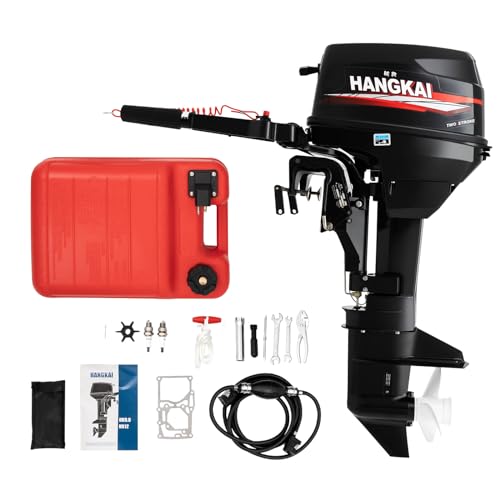
While rated at 12HP, this 2-stroke engine still offers solid thrust and a simple CDI ignition system with manual start. It uses a short shaft and provides practical performance for lightweight vessels like fishing skiffs and small dinghies. Best for budget-minded buyers who want a dependable, straightforward powerplant for modest loads.
Best for: Very light craft and budget-conscious boats where moderate speed and easy starting are priorities.
Caution: Lower horsepower means slower top speeds; ensure the engine meets your minimum performance needs.
Buying Guide: Key Considerations for 40 HP-Equipped or Similar Outboards
- Purpose and boat size: Match HP to boat weight, hull type, and typical load. Small inflatables benefit from lighter, compact engines, while mid-size boats may need more thrust.
- Fuel system and efficiency: Two-stroke engines offer lighter weight and quick response but can be less fuel-efficient than four-stroke units. Consider fuel availability and maintenance requirements.
- Shaft length and mounting: Short shafts suit smaller transoms and shallow waters; long shafts provide greater propeller clearance and better handling on larger craft.
- Ignition and starting: CDI systems provide reliable electric or manual starting. Confirm compatibility with your boat’s electrical system if required.
- Cooling method: Water cooling improves reliability in continuous use versus air cooling, especially in warmer climates or longer trips.
- Durability and materials: Aluminum alloy builds resist corrosion; consider environments (saltwater vs. freshwater) and maintenance routines.
- Maintenance and serviceability: Availability of spare parts, local service centers, and ease of annual maintenance impact long-term usability.
- Weight and handling: Heavier engines strain transoms and require proper mounting. Ensure your boat can safely support the engine’s weight.
- Warranty and support: Check manufacturer guidance and seller support for installation, troubleshooting, and parts availability.
FAQ
- What size outboard should I choose for a small inflatable boat? Best picks are in the 6–18 HP range for weight-sensitive inflatables; 18 HP options balance power and maneuverability.
- Do I need a long shaft for my boat? Long shafts provide more clearance for deeper water and larger propellers; short shafts are better for shallow-water craft and compact transoms.
- What maintenance does a 2-stroke engine require? Regular fuel/oil mixing, carburetor cleaning, and carburetor adjustments are common; check local service guidelines.
- Is a four-stroke engine more fuel-efficient than a two-stroke? Generally yes, but four-stroke units can be heavier and pricier; evaluate your typical use and weight constraints.
- Can I mix brands for accessories like covers? Yes, as long as mounting specifications and cover dimensions fit your engine’s size and mounting configuration.
- Are CDI ignition systems compatible with all boats? CDI systems are common, but verify electrical compatibility with your boat’s controls and kill-switch setup.