Answering the top buyer questions about 5 hp trolling motors, this guide highlights practical, saltwater- and freshwater-friendly transom-mount and kayak-ready options. Each pick suits different boat sizes, water conditions, and battery setups, helping you choose based on thrust, shaft length, and durability. The overview table below compares key specs to help you decide quickly.
| Product | Thrust (lb) | Shaft (in) | Best For | Notes |
|---|---|---|---|---|
| Minn Kota Endura C2 Transom-Mount Electric Trolling Motor – 30 Lb. Thrust | 30 | 30 | Small boats in freshwater | Lightweight, simple control |
| Newport NV-Series 36lb Thrust Trolling Motor | 36 | 30 | Kayaks, canoes, small boats | Balanced power and efficiency |
| Newport NV-Series 55lb Thrust Saltwater Transom | 55 | 30 | Larger small boats, saltwater | Higher thrust for windy days |
| BODIOO 55lb Thrust Trolling Motor | 55 | 30 | Freshwater or mixed conditions | 8-speed, extendable handle |
| Minn Kota Endura C2 Transom-Mount Electric Trolling Motor – 50 Lb. Thrust | 50 | 36 | Medium boats, freshwater | Stronger thrust with longer shaft |
Minn Kota Endura C2 Transom-Mount: 30 Lb Thrust
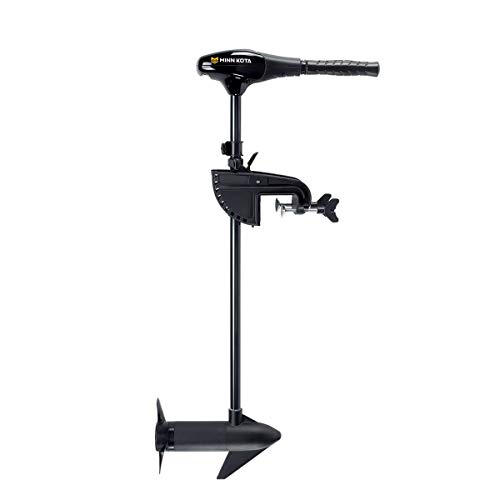
Best for lightweight freshwater boats. This model uses a 30 lb thrust with a 30-inch shaft and a 6-inch telescoping tiller for comfortable, all-day control. The prop is designed to power through light vegetation, and a push-to-test battery meter helps monitor power. It’s ideal for small aluminum boats or carry-on craft where simple setup and reliability matter. The 10-position lever lock bracket secures the motor angle for steady performance. Caution: lower thrust may be less effective in windy conditions or heavy current; consider a higher-thrust option if you regularly fish in rougher water.
Newport NV-Series 36lb Thrust: Versatile Small Boat Motor

Best for kayaks, canoes, and small boats needing portable, efficient propulsion. This model offers saltwater-ready hardware and a lightweight design with a 30″ shaft. The 2-blade propenge promotes battery efficiency, providing reliable, quiet operation for calm or moderate conditions. Choose this if you want a compact option that travels well and still offers solid thrust. Limitation: 36 lb is not ideal for larger vessels or heavy wind scenarios.
Newport NV-Series 55lb Thrust: Strong Performance
Best for boats that need more push in wind or current. The 55 lb thrust motor with a 30″ shaft and LED battery indicator provides robust power without excessive noise. The eight-speed setup (5 forward, 3 reverse) supports precise maneuvering. It’s suitable for saltwater or freshwater use and features an adjustable mount angle. Caution: higher thrust consumes more battery; plan for longer trips or larger battery capacity.
BODIOO 55lb Thrust: Quiet Power

Best for versatile freshwater use with strong torque. This 55 lb model offers an 8-speed system (5 forward, 3 reverse) and a 6-inch telescoping handle for precise control. The fiberglass composite shaft pairs with a die-cast aluminum head to withstand water exposure. Choose this if you want a quiet trolling motor with reliable mid-range power and a durable build. Limitation: heavier than smaller models; ensure your boat can accommodate the additional weight.
Minn Kota Endura C2 50lb: Strong All-Rounder
Best for medium boats in freshwater with higher power needs. This Endura C2 provides 50 lb thrust and a 36-inch shaft, plus the familiar tiller control and durable construction. The 10-position lever lock bracket ensures secure angling, and the power prop handles heavier vegetation. Avoid this if your craft is very small or you primarily fish in light currents where 30–36 lb thrust would suffice. Caution: the longer shaft may be less convenient on very small transoms.
Buying Guide
What size boat is the right fit?
Smaller craft typically benefit from 30–36 lb thrust. Mid-sized boats often perform well with 40–55 lb thrusts. Heavier boats or windy environments may require 55 lb or more for consistent control.
Which shaft length should you choose?
30″ shafts suit shallow or standard transoms; 36″ shafts offer deeper placement for higher hulls or rough waters. Select a shaft length based on your boat’s transom height and water conditions.
Freshwater vs saltwater durability?
Saltwater-rated motors have corrosion-resistant components. If you fish or sail in saltwater, prioritize models labeled for saltwater use or with aluminum or magnesium hardware and coated components.
Power vs battery life
Higher thrust drains batteries faster. For longer trips, pair a higher-thrust motor with a larger battery capacity or dual-battery setup. Consider motor efficiency, such as two-blade vs three-blade propellers, when evaluating runtime.
Controls and maintenance
Telescoping tillers increase comfort for long days. Look for features like a push-to-test battery meter and easy-angle adjustments. Regularly inspect prop pins, nuts, and washers to ensure easy installation and ongoing reliability.
Best for specific scenarios
- Best for small freshwater boats: 30 lb thrust options with 30″ shafts.
- Better for kayaks and canoes: 36 lb thrust with compact designs.
- Choose higher thrust for windy conditions or bigger boats: 55 lb and above.
- Avoid heavy consoles or very large boats with limited transom space from using longer shafts without space clearance.
FAQ
- What is the typical lifespan of a trolling motor?
- Is saltwater-rated essential for all water types?
- Should I choose a transom-mount or bow-mount trolling motor?
- How do I estimate battery needs?
- Can I install a trolling motor myself?
Durability depends on usage, maintenance, and environment. Most motors are designed for long-term use with regular care.
Only if you fish or operate in saltwater. For freshwater-only use, standard motors provide adequate durability.
Transom-mount is common and affordable for smaller boats; bow-mounts are for advanced setups and larger vessels requiring better thrust control.
Battery life depends on thrust, speed, and water conditions. Higher thrust requires larger capacity, or multiple batteries, to extend runtime.
Many models are designed for DIY installation with basic tools. Follow manufacturer instructions for bracket and prop assembly to ensure safe operation.