For buyers seeking a compact, gasoline-powered outboard in the 5 horsepower range, these options offer a balance of lightweight design, reliable ignition systems, and straightforward maintenance. This guide highlights five candidates best suited for inflatable boats, dinghies, small fishing skiffs, and kayaks that need dependable propulsion without heavy gear. Each pick is explained with who it’s best for, why it stands out, and a practical caveat to consider before buying.
Product Snapshot
- BJTDLLX 6HP Outboard Motor – Great for small crafts and versatile control
- 4 Stroke 7.5HP Outboard Motor by KTYHNPM – Best for steady power and smooth shifting
- 6.5HP 4 Stroke Outboard Motor by Goudergo – Strong, fuel-efficient option for longer trips
- CUKUSIN 4 Stroke 4HP Outboard Motor – Lightweight and easy to handle
- HANGKAI 4-Stroke 6HP Outboard Engine – Powerful for mid-size small boats
| Product | Engine Type | Power (HP) | Best For |
|---|---|---|---|
| BJTDLLX 6HP Outboard | 2-Stroke | 6 | Inflatable boats, small fishing crafts |
| 4 Stroke 7.5HP Outboard Motor | 4-Stroke | 7.5 | Stable cruising, longer trips |
| 6.5HP 4 Stroke Outboard Motor by Goudergo | 4-Stroke | 6.5 | Dinghies and tenders requiring efficiency |
| CUKUSIN 4 Stroke 4HP | 4-Stroke | 4 | Lightweight setups, kayaks, inflatables |
| HANGKAI 6HP 4-Stroke | 4-Stroke | 6 | Medium-sized small boats, reliable power |
BJTDLLX 6HP Outboard Motor

Engine Type: 2-stroke; Power: 6 HP. Features include a water cooling system to handle water resistance, 360° steering rotation for easy reverse, and a built-in tank with an option for external fuel supply. Best for small, sturdy inflatable boats or dinghies where quick maneuverability matters. Suitable for loads up to around 1000 kg with confident operation in calm to moderate waters. Caution: 2-stroke designs require oil mixing and more frequent maintenance than some 4-stroke models.
4 Stroke 7.5HP Outboard Motor by KTYHNPM
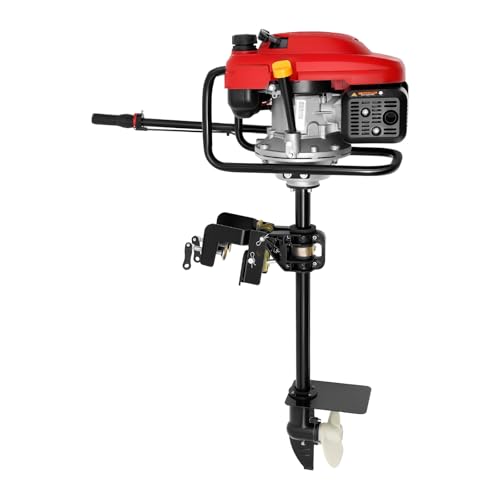
Engine Type: 4-stroke; Power: 7.5 HP. Notable for strong propulsion and a continuously variable transmission design that enables smooth gear changes, improving handling in tight spaces. It emphasizes good heat dissipation to avoid overheating during extended use. Best for boaters who prioritize steady cruising and easier throttle control with reduced maintenance shifting complexity. Caution: Slightly higher weight and power than a strict 5 HP class.
6.5HP 4 Stroke Outboard Motor by Goudergo

Engine Type: 4-stroke; Power: 6.5 HP. Features include a 123cc engine, 3-position tiller control with ergonomic handling, and a water-cooled design for consistent performance. Best for inflatable boats and small fishing skiffs needing reliable power with manageable fuel consumption. Caution: The 3.2-gallon fuel capacity is adequate for short trips; plan refueling for longer outings.
CUKUSIN 4 Stroke 4HP Outboard Motor

Engine Type: 4-stroke; Power: 4 HP. Highlights include a lightweight, portable build and 360° steering with manual reverse control for tight spaces. Best for small inflatable boats, kayaks, and canoes where a compact, easy-to-mount motor is preferred. Caution: Lower power means slower acceleration on larger craft or rough conditions.
HANGKAI 4-Stroke 6HP Outboard Engine

Engine Type: 4-stroke; Power: 6 HP. Delivers up to 750 kg thrust capacity and uses a 140cc displacement with a fuel-efficient design, featuring a TCI ignition and air-cooled system. Best for recreational or light utility use on small boats where you need consistent power and straightforward tilting control. Caution: Heavier than some 4 HP options; ensure transom mounting compatibility before purchase.
Buying Guide: Choosing the Right 5HP Class Outboard
What should you prioritize when selecting a small gasoline outboard?
- Power vs. Weight: Higher HP usually means more thrust but also more weight. Choose a model that matches your boat size and load capacity.
- Fuel Type and Efficiency: Two-stroke engines offer lighter weight and high power-to-weight but require oil mixing and more maintenance. Four-stroke engines are heavier but generally quieter and more fuel-efficient with longer lifespan.
- Cooling System: Water-cooled designs help prevent overheating on longer runs. Air-cooled units are lighter but may heat up faster under heavy use.
- Steering and Control: Models with 360° steering and tiler controls simplify maneuvering in tight spaces, especially on inflatables and kayaks.
- Fuel Capacity: Consider the fuel tank size or the option for an external tank for longer trips without frequent refueling.
- Mounting and Compatibility: Check transom height, shaft length (short vs. long), and mounting hardware to ensure a proper fit for your boat.
Frequently Asked Questions
- What is the typical weight range for these 5HP-class outboards?
– Most models in this category weigh between 20 and 40 pounds, with four-stroke variants often at the higher end due to additional components like fuel tanks and cooling systems. - Do two-stroke engines require oil mixing?
– Yes. Two-stroke outboards typically require premixing fuel with oil and regular maintenance to prevent engine wear. - Is a 6HP motor sufficient for a standard inflatable boat?
– For small inflatables and dinghies, a 6HP engine generally provides adequate thrust for cautious cruising and planing on light loads. Always verify manufacturer load ratings. - What maintenance is essential after long storage?
– Run fuel out of the carburetor, replace or top up gear oil as recommended, inspect the cooling system, and check for corrosion on metal parts, especially if stored in humid conditions. - Should I choose a 4-stroke over a 2-stroke?
– If you want longer-term reliability, quieter operation, and better fuel efficiency, a 4-stroke is typically preferable. For maximum power-to-weight and lower upfront cost, a 2-stroke can be advantageous, with more frequent maintenance requirements. - Can I mount any 5HP engine on my boat?
– Mount compatibility depends on transom thickness, shaft length, and mounting hardware. Always confirm transom compatibility and consult the manual before purchase.