Answering the needs of boaters who require reliable signaling on the water, these air horns are picks for safety, visibility in fog, and quick alerts. The top choices below are best for: small to mid-size boats needing Coast Guard approved devices, occasional sport boats for crowd attention, and emergency kits for rapid signaling. Each product section explains who it’s best for and why it stands out.
| Product | Brand | Type | Sound (dB) | Best For |
|---|---|---|---|---|
| ElectricWise 2 Pack 3.5oz Large Air Horn | ElectricWise | 3.5 oz, twin pack | 122 | Boat crews needing long-lasting, loud alerts |
| SeaSense Air Horn – Large Size 3.5 oz | SeaSense | 3.5 oz, large | 118 | Coast Guard–compliant signaling on larger boats |
| NUOVEPE 8.3oz Air Horn | NUOVEPE | 8.3 oz, high capacity | 120 | Emergency signaling with extended run time |
| Guard Dog Security Air Horn | Guard Dog Security | 1.4 oz, handheld | 120 | Quick, portable signaling in fog or crowds |
| Nicehill 1.4oz Air Horn | Nicehill | 1.4 oz, compact | 122 | One-touch signaling in tight spaces |
ElectricWise 2 Pack 3.5oz Large Air Horn

Two 3.5 oz blow horns deliver a high-volume warning with up to 122 dB, audible from about half a mile away. The larger canister reduces the need for frequent replacements, making it suitable for boaters who want extended use between recharges or replacements. It is Coast Guard approved and designed for boats up to 65 feet (20 meters).
Best for: Crew on mid-size boats needing reliable, long-lasting signaling in emergencies or fog.
Caution/limitation: Two-horn packs are heavier to store and require space; ensure proper mounting to avoid accidental discharge.
Guard Dog Security Air Horn

This handheld, 1.4 oz air horn blasts up to 120 dB from up to 1 mile away, offering a compact option for quick alerts on a boat, in fog, or during outdoor activities. It meets US Coast Guard requirements for safe boating signaling. Easy to stow on a boat, jet-ski, or dinghy.
Best for: Quick, one-handed signaling on small craft or for adding a portable safety option to an emergency kit.
Caution/limitation: Smaller canisters offer shorter run times; plan for contingencies on longer trips.
ElectricWise 2 Pack Air Horn 1.4oz
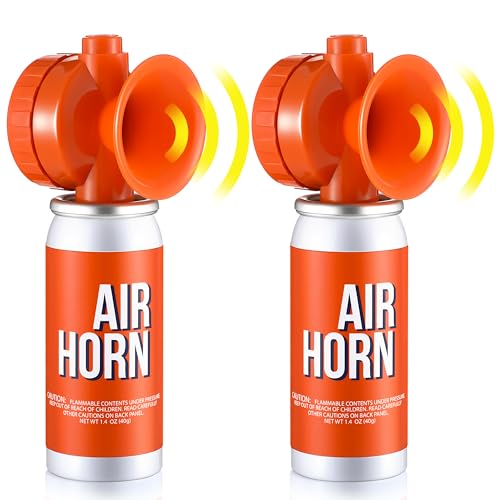
Two lightweight 1.4 oz horns offer up to 122 dB of sound and a signaling range of about 1/2 mile. These U.S. Coast Guard–approved units are portable, easy to carry, and suited for emergency signaling on boats up to 65 feet.
Best for: Boaters seeking a compact, transportable signaling solution that’s easy to store and quick to deploy.
Caution/limitation: Shorter run time than larger cans; consider pairing with a second unit for extended outings.
Air Horn 8.3oz For Boating

This 8.3 oz canister delivers a loud 120 dB signal with extended duration, suitable for boats up to 65 feet. It provides a longer warning blast and is Coast Guard approved for marine safety signaling. The larger canister is ideal for frequent signaling needs or longer trips.
Best for: Boats requiring substantial signaling time between replacements or those with longer cruising periods.
Caution/limitation: Heavier canister may take more storage space; ensure proper secure mounting to prevent movement.
Nicehill 1.4oz Air Horn
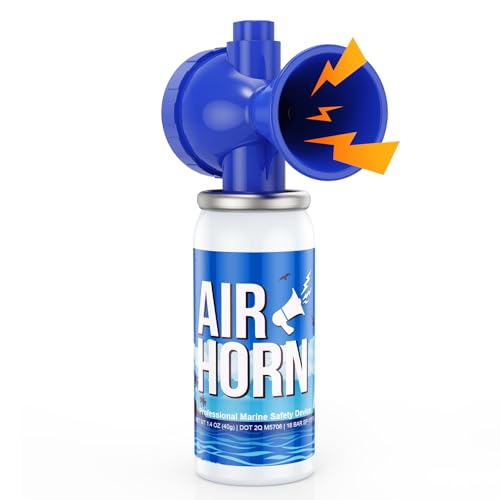
With 122 dB of output and a one-button operation, this compact horn is designed for straightforward emergency signaling. It requires no batteries or charging, offering immediate use when every second counts. Lightweight and portable makes it easy to carry on board or for personal safety signaling in outdoor activities.
Best for: Quick, battery-free signaling on smaller boats or during outdoor adventures where portability is key.
Caution/limitation: Very short run time due to small canister; consider keeping multiple units for extended trips.
Buying Guide
Key purchase considerations help match the right air horn to your boat and usage pattern.
- Canister size and runtime: Larger cans (like 8.3 oz) last longer between replacements, while 1.4 oz models are ultra-portable but may require more frequent use or additional units.
- Sound output and range: Typical boat horns range from 118–122 dB, with effective signaling from hundreds of meters to about a half mile. Choose according to boat size and typical signaling scenarios.
- Coast Guard approval: For safety compliance on U.S. waters, select products labeled Coast Guard approved for boats up to 65 feet/20 meters.
- Portability and storage: Smaller horns fit into grab-and-go kits or personal life vests, while larger cans suit fixed locations on deck or in tool compartments.
- Durability and weather resistance: Look for weather-resistant cans and sturdy diaphragms designed to withstand marine conditions.
- Use cases: Marine signaling, fog navigation, sporting events, and emergency preparedness have different emphasis on loudness, duration, and ease of use.
Frequently Asked Questions
- How loud should a boat air horn be?
Most marine horns operate in the 118–122 dB range. Higher dB levels offer longer signaling distances, but consider the environment to avoid startling nearby vessels unnecessarily.
- Are Coast Guard approved air horns required on boats?
Coast Guard approval is a common safety standard for boating equipment, but requirements vary by vessel and region. Check local regulations and ensure any horn meets the standard for your craft.
- Which horn size is best for a small fishing boat?
A compact 1.4 oz horn is often ideal for small boats thanks to portability and quick deployment, though carrying a second unit improves readiness for longer trips.
- Can I use air horns for signaling in fog?
Yes. Air horns provide audible signaling in fog or low-visibility conditions, helping to alert nearby vessels and the coast guard of your location.
- Is it better to have multiple horns or a single powerful horn?
Multiple smaller horns can offer flexibility and redundancy, while a larger canister provides longer signaling duration. Choose based on boat size, trip length, and storage space.
- Are there weather-resistant options?
Many marine air horns are designed with weather-resistant components; verify the product specifications for exposure tolerance and storage in your typical conditions.