Answering the search for a reliable all-electric outboard motor, this guide highlights five models that balance power, efficiency, and portability. Ideal for anglers, recreational boaters, and small craft crews, these motors minimize maintenance, reduce emissions, and keep noise to a minimum. The top picks are chosen for different boat sizes and water conditions, so you can match the motor to your needs—from calm lakes to saltwater adventures.
| Product | Thrust / Power | Best For | Key Benefit |
|---|---|---|---|
| Newport NT300 Electric Outboard Motor | 3HP Equiv. (1300W) | Long fishing trips, saltwater or freshwater | High thrust with long range and digital throttle |
| Newport NV-Series 55lb Thrust | 55 lb Thrust | All-day trolling, saltwater use | Low-noise, adjustable mount and battery meter |
| Minn Kota Endura C2 Transom-Mount | 30 lb Thrust | Kayaks, canoes, lightweight boats | Reliable, proven trolling motor for small vessels |
| 68LB Thrust Trolling Motor (BODIOO) | 68 lb Thrust | Medium boats, deeper water | Low fan-noise and real-time battery status |
| 45Lbs Thrust Electric Outboard (LKOBERTF) | 45 lb Thrust | Fishing kayaks, dinghies | Copper motor and adjustable speed for versatility |
Newport NT300 Electric Outboard Motor

Best for: anglers and boaters seeking quiet propulsion with solid range. The NT300 delivers about 110 lb of thrust equivalent with 1300 watts and a 66-mile single-charge range. It operates quietly and is designed for both saltwater and freshwater use, making it versatile for mixed-water trips.
Why selected: It combines digital throttle control, a clear LCD display, and a 24.6″ shaft with a 2-blade composite propeller. The trim/tilt options (0°, 7°, 14°, 21° / 70°) support responsive handling in varied conditions.
Limitation: Runtime and performance depend on boat weight, battery capacity, and environmental factors. The top speed is modest, prioritizing efficiency and range over raw speed.
Newport NV-Series 55lb Thrust Saltwater Transom Mounted Trolling Motor

Best for: saltwater trolling on larger, light-to-medium vessels where continuous operation is needed. This 12V trolling motor offers reliable power with a 30″ shaft and a 3-blade propeller, plus a 5-LED battery meter and 8-speed settings (5 forward, 3 reverse).
Why selected: High-quality construction resists corrosion, enabling all-day use without overheating or excessive noise. The adjustable mount and directional locks provide precise control for varied water conditions.
Limitation: Top speed is around 4 mph, so it’s most suitable for trolling and cruising rather than high-speed travel. Performance will depend on boat size and current conditions.
45Lbs Thrust Electric Outboard Motor (LKOBERTF)

Best for: fishing boats, canoes, kayaks, and small dinghies needing reliable thrust without gasoline. The motor uses a pure copper brush motor for stable output and long life, with a 5-forward/2-reverse gearing system.
Why selected: Durable copper motor and sturdy stainless steel bracket offer robust mounting and long-term usage in mixed water conditions. It’s designed for easy speed adjustment and stable performance at low to mid-range speeds.
Limitation: While powerful for its class, the overall thrust is moderate for larger fishing boats or high-wind days; pairing with a suitable battery is essential for expected runtime.
Minn Kota Endura C2 Transom-Mount Electric Trolling Motor
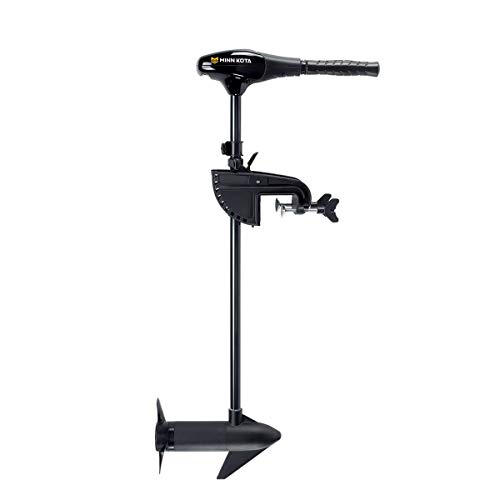
Best for: freshwater fishing on small to medium boats, kayaks, and canoes where dependability and simple control matter most. The Endura C2 features a 30″ shaft and 30 lb of thrust, with a proven track record for quiet, smooth operation.
Why selected: It offers a dependable telescoping tiller, push-to-test battery meter, and a robust lever-lock bracket for easy adjustments. The motor head is reinforced to resist marine wear and UV exposure.
Limitation: Lower thrust compared to larger models means it’s best suited for lighter vessels and calmer water conditions. It may require a larger battery or multiple batteries for extended trips on bigger boats.
Buying Guide
What to consider when choosing an all-electric outboard
- Boat size and weight: Heavier boats require higher thrust. Match motor torque to carrying capacity and desired speed.
- Water type: Saltwater models need corrosion-resistant construction. Freshwater setups may emphasize weight savings and efficiency.
- Battery compatibility: Confirm voltage, runtime expectations, and whether you need single or multiple battery configurations.
- Propeller design: A 2- or 3-blade propeller affects grip and efficiency in different conditions. Larger blades can push through slick water better; smaller blades reduce drag.
- Mounting and trim: Shaft length, transom compatibility, and tilt/trim range influence control and performance. Adjustable mounts improve handling in choppy water.
- Noise and emissions: All-electric motors reduce noise and do not burn fuel, offering a more peaceful boating experience and lower upkeep.
- Maintenance needs: Electric motors generally require less maintenance than gas engines but monitor seals, connections, and battery health.
Practical buying questions
- Is higher thrust always better? Higher thrust improves planing and movement in wind or current but drains battery faster.
- How important is shaft length? Longer shafts prevent cavitation and vibration in larger boats or choppy water.
- Should I choose a trolling motor or a primary outboard? Trolling motors are ideal for precise control and quiet operation on small boats; primary outboards are for direct propulsion on bigger vessels.
- What maintenance should I plan for? Regularly inspect propellers, mounting brackets, and battery connections; keep corrosion protection intact for saltwater use.
- Can I use a single battery for all-day use? Depending on the model and load, one high-capacity battery may suffice, but plan for reserve capacity on longer trips.
FAQ
- What is the typical range of an all-electric outboard? Range depends on battery capacity, boat weight, and water conditions; many models are designed for multi-hour use rather than continuous full-power operation.
- Do all-electric motors require maintenance? They generally require less maintenance than gas engines, with emphasis on battery care and connection checks.
- Are these motors suitable for saltwater use? Many are designed for both saltwater and freshwater; confirm corrosion-resistant features when buying.
- Can I upgrade batteries later? Yes, many systems support battery upgrades or additional packs to extend runtime.
- Is oil-free operation a benefit? Yes. Electric motors produce no emissions and reduce fueling hassles, making them cleaner and easier to operate.