Answering the common buyer question: which aluminum boat seam sealers deliver a reliable, durable seal for rivets, seams, and small holes? This guide highlights five practical options and explains who they’re best for. Whether you’re maintaining a trailerable aluminum boat or a larger hull, these products address leaks, weathering, and vibration-related stresses. The top picks cover epoxy sealers, gluvit-style coatings, barrier coats, fast-cure marine sealants, and quick-set putty designed specifically for aluminum surfaces.
Summary of chosen products:
- TotalBoat Aluminum Boat Leak Sealer — Best for quick, sturdy two-part epoxy repairs on rivets and seams.
- Travaco RM330K Gluvit Waterproof Epoxy Sealer — Best for sealing leaks around rivets and seams in hulls and decks.
- TotalBoat Aluminum Boat Barrier Coat — Best as a corrosion-preventing primer for underwater aluminum surfaces.
- Marine Adhesive Sealant 5200 Fast Cure — Best for permanent, watertight bonds above and below the waterline.
- STAR BRITE Waterproof Epoxy Putty Stick — Best for quick, emergency underwater repairs on aluminum parts.
TotalBoat Aluminum Boat Leak Sealer

Best for: Boat owners needing a reliable two-part epoxy that stays flexible and seals leaking rivets and seams on aluminum surfaces. Why selected: This product offers a long working time (about 75 minutes at 72°F) for thorough penetration and sealing. It absorbs stresses from contraction, vibration, and expansion, reducing the chance of re-leaks. It can be applied when surface and air temperatures are as low as 40°F, making it versatile for early-season or cooler-day repairs.
Limitations: Requires proper surface prep and mixing; not a quick-dry option if you need an immediate, temporary fix.
Travaco RM330K Marine-Tex Gluvit Waterproof Epoxy Sealer
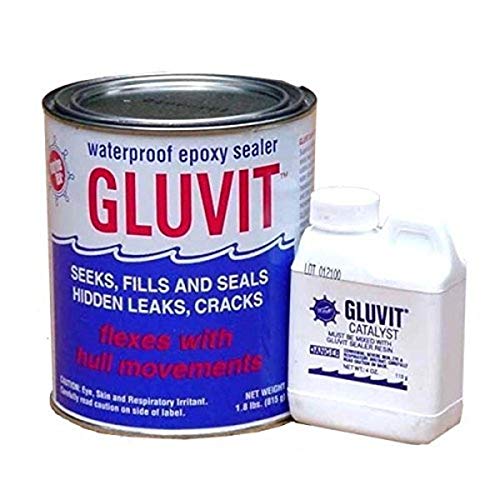
Best for: Mixed-material hulls where a barrier coat is needed to seal and protect aluminum, fiberglass, wood, or steel components. Why selected: Gluvit provides barrier-coat properties that seal leaky seams and rivets across multiple hull materials, offering robust protection for aluminum hulls and related structures. It helps prevent leaks around joints and areas prone to stress.
Limitations: May require compatible topcoats or follow-up coatings depending on usage; check surface compatibility for long-term UV exposure.
TotalBoat Aluminum Boat Barrier Coat (Quart, Gray)

Best for: Aluminum hulls requiring corrosion prevention and a solid base for subsequent coatings. Why selected: It is a high-build, two-component epoxy primer and barrier coat designed to protect underwater metals, including aluminum, and can be overcoated with bottom paints. It dries fast and requires no sanding between coats, which saves time on maintenance projects.
Limitations: It functions best as a primer; you’ll likely need additional top coats for full bottom-surface protection depending on use and environment.
Seam Sealer Automotive-Professional Grade High Strength Waterproof Adhesive

Best for: Auto and marine applications where an all-weather seam sealer is required for metal and plastic surfaces. Why selected: This product bonds to primed, painted, or bare metal surfaces and cures quickly, allowing painting in about 30 minutes. It’s designed for RV roofs, automotive seams, and similar joints, providing flexibility and durability in outdoor conditions.
Limitations: Primarily formulated for automotive and RV use; verify marine compatibility for permanent hull sealing in salty environments.
Marine Adhesive Sealant 5200 Fast Cure — White

Best for: Permanent, watertight seals above and below the waterline on boats, hulls, and fittings. Why selected: The 5200 Fast Cure provides a strong, flexible bond that tolerates hull movement and water pressure, with a 24-hour handling strength and UV resistance for long-term performance.
Limitations: It cures to a flexible seal rather than a rigid repair; ensure the surface is properly prepared and suited for a marine-grade sealant in your project.
STAR BRITE Waterproof Epoxy Aluminum Putty Stick

Best for: Quick, underwater, emergency repairs on aluminum parts, including boats and outdrives. Why selected: This putty is designed for rapid hardening and durable performance under water, offering a simple fix without draining or hauling the vessel.
Limitations: Not a long-term replacement for structural leaks; suitable as a temporary or patch solution in certain scenarios.
Buying Guide
What sealant should I choose for aluminum hulls?
Consider the type of leak and the surface condition. For rivet-and-seam leaks, two-part epoxy sealers like TotalBoat Leak Sealer provide strong, flexible seals with good resistance to vibration. For a barrier coat approach, Gluvit or Barrier Coat products help protect against corrosion and prepare the surface for paint or other coatings.
Do I need a quick-cure option or a long-working-time product?
Quick cures are ideal for urgent repairs where downtime matters. Long-working-time products offer more time to shape and ensure a thorough seal, which is important for irregular seams or complex hull areas.
What about underwater repairs?
Underwater or submerged repairs require putty or fast-cure adhesives designed to cure in wet conditions, such as STAR BRITE putty or 5200 Fast Cure, which maintains adhesion and flexibility under water.
Is a primer or barrier coat necessary?
For aluminum hulls, applying a corrosion-protective barrier coat before top coating can extend life and reduce future maintenance. Barrier coats also improve adhesion for subsequent paints and sealants.
What about compatibility and surface prep?
Most products require clean, dry surfaces and may specify priming or sanding. Always follow manufacturer instructions for surface prep, mixing ratios, cure times, and environmental conditions for best results.
How should I apply and cure the products?
Use the recommended applicator (caulk gun, putty knife, or brush) as specified. Apply evenly over seams and rivets, and avoid applying too thick a layer in one pass. Allow full cure times as directed before exposing the hull to water or load stress.
Maintenance and long-term care
Inspect seals regularly, especially after impact, hauling, or seasonal changes. Reapply or touch up as needed, and consider a full barrier-coat or professional inspection for older hulls showing signs of corrosion or fatigue.
Key purchasing considerations at a glance
- Leak severity and location (rivets vs. long seams).
- Need for barrier coats or primers.
- Time available for cure and exposure to water.
- Compatibility with aluminum and other hull materials.
Frequently asked questions
- What is the best sealer for aluminum boat leaks? — Two-part epoxy sealers offer durable seals for rivets and seams; consider barrier coats for corrosion protection.
- Can I use automotive seam sealer on boats? — Some formulations are designed for automotive use and may work in marine contexts, but verify marine compatibility and UV resistance.
- How long does a marine sealant take to cure? — Cure times vary by product; some fast-cure options reach handling strength within 24 hours.
- Do I need to sand before applying a barrier coat? — Many barrier coats dry without sanding, but always follow the product’s prep instructions.
- Can these products be applied in cold weather? — Some products specify applications down to 40°F; check the specific product’s temperature range.
- Is a primer necessary before top coating? — A barrier coat primer often improves corrosion resistance and adhesion for subsequent paints.