Answering the common buyer question: which anchor holder or roller setup works best for the front of a small to medium boat? The selections below cover a range of needs—from quick-release oar holders that double as light-duty anchor mounts to heavy-duty bow rollers designed for larger vessels. Each option is chosen for durability, ease of use, and suitability for front-more-anchor operations. The list highlights who each product is best for, and why it fits specific boat sizes and conditions. A concise summary table follows the intro to help compare options at a glance.
| Product | ||
|---|---|---|
| Attwood Standard Lift ‘n Lock Anchor Control | Small to mid-size boats | Economical steel with reliable lift-lock mechanism |
| Seachoice Utility Anchor w/ Slip Ring | Boats 15–19 ft | Easy retrieval with slip ring shank |
| Scotty Anchor Lock | Still-water fishing on small boats | Smooth operation with deck-mount options |
| ISURE MARINE Bow Anchor Roller | Yachts and larger skiffs | 14-in custom roller for self-launching |
| Pebbly Beach Bow Anchor Roller | 20–30 ft vessels, shore/shoreline keeps | 316 stainless steel with protective rubber roller |
Attwood Standard Lift ‘n Lock Anchor Control, Zinc-plated Steel

The Attwood anchor control uses zinc-plated steel to provide economical, durable support for anchors up to 20 pounds. It accepts lines from ¼ inch to 7/16 inch (line sold separately) and features a steel sheave to control the anchor from any position. This setup is best for small to mid-size boats where a simple, reliable front-mount anchor control is desired and where budget considerations matter.
Who this is best for: Buyers seeking a straightforward, affordable lift-and-lock anchor control for light-to-moderate loads on smaller craft. Why selected: combines essential lift-and-lock functionality with corrosion-resistant steel at a low cost. Caution: not ideal for heavy anchors or high-load, aggressive water conditions.
Seachoice Utility Anchor w/ Slip Ring, Size 7E
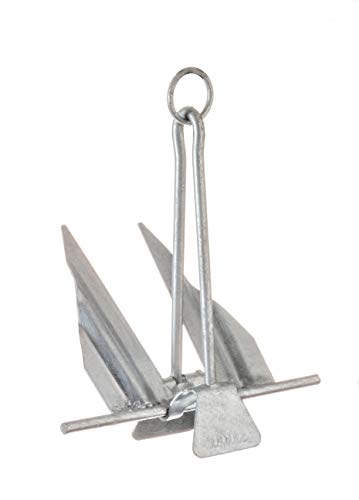
This galvanised steel anchor features a slip ring shank that simplifies retrieval if the anchor becomes stuck. It is recommended for boats between roughly 15 and 19 feet. The slip ring helps reduce the effort needed to free a bound anchor, making it a practical choice for fixed front-mount setups on coastally anchored boats or in varied seabeds.
Who this is best for: boaters who frequently anchor in mixed seabed conditions and require easier retrieval. Why selected: the slip ring design enhances ease of use. Caution: not ideal for very large boats or extreme tidal conditions where heavier anchors are needed.
Scotty #276 Anchor Lock

The Scotty Anchor Lock system, including No. 241 Combination Side/Deck Mount, provides easy lock and release action for anchor line adjustments. Built with rugged durability and a roller-bearing mechanism for smooth, quiet operation, this option is well-suited for small boats in still-water fishing situations where a reliable anchor lock is beneficial.
Who this is best for: anglers on compact craft needing precise line control and a quiet, dependable anchor lock. Why selected: strong construction with straightforward operation. Caution: may be more components to install than a simple mount on some boats.
Hitorhike Universal Anchor Mount

The HITORHIKE universal mount offers multi-directional locking and built-in anchor storage for anchors up to 5 pounds. It’s designed for kayaks and small boats, featuring a three-point rope feed design to simplify anchoring and retrieval. Note that anchors heavier than 5 pounds do not fit inside the mount, and anchors over 15 pounds are not compatible.
Who this is best for: smaller watercraft and light anchors where integrated storage is a priority. Why selected: compact, low-profile design that stabilizes anchors effectively on light loads. Caution: limited weight capacity may restrict use with heavier gear or longer runs.
ISURE MARINE Bow Anchor Roller

This 15-inch bow anchor roller features a universal fit for easy mounting on most bows, with a roller size designed to facilitate smooth lowering and weighing of anchors. It is intended for marine yachts and larger fishing boats that require reliable self-launching capability at the bow.
Who this is best for: boat owners seeking a dedicated bow roller for easier anchor deployment on mid-to-large craft. Why selected: robust rollers improve handling in rougher water. Caution: compatibility should be checked with existing bow geometry and mounting space.
Pebbly Beach Bow Anchor Roller

This 6.5-inch heavy-duty bow roller uses marine-grade 316 stainless steel with a mirror finish and a high-elasticity rubber roller to minimize hull contact and protect paint. It supports anchors up to 35 pounds and suits boats in the 20–30 foot range, offering reliable protection and simple handling for regular anchoring at the bow.
Who this is best for: mid-to-large vessels needing durable, hull-safe anchor handling with a protective roller system. Why selected: excellent corrosion resistance and strong load support. Caution: larger anchors may exceed the stated compatibility; verify weight capacity before installation.
Buying Guide: Key Purchase Considerations For Front-Bow Anchor Holders
What boat size and anchor load should you plan for?
Choose anchor hardware that matches your boat length and average anchor weight. Lighter, economical options work well on small boats with light anchors, while mid-to-large crafts benefit from rollers and locks designed for higher loads and easier handling.
What mounting style fits your deck layout?
Consider whether you need a deck-mount, side-mount, or universal mount. Front-bow applications often favor easy-access, low-profile rollers or lift-lock anchors for quick deployment and retrieval in varying conditions.
Is corrosion resistance important in your environment?
Coastal or saltwater use benefits from galvanized or stainless steel components to resist rust and extend service life. Polymer-coated options may also offer protection against corrosion in harsh environments.
Do you require built-in storage or a simple locking mechanism?
Storage-enabled mounts reduce clutter and protect the anchor when not in use, while locking mechanisms ensure the anchor stays secure during transit and rough seas.
What are the typical seabed and weather conditions you face?
Deeper seabed or heavy current may demand stronger rollers and higher-capacity anchors. For calm inland waters, lighter options with straightforward retrieval may suffice.
Maintenance and installation considerations
Check mounting hardware, alignment with the bow, and compatibility with your line size. Ensure you have the appropriate tools and space for installation and routine inspection.
FAQ
- What is the best anchor holder for small boats? A simple lift-and-lock control or a compact anchor mount with basic locking features works well for small boats needing reliable front-mow anchoring without complex installation.
- Can I use a bow roller on a kayak or canoe? Yes, but ensure the roller capacity and mounting design fit the vessel’s dimensions and intended loads.
- Is a slip ring necessary for anchor retrieval? A slip ring helps reduce effort when retrieving an entangled anchor and is beneficial in frequent anchoring scenarios.
- Should I prioritize stainless steel or galvanized steel? Stainless steel offers superior corrosion resistance, while galvanized steel provides a cost-effective option with adequate durability in many marine environments.
- What maintenance is needed for bow anchor systems? Regularly inspect mounting hardware, lubricate moving parts, check for corrosion, and verify that lines and anchors move freely through rollers or locks.
- How do I choose the right weight for my anchor? Match the anchor weight to your boat size and typical water conditions, favoring higher-capacity options for rough seas and larger vessels.