Answering your search for antifouling paint for fiberglass boats, these selections focus on protecting hulls from barnacles, weeds, and slime while staying user-friendly for marinas and DIY painters. Ideal buyers include frequent saltwater users, weekend sailors, and work boats seeking single-season protection with easy cleanup. Below is a quick buying guide table of the five highlighted products, followed by detailed sections for each option.
| Product | Best For | Coating Type | Water Type |
|---|---|---|---|
| TotalBoat Underdog (Blue, Gallon) | Frequent saltwater sailors | Ablative/Hybrid | Salt & Fresh |
| TotalBoat JD Select Ablative (Black, Gallon) | Low-odor, easy cleanup lovers | Ablative | Salt & Fresh |
| Interlux BottomKote NT (Black GAL) | Marina-friendly, low odor | NT Bottom Paint (Non-Toxic) | Salt & Fresh |
| Rust-Oleum Marine Flat Boat Bottom (Black, Quart) | Budget-conscious projects | Copper-release | Salt & Fresh |
| TotalBoat Krypton Copper Free (White, Quart) | Silver lining for aluminum/outdrives | Copper-free Ablative | Salt & Fresh |
TotalBoat Underdog Marine Antifouling Bottom Paint (Blue) for Fiberglass

Best for boats used frequently in saltwater conditions. This economical antifouling bottom paint provides single-season protection with a copper biocide to deter barnacles and mussels from clinging to hulls. The coating is suitable for properly prepared fiberglass, wood, steel, and iron. Its ablative nature means the film wears away over the season, reducing paint buildup for easier reapplication next year. Clean-up is straightforward, and the durable finish stands up to trailering and beaching better than traditional ablatives.
Who it’s best for: sailboats and powerboats that see regular use and require a simple, cost-effective solution. Caution: the copper biocide may cause staining on some substrates if not applied evenly; ensure proper surface prep for best performance.
TotalBoat Underdog Marine Antifouling Bottom Paint (Black) for Fiberglass
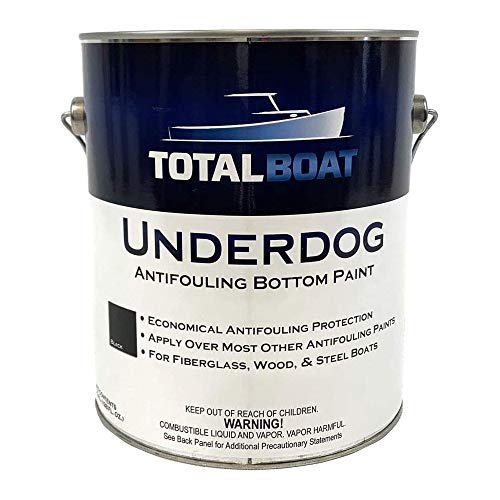
This option mirrors the blue Underdog in protection level and usability, offering an economical single-season antifouling solution with copper biocide. It fixes efficiently to properly prepared fiberglass surfaces and is especially effective for boats that operate in varied saltwater conditions. The durable finish stands up to trailering and beaching, reducing paint buildup over the season. Finish color can affect visibility for inspection and maintenance during haul-outs.
Who it’s best for: boaters seeking a budget-conscious, dependable solution with clear color alternatives. Caution: color appearance may vary slightly between batches; confirm color consistency prior to large projects.
TotalBoat JD Select Ablative Antifouling (Black) for Fiberglass

Best for marinas and environmental restrictions, this ablative antifouling paint wears away as the boat travels, minimizing buildup and making next-season sanding easier. It’s a low-odor, low-VOC, water-based formula with easy soap-and-water cleanup—handy for boats in restricted yards or tight marinas. It’s compatible with fiberglass, wood, and steel in both salt and freshwater. The trade-off is that the coating’s wear rate depends on usage, so boats with long idle periods may see quicker depletion.
Who it’s best for: operators who prioritize easy cleanup and lower environmental impact. Caution: intermittent use may shorten coating life; plan reapplication before losing protection in high-traffic seasons.
TotalBoat JD Select Ablative (Blue) Antifouling Paint

Another ablative option from the JD Select line, this blue variant shares the same advantages: a self-polishing film that reduces buildup, maintains speed and fuel efficiency, and supports smooth launch after a season afloat. It’s suitable for fiberglass, wood, and steel boats in various waters. Low odor and cleanup make it marina-friendly. The main limitation is that performance depends on water movement; slow-moving boats may experience slower biocide release.
Who it’s best for: boaters who want a high-visibility blue shade with reliable ablative performance. Caution: ensure proper surface prep; poor prep can hinder adhesion and performance.
Interlux YBB379G Bottomkote NT for Fiberglass

Specially formulated for fiberglass, BottomKote NT is a non-toxic, water-based option designed for marinas and restricted environments. It provides antifouling protection while aiming to minimize environmental impact. This NT (non-toxic) formula may suit readers who prioritize lower chemical exposure and simpler disposal. Performance depends on water flow and hull condition, so verify compatibility with routine maintenance plans.
Who it’s best for: boat owners in densely regulated marinas or those seeking lower-toxicity products. Caution: availability may vary by region, and some users may see slower initial biocide release compared to traditional copper-based paints.
Rust-Oleum 396967 Marine Antifouling Paint (White/Black) Quart

Rust-Oleum’s copper-release formula suits fiberglass, wood, or steel hulls, releasing copper gradually to deter fouling. It offers relatively broad coverage and a practical recoat window, making it a solid option for budget-minded projects. Best for boats that need a straightforward coating with predictable recoat timing. Limitation: copper-based paints can require careful handling and surface preparation to avoid streaks or uneven color.
Who it’s best for: DIYers seeking a cost-efficient solution with proven copper-release mechanics. Caution: follow ventilation and safety guidelines when applying and disposing of copper-containing products.
TotalBoat Krypton Copper Free Antifouling (White) Quart

Copper-free formula designed to avoid galvanic concerns on aluminum boats, outdrives, and trim tabs. This ablative paint provides single-season protection in fresh, salt, and brackish water with aluminum-friendly performance. Colors stay brighter without copper biocide, which can be advantageous for visibility and inspection. The lack of copper may influence long-term fouling resistance compared to copper-based paints, so match to usage patterns accordingly.
Who it’s best for: aluminum boats, outdrives, and trim-tab applications needing a bright finish without copper concerns. Caution: copper-free formulas may exhibit different wear rates; plan for timely reapplication based on boat activity.
Buying Guide: Key Purchase Considerations
- Boat type and material: Fiberglass, wood, steel, and aluminum surfaces may require different antifouling chemistries. Choose accordingly.
- Water type and usage: Saltwater boats with frequent use benefit from ablative or hybrid films; occasional freshwater use may favor simpler formulations.
- Environmental considerations: Low-VOC and low-odor options help with marina regulations and indoor prep spaces.
- Recoat window and maintenance: Ablative paints wear away with movement; plan reapplication timing around haul-outs and dry-dock schedules.
- Coating life and cleanup: Some products favor easy soap-and-water cleanup; others emphasize durability against trailering and beaching.
- Copper vs. copper-free: Copper-based paints deliver strong fouling resistance but require care around aluminum and galvanic considerations; copper-free options reduce corrosion risk for non-ferrous hulls.
Frequently Asked Questions
- What antifouling paint is best for fiberglass boats?
Answer: An ablative or hybrid antifouling designed for fiberglass provides single-season protection and ease of reapplication, such as TotalBoat Underdog or JD Select Ablative variants. - Do copper-based antifoulings work in freshwater?
Answer: They can work in freshwater but may require different maintenance schedules; always follow the manufacturer’s guidance for freshwater use. - Are low-VOC antifouling paints effective?
Answer: Yes, many low-VOC formulas offer effective protection with easier cleanup, especially for marinas with environmental restrictions. - How often should I recoat antifouling paint?
Answer: Recoat timing depends on usage and water conditions; ablative coatings wear during use, while hard, non-ablative options may last longer in light-use scenarios. - Is copper-free antifouling safer for aluminum hulls?
Answer: Copper-free formulas reduce galvanic corrosion risk and are typically preferred for aluminum boats and aluminum outdrives. - Can I switch between copper-based and copper-free paints?
Answer: Yes, but ensure proper prep between formulations and verify compatibility with the current coating before applying a different system.