Answering the question for anglers and boaters: the right anchor system improves steadiness, reduces drift, and simplifies anchoring in varying water conditions. This guide highlights five top options and who they’re best for—from hands-free winches to simple manual anchors. Use this overview to compare deployment, maintenance, and storage needs at a glance.
| Product | Best For | Key Feature |
|---|---|---|
| Minn Kota Deckhand Electric Anchor Winch – DH-40 | Anglers who want hands-free control | One-Touch Automation with 40-lb capacity |
| Attwood 13710-4 Anchor Lift System | Boatowners seeking a durable lift and storage system | Heavy-gauge steel, self-lubricating nylon wheels |
| Scotty 276 Anchor Lock | Small boats needing quick lock-and-release | No. 241 mount; smooth operation |
| SandShark Premium Fluke Anchor | Lightweight, versatile fleet in varied waters | High-strength aluminum; strong hold |
| Lewmar Vector Manual Shallow Water Anchor | Manual, maintenance-light setup | No hoses or pumps; easy pull-rope deployment |
Minn Kota Deckhand Electric Anchor Winch – DH-40

The DH-40 provides automated anchor handling with a simple one-touch operation. Best for anglers who value hands-free anchoring and quick setup, this unit ships with 100 feet of 800-lb test nylon rope in a pre-spooled arrangement, ready for immediate use. It’s ideal for divers, campers, and boaters who anchor frequently and want consistent deployment with minimal effort. A universal davit allows mounting at the base or remote position and can store the anchor horizontally for compact stowage.
Who it’s best for: multi-scenario anglers who prioritize convenience and steady anchoring. Why selected: combines automation with strong rope and a flexible mounting option. Caution: heavier electrical components require power access and some boat layouts may need extra clearance for full operation.
Attwood 13710-4 Anchor Lift System

The Attwood lift system focuses on reliable drop, raise, and storage with heavy-gauge steel components and a durable powder-coated finish. Nylon wheels provide low-friction movement, reducing wear on the anchor line. This option is well-suited for boats that require a robust, mechanically simple setup and frequent anchor retrieval without electronic power dependencies.
Who it’s best for: boaters who want a sturdy, low-maintenance system for regular anchoring. Why selected: robust steel construction with self-lubricating wheels enhances longevity. Caution: heavier builds may demand more installation space and mounting effort.
Scotty 276 Anchor Lock

The Scotty Anchor Lock offers a dedicated locking mechanism for boats operating in still-water fishing conditions. It includes the No. 241 Combination Side/Deck Mount and a smooth lock-and-release action for adjusting the anchor line. This setup is ideal for compact boats and pontoons that require quick, simple anchoring in calm waters.
Who it’s best for: small boats needing fast, reliable anchor line adjustments. Why selected: compact design with a straightforward lock system. Caution: may be less ideal in strong currents or windy conditions where a heavier-duty solution is preferred.
SandShark Premium Fluke Anchor

SandShark’s fluke anchor is designed for all-around performance, with serrated edges to improve holding power in diverse seabeds. Constructed from high-strength aircraft-grade aluminum, this anchor is light for its size and resists shock. It’s especially suitable for boats in the 16–30 ft range, performing well in saltwater and freshwater alike.
Who it’s best for: boaters who want strong hold without heavy gear. Why selected: excellent balance of weight, strength, and holding power. Caution: aluminum construction requires careful storage to avoid dings during transport.
Lewmar Vector Manual Shallow Water Anchor
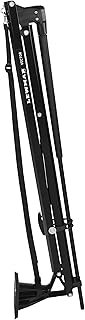
The Lewmar Vector is a simple, maintenance-light choice for shallow-water deployments. No hoses, pumps, or wires are required, and the pull-rope deployment makes setup straightforward. It’s compatible with aftermarket mounts and standard hole patterns for easy installation. This option works well for users who want a reliable manual system with quick setup.
Who it’s best for: boaters seeking a low-maintenance, wire-free anchor solution. Why selected: minimal components simplify installation and upkeep. Caution: manual operation may be slower in active conditions or with larger boats.
Buying Guide
What type of anchor system fits my boat size and water conditions?
For smaller boats and calm waters, a lightweight anchor with quick-deploy features can be ideal. Larger boats or mixed conditions benefit from reinforced steel lifts or electric winches for easier handling and consistency.
What maintenance should I expect?
Manual systems typically require less maintenance, while electric and lift systems need power considerations, corrosion protection, and occasional motor checks. Choose hardware with corrosion-resistant finishes for saltwater use.
Is storage space a concern?
If stowage space is limited, consider compact designs like the Anchor Lock or lighter fluke anchors. Some models offer horizontal stowage or remote mounting to minimize footprint.
How important is ease of installation?
Manual systems generally install quickly with standard mounting patterns. Electric or lift systems may require additional mounting hardware and space for the motor and wiring.
What are common limitations to anticipate?
Electrical components rely on power access; manual systems require physical effort. Some designs are better suited to specific seabed types, so match the anchor’s holding power to your typical water conditions.
FAQ
- What is the best anchor system for small boats? A compact lock or manual lift paired with a lightweight anchor is typically best for small boats in calm conditions.
- Do electric winches require maintenance? Yes. Regularly inspect wiring, motor mounting, and rope integrity to prevent failure during deployment.
- Which anchor holds best in sandy bottoms? Fluke-style anchors with serrated edges usually provide strong holding power in sand and mixed seabeds.
- Can I upgrade an existing boat with a new anchor system? Yes. Many systems are designed for universal mounting patterns, but confirm mounting dimensions and space before purchase.
- Are manual anchors harder to deploy in strong winds? Manual systems require more effort, but they offer reliability without power dependence in adverse conditions.
- Is it better to choose a heavy-duty anchor for saltwater? Heavier systems with corrosion-resistant finishes tend to last longer in saltwater and resist wear from frequent deployment.