Answer: For boat applications, choose rugged, corrosion-resistant battery cables with marine-grade insulation and secure lugs. The best picks below are suited to marine electrical systems, with clear guidance on suitability, benefits, and limitations. This list targets boaters, RV and solar enthusiasts who need dependable, easy-to-install power conductors that resist saltwater exposure and vibration.
Summary table of selected products:
| Product | Recommended Use | Lug Size | ||
|---|---|---|---|---|
| 4 AWG 6FT ABIGAIL | Main power runs on boat | 3/8 in | 6 ft | Pure copper, heat-shrink ends |
| 4 AWG 4FT ABIGAIL | Secondary run or inverter tie-in | 3/8 in | 4 ft | Flexible PVC, durable |
| CARTMAN 24-Inch 4AWG | Shorter jumper runs | SAE 4 GAUGE COPPER | 24 in | High current with robust lugs |
| Linkstyle 12 Inch 4 AWG (6 PCS) | Parallel or multi-point connections | 3/8 in | 12 in each | Tin-plated terminals |
| InstallGear 5 Gauge 10ft | Longer battery to inverter run | 2 sets red/black | 10 ft | Deoxigenized copper, full set |
4 AWG Battery Cable 6FT By ABIGAIL

Product highlights: Pure copper conductor with tinned copper lugs, improving oxidation resistance and conductivity. Flexible PVC insulation resists abrasion, moisture, and heat, with heat-shrink ends for insulation. Wide application across automotive, solar, marine, RV, motorcycle, and power inverter batteries.
Best for: Boat owners needing a long, robust main power cable with corrosion resistance and secure terminations. Selected for its combination of copper purity and durable insulation. Caution: Ensure the cable length fits your boat layout to avoid excess slack or tension.
A ABIGAIL 2 AWG Battery Cable 1FT

Product highlights: Pure copper with tin-plated lugs for corrosion resistance; flexible PVC insulation resists abrasion and moisture; ends sealed with heat shrink tubing for insulation. Broad use across automotive, solar, marine, RV, and electrical equipment.
Best for: Shorter runs or secondary connections where 2 AWG is sufficient and flexibility is prioritized. Caution: This is a smaller gauge than typical main boat battery runs; confirm amperage expectations before use in high-load circuits.
4 AWG Battery Cable 4FT By ABIGAIL
Product highlights: Pure copper, heat-shrink sealed ends, and flexible PVC insulation designed for harsh environments. Suitable for automotive, solar, marine, RV, and other electrical equipment.
Best for: Medium-length boat wiring where consistent current transfer is needed and a sturdy 4 AWG run is required. Caution: Like all battery cables, ensure connectors fit your lugs and stud sizes.
CARTMAN 4AWG 24-Inch Battery Cables
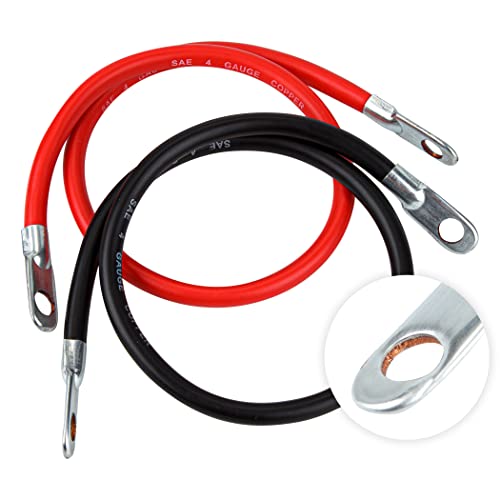
Product highlights: 4 AWG copper with 24-inch length; high-current capability with 3/8″ stud compatibility and zinc-plated copper lugs. Designed to reduce resistance and improve current flow under load.
Best for: Short, high-current power runs between battery and inverter or distribution block on smaller boats. Caution: Slightly longer than typical jump cables; check fitment in tight compartments.
Linkstyle 6 PCS 4 AWG Battery Cables (12 Inch)

Product highlights: Includes six 4 AWG cables, 12 inches long, with 3/8″ tin-plated copper lugs. PVC insulation offers wear resistance, waterproofing, and flame retardance for harsh environments.
Best for: Complex boating electrical layouts requiring multiple parallel or short run connections with consistent polarity. Caution: Short length means more connections, which can increase potential failure points if not properly crimped.
GEARit 8 Gauge Amp Wiring Kit

Product highlights: 8 AWG copper-clad aluminum wires with soft jackets for easy handling; includes 15 lugs and 20 heat shrink pieces for ready-to-use installation. Color-coded red and black for polarity identification.
Best for: Marine or automotive projects where lighter gauge wiring is adequate, supplemented by heat shrink and lugs for safe, organized wiring. Caution: Copper-clad aluminum is less conductive than pure copper; assess current requirements carefully.
A ABIGAIL 6 AWG 3FT Cable

Product highlights: 6 AWG pure copper with tinned lugs; heat-shrink insulated ends provide heat insulation and moisture resistance. Suitable for automotive, marine, and inverter connections.
Best for: Boats needing a tighter 3-foot run with reliable current transfer. Caution: Heavier gauge may be bulkier in crowded engine bays; verify routing space.
InstallGear AWG 5 Gauge 10ft Cables

Product highlights: Ten feet of 5 gauge inverter cables in red and black, with 99.9% deoxidized copper for low resistance. Includes an adjustable ring terminal set for flexible installation on boats or vehicles.
Best for: Longer runs from battery to inverter or distribution points, where 5 AWG provides a balance of flexibility and current capability. Caution: Slightly higher resistance than larger gauges; ensure gauge suits load requirements.
Buying Guide
- For most boats, 4 AWG to 6 AWG is standard. Choose thicker gauges for higher current or longer runs to minimize voltage drop.
- Pure copper offers superior conductivity and durability versus copper-clad aluminum. Tin-plated lugs improve corrosion resistance in salt air.
- Look for flexible PVC insulation that is water- and heat-resistant. Heat-shrink ends provide extra insulation and sealing.
- Ensure lugs match your battery terminals or inverter studs (common sizes include 3/8 in). Check stud diameter and bolt pattern.
- Choose cables rated for moisture, salt spray, vibration, and environmental exposure. Quick-disconnects or pre-crimped lugs can speed installation.
- Plan routing to avoid sharp edges, heat sources, and moving parts. Use protective loom or conduit in exposed areas.
- Turn off power before routing, verify polarity, and inspect crimps for secure connections. Replace frayed insulation immediately.
FAQ
- What gauge is best for a typical small boat battery to inverter run? Typically 4 AWG to 6 AWG is recommended, depending on distance and current draw.
- Should I choose copper or copper-clad aluminum? Copper offers better conductivity; copper-clad aluminum is lighter and cheaper but with higher resistance.
- Are pre-crimped lugs necessary? Pre-crimped lugs with heat shrink provide a reliable seal against moisture and corrosion in marine environments.
- How long should a battery cable be? Use the shortest practical length to minimize resistance and voltage drop, while allowing proper routing and strain relief.
- Can I mix gauges in a boat’s wiring? It’s best to use consistent gauges for a given circuit to avoid uneven current distribution; use larger gauges for main runs and smaller ones only where appropriate.
- Do weather conditions affect cable performance? Yes. Salt, humidity, and vibration can degrade connections, so choose marine-grade insulation and seal connections well.