Answering the demand for dependable trolling motor power, this guide highlights five top batteries that balance longevity, weight, and ease of use. It helps anglers and boaters choose the right 12V or 100Ah LiFePO4/NMC-style options for prolonged freshwater and saltwater use. Each pick targets specific needs: portability, integrated power hubs, deep cycle longevity, and cold-weather resilience. The following overview includes a quick buyer comparison table to aid side-by-side decisions.
| Product | Best For | Key Benefit |
|---|---|---|
| Newport 12V50Ah Deep Cycle | Lightweight trolling setups | Sealed AGM, easy transport |
| Newport Trolling Motor Smart Battery Box | Clean, organized power hub | Built-in USB and DC ports |
| SUPER EMPOWER 12V 100Ah LiFePO4 | Long life, high cycle count | High durability with integrated BMS |
| Lampword 12V 15Ah LiFePO4 | Portable, light portable power | Multiple cycles, wide temperature range |
| LiTime 12V 100Ah LiFePO4 (Group 31) | Bluetooth monitoring and cold protection | Smart app and robust protections |
Newport 12V50Ah Deep Cycle Marine Battery

Best for: boaters needing a lightweight, sealed power source for trolling motors. The Newport 12V50Ah is described as a lightweight deep cycle AGM design, enabling easy transport and installation on smaller craft. Its 32-pound weight helps reduce overall vessel heft while delivering steady trolling power. The sealed, leak-proof construction minimizes maintenance and corrosion risk in marine environments. This unit is suited for kayaks, small fishing boats, or coastal boats prioritizing portability.
Why selected: The combination of a compact weight, AGM technology, and trolling motor compatibility makes it a solid, straightforward option for those who want a reliable, low-maintenance deep cycle battery without extra bulk. The sealed design supports on-deck or in-gunnel mounting with less worry about spills.
Caution: This model is a single 12V cell pack. For longer trips, consider additional packs or a higher-capacity option to avoid runtime gaps during extended trolling sessions.
Newport Trolling Motor Smart Battery Box Power Center
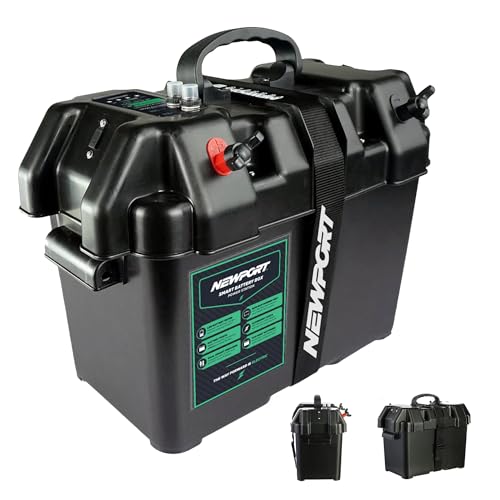
Best for: boaters who want a tidy, plug-and-play power setup with external connections. This battery box power center consolidates power management with built-in USB and 12V DC ports, reducing clutter on small boats, kayaks, or jon boats. The design emphasizes quick, clean connections for trolling motors, fish finders, and other electronics, making it ideal for anglers who value accessibility and organization on the water.
Why selected: It acts as a compact “all-in-one” hub, simplifying wiring and reducing exposed terminals. The external terminals enable fast connections without opening the battery box, which is convenient for in-field adjustments or upgrades.
Caution: It is a power center rather than a single high-capacity battery. Verify that your trolling motor and devices draw within the unit’s supported power range to avoid overloading.
SUPER EMPOWER 12V 100Ah LiFePO4 Battery

Best for: users needing a long-life, high-cycle LiFePO4 power source for trolling motors, RVs, or marine applications. This 12V 100Ah battery features a built-in BMS for protection against overcharge, over-discharge, short circuits, and temperature extremes. With a stated cycle durability suited for extended off-grid use, it targets those who require frequent cycling and reliable performance in variable conditions.
Why selected: LiFePO4 chemistry offers higher energy density, faster charging, and a longer lifespan than traditional lead-acid, making it a strong choice for long boating seasons or off-grid setups where battery replacements are costly.
Caution: The description emphasizes energy storage use; avoid using this as a cranking battery for engines. Ensure proper charging practices in cold or extreme temperatures to maximize lifespan.
Lampword LiFePO4 12V 15Ah Battery With Charger

Best for: portable power needs where weight and size matter. The Lampword 12V 15Ah LiFePO4 package emphasizes lightness and flexibility, suitable for small trolling motor applications, fish finders, or auxiliary power on compact vessels. It notes that multiple batteries may be needed for higher power requirements and demonstrates the advantage of LiFePO4’s higher energy density compared to lead-acid.
Why selected: Its LiFePO4 chemistry offers longer cycle life and stability with a wide operating temperature range, making it a good option for travelers who prioritize portability and consistent performance in variable environments.
Caution: For higher-power devices like larger trolling motors, plan parallel or series battery configurations to meet voltage and amperage needs. This unit alone may not support heavy trolling motor demands for extended trips.
LiTime 12V 100Ah Trolling Motors LiFePO4 Battery

Best for: boaters seeking smart monitoring and cold-weather protection with a robust BMS. The LiTime 100Ah LiFePO4 model includes Bluetooth monitoring to check battery status, discharge, and system checks remotely. Its low-temperature protection helps prevent charging in dangerously cold conditions, making it a practical choice for year-round use on lakes or coastal trips.
Why selected: The combination of Bluetooth status updates and a comprehensive BMS makes it easier to manage power without guesswork. The IP65 waterproof and dustproof rating adds resilience in wet environments typical of trolling motor setups.
Caution: Bluetooth connectivity adds a dependency on a compatible device and app. Ensure compatible gear and routine checks to benefit from the monitoring feature.
Buying Guide: Key Considerations For Trolling Motor Batteries
What capacity do I need?
Consider your trolling motor’s draw and expected runtime. Higher capacity (Ah) delivers longer runs between charges but adds weight. LiFePO4 options provide longer lifespans at similar or lighter weights compared to lead-acid.
Should I choose LiFePO4 or AGM?
LiFePO4 offers longer cycle life, faster charging, and better safety margins. AGM is often lighter on initial purchase but will degrade faster under repeated deep discharges. For serious trolling motor use, LiFePO4 is usually the more economical long-term choice.
What about weight and space on smaller vessels?
Lightweight, compact batteries reduce deck clutter and balance weight. For smaller boats, a 12V 50-100Ah LiFePO4 pack often provides a good balance between capacity and weight.
Is battery management important?
Yes. A Battery Management System (BMS) protects cells, manages charging, and prevents over-discharge. A built-in BMS is especially important for LiFePO4 packs used in marine environments.
What about cold-weather performance?
Some batteries include low-temperature protection to prevent charging in very cold conditions. If you operate in winter or high latitude areas, choose models with robust cold-weather handling.
What accessories improve usability?
Consider a battery box with integrated ports or a Bluetooth monitor. USB and 12V ports reduce wiring clutter, and monitoring helps prevent unexpected power loss on the water.
Safety and handling basics
Follow manufacturer guidelines for charging and storage. Do not mix chemistries, and avoid deep discharges beyond the recommended DOD to maximize cycle life.
Maintenance overview
Inspect connections for corrosion, keep terminals clean, and store batteries in a dry, ventilated area. LiFePO4 typically requires less maintenance than lead-acid options.
Which option should I pick?
Choose based on your vessel size, trolling motor power needs, and how often you boat. For light, portable setups, a smaller 12V LiFePO4 pack may suffice. For extended trips or larger motors, a 100Ah LiFePO4 battery with a solid BMS provides more dependable power and longevity.
Common questions
- Can I mix battery brands for a trolling motor? Answer: Mixing brands and chemistries can create unequal charging and reduced performance. Use matched packs when possible.
- Do I need a dedicated charger for LiFePO4 batteries? Answer: Yes. Use a lithium-specific charger or a charger compatible with LiFePO4 chemistry to avoid damage.
- What is the typical lifespan of a LiFePO4 trolling motor battery? Answer: Many LiFePO4 options offer thousands of cycles, often around 5,000 to 15,000 cycles depending on depth of discharge.
- Is a battery box necessary? Answer: Not strictly necessary, but it improves organization, safety, and ease of use on small boats.
- How does temperature affect performance? Answer: Extreme cold can reduce charging ability and efficiency; look for batteries with low-temp protection.
- What is a good practice for storage during off-season? Answer: Store in a cool, dry place and maintain a modest charge to preserve longevity.