Answer: A 12V battery monitor system helps you track voltage, current, and state of charge to protect batteries and prevent outages. This guide highlights five top options for different wants—from precise shunt-based monitors to Bluetooth-enabled guardians—so you can choose the right fit for cars, RVs, boats, and solar setups. Each pick targets a specific buyer: RV owners needing multi-battery vigilance, DIY solar enthusiasts, and those who value wireless alerts. Below is a quick comparison to help you decide at a glance.
| Product | Type | Best For |
|---|---|---|
| Renogy 500A Battery Monitor | Shunt-based, 12-120V | Accurate real-time monitoring for single large systems |
| ANCEL BM300 Pro | Universal 6V-24V with Bluetooth | Versatile, multi-vehicle setups; real-time alerts |
| ANCEL BM200-US Car Battery Tester | 12V with Bluetooth | Everyday vehicle battery health and quick tests |
| SUPNOVA IPX7 Waterproof Monitor | 7-100V, high protection | Outdoor/harsh environments; wide voltage range |
| BINTA Battery Monitor with Shunt | 8-120V, up to 500A | Powerful caravan/boat systems needing large capacity |
Renogy 500A Battery Monitor With Shunt
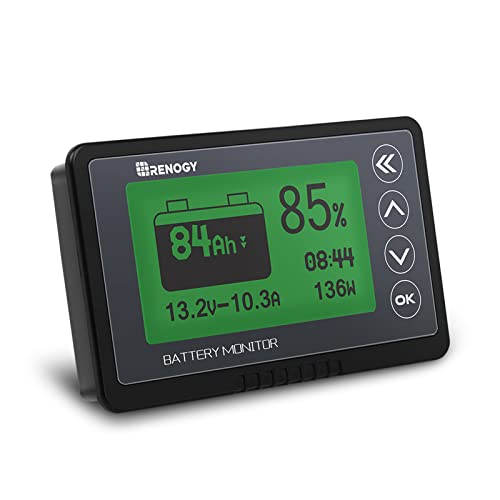
The Renogy monitor uses a shunt-type design to deliver high-accuracy real-time voltage and current readings. It includes high and low voltage alarms with backlighting to signal when the system is at risk of over-discharge. This unit is compatible with multiple battery chemistries, including Lead-Acid (AGM, GEL), Lithium Iron Phosphate, and Lithium-Ion. It supports batteries operating at 12, 24, or 48 volts, making it suitable for 12V systems and larger installations in RVs or boats. Best for: users who need precise monitoring for a single system and value clear alarms. Caution: ensure proper shunt placement and wiring to maintain accuracy across long runs.
ANCEL BM300 Pro Battery Monitor
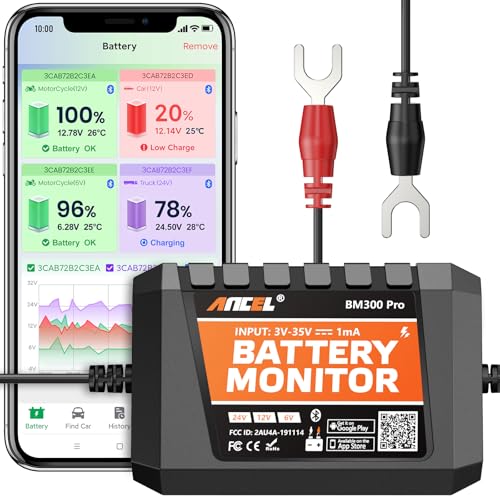
BM300 Pro is a universal monitor that auto-detects voltage from 6V to 24V systems, making it a flexible choice for versatile setups. It supports Lead-Acid and Lithium-Ion chemistries and can monitor up to four batteries concurrently, with instant phone alerts for voltage drops or charging issues. This is ideal for RVs, boats, or multi-battery vehicles where real-time alerts matter. Choose this if you want a future-proof, multi-battery guardian with Bluetooth connectivity. Limitation: 6V only for state-of-charge, voltage, and temperature monitoring; it does not perform charging/cranking tests at 6V.
ANCEL BM200-US Car Battery Tester

The BM200-US delivers high-value testing for 12V lead-acid and lithium batteries, including voltage, cranking, and charging system tests. It also records voltage history and includes alert features. This makes it well-suited for drivers who want a portable battery health check that covers typical automotive and light-commercial needs. Best for: car owners who want a dedicated, easy-to-use tester for routine checks. Caution: while versatile, it is not a full-blown multi-battery monitor for large solar or RV systems.
SUPNOVA IPX7 Waterproof Battery Monitor

This monitor handles 7-100V systems, including 12V, 24V, 36V, up to 84V in a single device. It features IPX7 waterproofing and a protective shell, making it suitable for outdoor or marine installations. It’s compatible with lead-acid, AGM, and LiFePO4 batteries. Best for: installations exposed to weather or moisture where durability matters. Limitation: reading clarity can be affected by direct bright sunlight, so placement matters for visibility.
BINTA Battery Monitor With Shunt

The BINTA monitor tracks state of charge, remaining capacity (up to 999Ah), voltage, and current, with a backlit display for readability. It supports 8-120V lead-acid, LiFePO4, and lithium-ion batteries and handles up to 500A peak. This makes it a strong choice for RVs, boats, golf carts, or mixed power systems where robust monitoring is needed. Best for: larger setups requiring a high-amp, versatile monitor. Caution: confirm compatibility with your specific battery chemistry if operating near the limits of 500A peak.
Buying Guide
What should you look for when choosing a 12V battery monitor?
- Voltage range and battery chemistry: Ensure the monitor supports your system voltage (12V, 24V, etc.) and battery types (lead-acid, AGM, Gel, LiFePO4, Li-ion).
- Current rating: If you have high draw or multiple banks, choose a unit with a higher amps rating and, if needed, shunt-based accuracy for precise readings.
- Alarms and alerts: Look for audible/visual alarms for low/high voltage, discharge, or charging issues. Bluetooth or Wi-Fi connectivity helps you monitor remotely.
- Number of monitored banks: Some devices monitor multiple batteries simultaneously; pick according to your setup (single battery, dual, or multi-battery systems).
- Durability and location: Outdoor or marine use benefits from IP ratings and rugged enclosures. Consider IPX7 or higher for exposed environments.
- Display readability: Backlit or high-contrast displays help in bright daylight or darkness. Consider placement to avoid glare.
- Installation complexity: Shunt-based monitors require wiring to a dedicated shunt; check installation guides or seek professional help if needed.
FAQ
- What is the main advantage of a shunt-based monitor?
Answer: It provides higher accuracy for current and voltage measurements by using a dedicated shunt to measure electrical flow. - Do these monitors work with 12V systems only?
Answer: Many models support 12V and higher (24V, 48V) and multiple chemistries; check the product specs for compatibility. - Can I use Bluetooth-enabled monitors without a phone?
Answer: Bluetooth enables remote monitoring via a connected device; without it, you’ll rely on the built-in display or wired connections. - Are waterproof monitors necessary for outdoor setups?
Answer: IP-rated or waterproof designs help protect electronics in rain, boat holds, or exposed areas; choose accordingly. - Is multi-battery monitoring required for RVs or boats?
Answer: Yes, if you have more than one battery bank, a monitor that tracks multiple banks provides better protection and planning. - Can these monitors replace professional battery maintenance?
Answer: They aid in early detection but do not replace regular maintenance and testing by qualified technicians when needed.