When choosing a battery selector switch for a boat, the goal is clear: reliable power control that prevents battery drain, supports multiple batteries, and fits your installation space. The following five models are among the most suitable for American boaters seeking simple switching, robust construction, and clear load management. Each option is explained with who it’s best for and why it stands out, plus a quick practicality note.
| Product | Best For | Key Benefit |
|---|---|---|
| Seachoice Battery Select Switch, Disconnect Isolator Cutoff | Two or more batteries; general boating | Versatile selection between batteries for starting, charging, or operation in parallel |
| Blue Sea Systems 4‑Position Mini Selector | Compact spaces; emergency combining | Three mounting options and emergency combine to draw power from both batteries |
| RED WOLF 1-2-Both-Off Battery Switch | Flexible multi-battery management | Four-position control with high current options; isolates or combines as needed |
| Nilight 90015A Battery Switch 12-48V | Rugged, high-current needs | Heavy-duty, four-position design with strong insulation and safety features |
| Malictele 300A 1-Both-2-Off Battery Switch | Secure power shutoff and uninterrupted switching | Make-before-break; 4-position control with robust construction |
Buyer types best served by these options include liveaboard sailors needing dependable power management, weekend boaters who balance electronics with engine starts, and campers who rely on battery isolation during storage. Each product below highlights its ideal user and practical limitations to help you pick the right fit.
Seachoice Battery Select Switch

Best for two or more batteries needing straightforward switching. This unit permits selection between batteries for starting, charging, or operation in parallel and is suitable for systems under 50V. It is UL listed, ignition protected and CE approved, which adds a layer of safety for marine use. Choose this if you want a simple, compliant solution that covers common sailing and small-boat needs. A potential limitation is its emphasis on standard two-battery configurations, which may require a larger switch for many-bank systems.
Blue Sea Systems 4‑Position Mini Selector

Best for tight spaces where mounting depth is limited. The compact design supports installation in restricted areas, and it provides an emergency combine feature to draw power from both batteries during engine starts or essential radio use. It offers three mounting methods for flexibility. Best for boats with space constraints; consider potential trade-offs in current capacity if you operate high-draw systems.
RED WOLF 1-2-Both-Off Battery Switch

Best for flexible power management with high current capacity. This 12-48V battery switch provides On/Off 4-Position control with robust amperage ratings (200A DC continuous, up to 1000A cranking for brief moments). It supports isolating a single battery or balancing load between multiple banks. A limitation is the need to monitor temperature and humidity, as continuous current may vary with conditions and wiring choices.
Blue Sea Systems e-Series 4-Position Selector
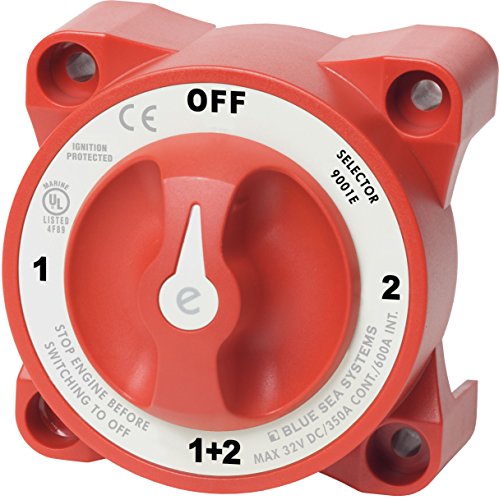
Best for engine rooms and tight installations on gasoline-powered boats. The e-Series 4-Position selector is compact and offers multiple mounting options (surface or rear). Ignition protected, it is suited for engine compartments where protection from sparks is critical. It is a good pick for boats with limited space but should be evaluated for its current capacity relative to your system’s demands.
RVMARINEPAT Battery Disconnect Switch

Best for universal, easy installation with four-position control (1-Both-2-Off). The design emphasizes low parasitic drain and a make-before-break approach to prevent power interruptions during switching. This option is compatible with multiple marine or automotive electrical setups and includes mounting screw hardware. A potential limitation is that unusually high-current draws may require a heavier-duty alternative depending on the boat’s electrical load.
Buying Guide
What should you consider when picking a boat battery selector switch?
- Number of batteries and load: If you have two banks, choose switches with 2-Both-Off or 4-Position options to manage charging, starting, and auxiliary loads.
- Current rating: Match the continuous and intermittent current ratings to your system’s needs to avoid overheating and ensure reliable operation.
- Mounting space: If space is tight, prioritize compact designs or flexible mounting options to fit under panels or in engine rooms.
- Safety and protection: Look for ignition protection, UL or CE approvals, and proper insulation to minimize shorts and fire risk.
- Make-before-break vs break-before-make: Make-before-break helps prevent losing power to critical devices during switching; break-before-make may be acceptable for some installations but can cause brief power drops.
- Ease of installation: Consider terminals, cable sizing (AWG), and included mounting hardware when planning wiring and labor.
Frequently Asked Questions
- What is a battery selector switch used for on boats?
It directs power from one or more batteries to essential systems, allows combining batteries for extra power, and prevents unwanted drain during storage.
- How many batteries can a typical boat switch manage?
Most four-position models support two batteries with both, or more with parallel operation; always check the current rating and wiring diagram.
- Is ignition protection important for marine switches?
Yes. Ignition-protected switches reduce ignition risk in engine compartments and other high-heat areas.
- What is make-before-break switching?
It changes settings without losing power to connected devices, which helps avoid surges or device resets during the switch.
- Should I choose a compact or high-current switch?
Choose based on space and load: compact switches fit cramped panels, while high-current models support heavy electrical systems and more demanding boats.
- Can these switches be used for non-boat vehicles?
Yes, many are suitable for RVs, trucks, and other 12-48V systems, though marine-focused models offer better water resistance and corrosion protection.