Answering your search for reliable, marine-grade battery terminal covers, these options provide insulated protection, corrosion resistance, and easy installation for boat and RV setups. Best for boat owners, RV travelers, and marine technicians who need quick-to-install protection that prevents shorts and wear in harsh environments.
Overview: The table below highlights five top picks that balance durability, insulation, and compatibility with standard post and stud terminals. Use this guide to compare material, fit, and ease of use before selecting your marine battery terminal covers.
| Product | Material / Color | Best For | Note |
|---|---|---|---|
| CANIPHA 6Pcs Battery Terminal Cover Set | Soft insulating rubber • Red/Black | Small- to mid-size boats, motorcycles, cars | Easy to distinguish polarity; good insulation |
| Fastronix Side Post Battery Terminal Cover Set | PVC • Red & Black | Versatile wire sizes 2 AWG to 2/0 AWG | Universal fit; durable construction |
| Fastronix Marine Battery Terminal Cover Set | Standard covers | Marine terminals with studs | Designed for maximum durability at sea |
| Fastronix Red & Black Top Post Cover | Flexible material | Professional-looking installations | Slides on before battery installation |
| RVBOATPAT Silicone Battery Terminal Cover Pack | Silicone • Black | Thicker wires and high-toughness needs | Excellent elasticity and toughness |
CANIPHA Battery Terminal Cover Set

What it is: A 6-piece set of insulating battery terminal covers designed to fit positive and negative poles on various vehicles. Colors red and black help visually identify polarity.
Best for: Car, motorcycle, and light truck owners who want clearly colored, easy-to-install insulation for exposed terminals on a budget.
Why this was selected: It offers practical insulation, reduces air contact to studs, and helps prevent wear and shorts. The soft rubber material handles high temperatures well and is simple to install by hand.
Limitations: Not explicitly marine-rated; best used in inland areas or non-salt-exposed boats unless you ensure added corrosion protection.
Fastronix Side Post Battery Terminal Cover Set

What it is: A universal red and black two-cover set for side post terminals, compatible with wire gauges from 2 AWG to 2/0 AWG.
Best for: Boats and vehicles with varied post sizes where polarity identification is essential.
Why this was selected: Durable PVC construction provides long-lasting protection and flexibility across wire sizes.
Limitations: PVC is durable but may require occasional inspection in extreme marine environments to prevent wear over time.
Fastronix Marine Battery Terminal Cover Set
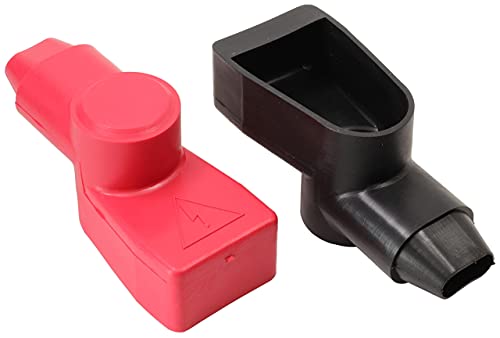
What it is: A marine-focused cover set designed specifically for terminals with studs.
Best for: Boats requiring sturdy, salt-tolerant protection that remains flexible in marine conditions.
Why this was selected: Made in the USA, emphasizing durability and flexibility for marine terminals.
Limitations: Specific compatibility with certain stud configurations may vary; verify fit before purchase.
Fastronix Red & Black Top Post Cover

What it is: A top post style battery terminal cover kit, includes one red and one black cover.
Best for: Professional-looking battery installations where clean polarity visibility matters.
Why this was selected: Designed to slip over post terminals prior to battery installation for a tidy, protected setup.
Limitations: May not fit all post sizes without testing; intended for up to 2/0 gauge cable in some cases.
RVBOATPAT Silicone Battery Terminal Cover Pack

What it is: A silicone battery terminal cover set designed for 1/4″, 5/16″, and 3/8″ posts, suitable for 4 to 2/0 AWG cables.
Best for: Marine and RV setups requiring thick wires with strong elasticity and resilience.
Why this was selected: Silicone provides good insulation, better elasticity, and high toughness to handle thick wires.
Limitations: Silicone products can be pricier than basic PVC options; verify long-term resistance to salt exposure.
Buying Guide
What to consider when choosing marine battery terminal covers
- Material: Silicone and flame-retardant rubber offer higher elasticity and insulation; PVC is budget-friendly but may wear faster in harsh marine conditions.
- Fit and compatibility: Check whether the covers’re sized for top post or side post terminals and the maximum cable gauge (e.g., 2/0 AWG).
- Color and polarity: Red and black color coding helps prevent misconnection during maintenance and installation.
- Marine suitability: Look for salt-water resistance, UV stability, and high-temperature tolerance when used on boats.
- Ease of installation: Quick-attach designs save time and reduce the risk of improper seating around terminals.
- Durability: Consider thick-walled or robust materials that resist wear from vibration and engine heat.
Frequently Asked Questions
- What is the primary purpose of battery terminal covers in marine settings?
They insulate exposed terminals to prevent shorts, corrosion, and accidental contact while withstanding heat and salt exposure. - Can I use non-marine battery terminal covers on a boat?
Yes, but choose covers with better salt resistance and UV stability for marine environments. - Which material lasts longer under marine conditions?
Silicone and flame-retardant rubber typically offer greater elasticity and insulation, while PVC is budget-friendly but may wear sooner. - Do covers affect battery performance?
Not directly; they mainly protect against shorts and contamination, helping maintain terminal integrity. - How many covers should I buy?
A packing set (4–6 pieces) usually covers most standard battery banks on boats, enabling quick replacements as needed. - Are red and black covers necessary?
They help identify polarity quickly, which reduces improper connections during maintenance.