Answering the need for early, reliable bilge alerts, these bilge high water alarms help boaters detect rising water and trigger swift action. They’re best suited for owners who want audible and visual warnings, compliance-ready monitoring, and easy installation. Below, five top options are grouped by who they’re best for and why they stand out.
| Product | Brand | Best For | Why It Stands Out |
|---|---|---|---|
| Rule 33ALA Marine High Water Bilge Alarm (Mercury Free, 12-Volt) | Rule | Compliant, unmanned spaces | Integrated float switch and in-dash gauge with visual and audible 85 dB alarm; CFR 182.530 compliant for unmanned spaces on commercial vessels 26’+ |
| SEAFLO High Water Level Alarm System for Bilge – 12V, 95dB | SEAFLO | High durability, long-term monitoring | Solid-state switch, 95 dB alarm, 4-year warranty; designed for reliability in marine bilge systems |
| Johnson Pumps 72303 Bilge Alert High Water Alarm | Johnson Pump | Affordable, quick setup | Includes switch panel with beeper and Mirius Technology Sensor for straightforward monitoring |
| SEAFLO 12V High Water Alarm Switch Panel | SEAFLO | Integrated switch-panel installations | Audible alarm with LED indicator; waterproof housing designed for harsh marine environments |
| Skyhawk Oversea Bilge High Water Sensor | SKYHAWK | Remote, wireless monitoring | 100% wireless, self-powered with long battery life; real-time alerts via app or email; compatible with Oversea Hub |
Quick reference: the five picks above cover a range of installation styles—from traditional wired alarms with visual gauges to wireless, smart alerts—so you can match your boat’s setup and monitoring preferences.
Rule 33ALA Marine High Water Bilge Alarm (Mercury Free, 12-Volt)
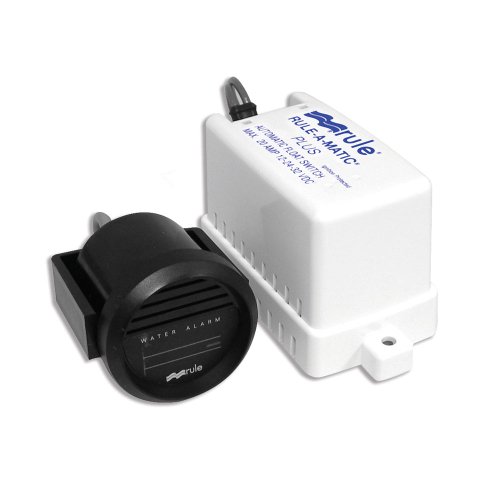
- Features: Float switch plus in-dash gauge; visual and audible 85 dB alarm; monitors unmanned spaces; CFR 182.530 compliance
Best for: Boat operators who need a compliant, self-contained high-water alarm with an in-dash display. The alarm’s dual indication—visual and audible—helps crews detect issues quickly. It’s well-suited for commercial vessels or larger recreational boats with unmanned spaces that require constant monitoring. Caution: The 85 dB alert is audible indoors or in enclosed spaces, but may be less noticeable in very loud environments without a visual cue.
SEAFLO High Water Level Alarm System for Bilge – 12V, 95dB

- Features: 12V system, supports up to 20 A; electric field switch; 1000 mm switch wire and 150 mm alarm wire; 4-year warranty
Best for: Users seeking a robust, long-term marine alarm with a strong warranty and a high-decibel alert. Choose this if you value extended coverage and a system that lends itself to dependable monitoring across bilge layouts. Caution: Installation requires proper wiring and routing to achieve the full 95 dB alert and reliable sensing.
Johnson Pumps 72303 Bilge Alert High Water Alarm

- Features: 12V system; includes switch panel with beeper and Mirius Technology Sensor
Best for: Boaters seeking a reputable brand with an integrated switch panel and audible alert. It’s a practical choice for mid-range bilge monitoring where a compact, all-in-one solution is preferred. Caution: The description notes “Mirius Technology Sensor”—confirm compatibility with your existing bilge components during sourcing.
Skyhawk Oversea Bilge High Water Sensor

- Features: Wireless; self-powered with long battery life; alerts via text, app, or email; works with Oversea Hub; 4-ft probe
Best for: Boats with remote monitoring needs or where wireless alerts are preferred. Use this if you want real-time notifications beyond local audible alerts and you already use the Oversea ecosystem. Caution: Requires compatible Oversea Hub setup and may depend on battery status for continuous operation.
Buying Guide
- Wired vs. wireless: Wired alarms (like Rule and SEAFLO options) provide direct bilge monitoring, while wireless sensors (Skyhawk) offer remote alerts but depend on battery life and hub compatibility.
- Decibels and visibility: Higher dB levels and visual indicators improve noticeability in loud engine rooms. Consider your boat’s typical ambient noise and space acoustics.
- Power and wiring: Check voltage requirements (12V is standard) and whether you need a panel, gauge, or a standalone switch. Verify wiring length and compatibility with your boat’s electrical system.
- Installation environment: Marine environments demand waterproof housings and corrosion-resistant components. Consider panels and enclosures rated for saltwater use.
- Compliance and safety: If you operate a commercial vessel or a larger craft, ensure the alarm meets relevant standards and CFR requirements where applicable.
- Maintenance and warranty: A longer warranty indicates confidence in reliability. Consider systems with simple maintenance and readily available replacement parts.
Frequently Asked Questions
- What is a bilge high water alarm?
A bilge high water alarm detects rising water in the bilge and triggers audible and/or visual alerts to prompt a response.
- Which alarm is best for commercial vessels?
Alarms that meet CFR requirements and offer a visual plus audible alert, such as Rule 33ALA, are well-suited for unmanned spaces on commercial vessels.
- Can I use a wireless bilge alarm on a small boat?
Yes, wireless systems like Skyhawk can work well on smaller boats, especially where wiring is challenging, but ensure hub compatibility and battery life meet your monitoring needs.
- Should I choose a higher decibel alarm?
Higher decibel levels improve noticeability in noisy engines or busy areas; pair with a visual indicator for redundancy.
- Do these alarms require professional installation?
Some units are straightforward to install with basic electrical skills, while others (especially panel-integrated systems) may benefit from professional wiring to ensure reliability and compliance.
- What maintenance is needed?
Regularly test the alarm, inspect wiring and seals, check battery life for wireless models, and replace components as recommended by the manufacturer.