Finding the right non-slip deck option helps boaters stay safe without sacrificing comfort or aesthetics. This guide highlights five well-suited choices for different boat types and conditions, from soft EVA foam sheets to resilient deck paints. Whether you own a jon boat, a pontoon, or a yacht, these selections address traction, durability, and weather resistance. The top picks suit anglers, casual cruisers, and DIY enthusiasts who want steady footing and easy maintenance.
| Product | Best For | Why It Stands Out |
|---|---|---|
| OCEANBROAD Gray 48″ x 16.8″ | Jon/Bass Boats | Closed-cell EVA foam, anti-slip vinyl pattern, strong 3M backing. |
| Abahub 48″ x 16″ | DIY Decking On Flat Surfaces | 6 mm EVA with diamond grooves, easy to cut & self-adhesive. |
| TotalBoat TotalTread Deck Paint (White, Quart) | Wood/ fiberglass & more | Long-lasting polyurethane coating with high-traction texture. |
| FOCEAN 94.5″ x 15.7″ | Large Deck Areas | High-density EVA foam with self-adhesive backing, cool underfoot. |
| OCEANBROAD Brown 48″ x 16.8″ | Flexibility & Color Choice | Faux teak look, 6 mm EVA foam, durable and non-slip. |
OCEANBROAD Gray 48×16.8 Self-Adhesive Boat Flooring

Best for: Jon boats and small to mid-sized craft needing cushioned, slip-resistant footing with minimal setup. This 6 mm EVA foam decking uses a closed-cell construction that resists water absorption and reduces surface heat. The faux teak surface provides effective drainage and anti-skid grip in wet or dry conditions, making it a strong balance of comfort and safety on deck. The 3M backing ensures sticking power on smooth metal or fiberglass surfaces.
Caution: Ensure the application surface is clean and dry for optimal adhesion. Replacement is straightforward but requires careful removal if damaged sections occur.
Abahub EVA Foam Boat Decking 48″ x 16″
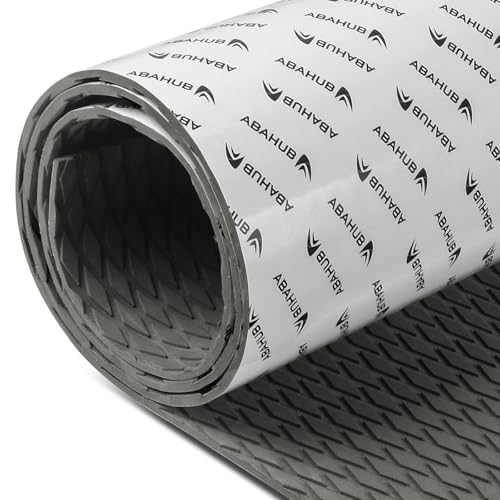
Best for: DIY deck projects on flat surfaces like boats, SUP boards, or kayaks. The 6 mm thick EVA foam delivers a cushioned feel underfoot with good heat resistance and UV stability to resist fading. Diamond grooves enhance drainage and anti-slip performance, while the self-adhesive backing makes installation simple on metal or fiberglass decks.
Limitation: Cutting and trimming require a sharp utility knife for precise sizing. Replacement pieces can be swapped individually if a section is damaged.
TotalBoat TotalTread Non-Skid Deck Paint (White, Quart)

Best for: Older or weathered deck surfaces that benefit from a durable, textured coating. This marine-grade paint creates a low-glare, high-traction surface with a rubberized feel that is less abrasive than silica-based options. It provides a long-lasting finish and is suitable for decks, docks, and other high-traffic areas on boats or even patios.
Limitation: Requires surface preparation and multiple coats; not a quick-deactivation solution compared to peel-and-stick flooring.
FOCEAN EVA Foam Boat Flooring 94.5″ x 15.7″

Best for: Larger decks or areas needing a seamless look with uniform traction. The high-density EVA foam resists deformation, stays cool, and offers UV stability. It’s self-adhesive and easy to cut to fit intricate shapes or long runs, making it ideal for pontoons or expansive cockpit spaces.
Caution: Longer sheets can be challenging to align perfectly without careful planning; plan patterns before cutting to minimize waste.
OCEANBROAD Brown 48″ x 16.8″ Self-Adhesive Decking

Best for: Those seeking a natural wood-like appearance on a non-slip surface. The 6 mm EVA foam provides cushioning, while the faux teak V-groove ensures efficient drainage and a secure grip. Suitable for diverse decks and pairs well with other neutral tones on board interiors.
Limitation: Color tone may vary slightly between batches; verify color match for larger installations.
Buying Guide: Key Purchase Considerations
- Deck material compatibility: Foam sheets suit metal, fiberglass, and smooth decking, while paints work on wood and fiberglass with proper prep.
- Traction vs. comfort: EVA foam provides cushioning and grip; deck paints emphasize durable traction with a textured finish.
- Surface preparation: Self-adhesive foams require clean, dry surfaces; paints need cleaning and priming for best adhesion.
- Maintenance: Foam sheets are easy to wipe and replace sections; paints need occasional reapplication as wear occurs.
- Installation complexity: DIY-ers benefit from pre-cut sheets and peel-and-stick backings; paints require tools, masking, and curing time.
- UV and heat resistance: Look for Level 3–4 UV stability in foams and UV protection in paints to prevent fading and heat buildup.
- Replacement strategy: Some pieces can be swapped individually; others may require reapplication of the entire surface.
Frequently Asked Questions
- What is the best non-slip option for a small jon boat?
Foam decking with adhesive backing (like the OCEANBROAD gray or brown options) offers quick installation, cushioning, and reliable grip on small aluminum or fiberglass boats.
- Can I install non-slip deck paint on a wooden boat deck?
Yes, with proper surface preparation, sanding, and priming, TotalBoat TotalTread provides a durable, high-traction coating for wooden decks.
- Are EVA foam sheets maintenance-free?
Not maintenance-free, but easy to clean and replace. Regular cleaning helps maintain grip and longevity of the surface.
- Is self-adhesive safer than traditional deck paints?
Self-adhesive foams provide quick installation with immediate traction, while paints offer longer-term durability in harsh environments when properly applied.
- How do I choose between foam decking and deck paint?
Choose foam when you want cushioning and easier DIY installation; choose deck paint for permanent, high-traction finishes on varied surfaces.
- Can damaged foam sections be replaced individually?
Many foam sheets allow piece-by-piece replacement; verify the product’s cut-and-replace compatibility before installation.