The buyer intent is clear: find reliable boat dock electrical outlets that ensure safe, convenient shore power. This guide highlights five top options and who they’re best for, with practical trade-offs. It is ideal for boaters, yacht owners, and marina users seeking durable, weatherproof dock-side power connections.
Summary of selected products
| Product | Best For | Key Benefit |
|---|---|---|
| Marinco 305CRRB Marine Electrical Receptacle | Boaters needing a compact, reliable 30A 125V female receptacle | Corrosion-resistant exterior, simple dockside use |
| Marinco 6369CR Marine 3-Pole 4-Wire Receptacle | Higher-amperage dockside power up to 50A | Three-pole, versatile 125/250V compatibility |
| 36 Inch Dock Mount Marine Power Pedestal (30A/20A) | Vertical dock mounting with multiple outlets | Integrated hose holder and water faucet for dock-side convenience |
| Marinco 305CRR Marine Receptacle (Yellow) | Visible color-coded Shore Power option | Same 30A/125V format with distinct color signaling |
| LAZMUMI NEMA L5-30P to 2X L5-30R Splitter | Power two devices from a single 30A dock source | Dual outlets with locking rings for marine use |
Marinco 305CRRB Marine Electrical Receptacle

Product type: Marine electrical receptacle, 30-Amp, 125-Volt, Female, Black. Features indicate compact packaging suitable for standard dock connections. Best for boaters who need a straightforward 30A/125V power inlet on an auxiliary dock pedestal or portable outlet box. Limitations include a basic feature set without extra mounting or weather-first accessories beyond the standard receptacle.
Marinco 6369CR Marine 3-Pole 4-Wire Receptacle
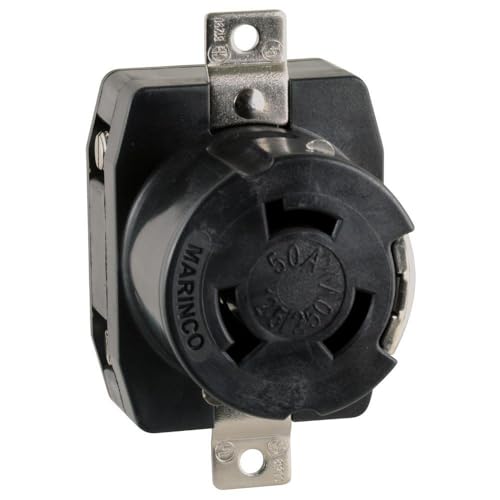
Product type: 50-Amp, 125/250-Volt, Female. This three-pole, four-wire receptacle suits boats requiring higher power and multi-volt flexibility. Best for larger vessels or marina setups that demand higher amperage and dual-voltage capability. Caution: heavier-duty design may require compatible pedestals and wiring suited to 50A circuit runs.
36 Inch Dock Mount Marine Power Pedestal (30A/20A)

Product type: Dock-mounted pedestal with angled 30A and 20A receptacles, 45-degree orientation, and integrated hose holder. Best for users needing a compact, all-in-one dock pedestal with multiple outlet options and convenient dock-side water access. Limitation: footprint is fixed; consider dock spacing to avoid outlet crowding.
Marinco 305CRR Marine Receptacle (Yellow)

Product type: Yellow 30-Amp, 125-Volt Female receptacle. Best for visibility and color-coded shore-power setups to reduce mis-plugging in busy marinas. Selection note: maintain consistent color-coding across your dock to help crew identify live outlets quickly. Caution: ensure the color standard is compatible with your existing dock wiring system.
LAZMUMI NEMA L5-30P to 2X L5-30R Splitter

Product type: Marine shore power Y splitter with two L5-30R receptacles. Best for boats that need to power two devices from a single 30A source and want built-in locking rings for secure connections. Better for extended trips with multiple shore power needs. Limitation: ensure your dock outlet supports L5-30 connections and note the total wattage.
36 Inch Dock Mount Marine Power Pedestal (50A/30A/20A)

Product type: Versatile pedestal with 50A, 30A, and 20A receptacles. Best for marinas or boaters who need multiple outlet options in a single, compact unit. Selection note: verify dock compatibility and mounting space to accommodate the pedestal’s width and angle configuration. Caution: higher amperage requires appropriate wiring and protection.
Buying Guide
What should you consider when shopping for boat dock electrical outlets?
- Amperage and voltage needs: Match receptacle amperage (20A, 30A, 50A) with your boat’s shore power requirements and the dock outlet supply. Higher amperage provides more power but requires heavier cabling and appropriate breakers.
- Connector type and compatibility: Check NEMA/L5-30, L5-30R configurations and whether your dock uses single- or multi-outlet pedestals. Ensure the color-coding, if used, aligns with marina standards.
- Weatherproofing and corrosion resistance: Look for marine-grade housings, watertight seals, nickel-plated contacts, and UV-resistant plastics to withstand saltwater environments.
- Mounting style and space: Decide between portable receptacles, pedestal pedestals, and dock-mount units. Consider footprint, mounting hardware, and whether a hose holder or water faucet is needed.
- Ease of use: Features such as ergonomic grips, contour handles, and directional blade alignment improve connection reliability in marine conditions.
- Safety and reliability: Use GFCI protection where applicable, ensure proper grounding, and verify compatibility with shore power systems to avoid arc faults or overloads.
Frequently Asked Questions
- What is a marine shore power outlet?
A marine shore power outlet is a weatherproof electrical receptacle designed to connect a boat to a dock’s power source, providing AC power for onboard systems.
- Which amperage should I choose for a small boat?
For small-to-mid-size boats, a 30A/125V setup is common. For larger vessels or high-power systems, a 50A/125/250V arrangement may be needed.
- Is color coding important for dock outlets?
Color coding helps users identify the correct outlet quickly and avoids plugging into the wrong circuit. Use consistent color schemes across your dock.
- Do I need to upgrade wiring when adding higher-amperage outlets?
Yes. Higher-amperage outlets require appropriately rated cables, breakers, and weatherproof connections to ensure safety.
- What maintenance should I perform on dock outlets?
Regularly inspect for corrosion, cracks, and moisture ingress. Clean connections, replace damaged weather seals, and verify outlet covers seal properly in all seasons.