Answering the question most boat owners have: which boat engine block heater best fits your needs? This guide highlights five top options designed to keep engine compartments warm, prevent freezing, and simplify winter storage. Each pick targets different boat types and installation preferences, from compact bilge heaters to larger inline preheaters. The buyers below are best for those who want reliable cold-start protection, reduced winterization costs, and installations that suit confined engine rooms or outdoor engine bays.
Summary table of selected products:
| Product | Best For | Key Benefit | Approx. Power |
|---|---|---|---|
| Therelmax Boat Engine Compartment Heater | Boat owners needing adjustable control | Adjustable thermostat with rapid 3s heating | 500W |
| Xtreme Heaters 400W Marine Bilge Heater | Compact spaces requiring stable temp | Self-regulating with 150W bump, waterproof fan | 400W |
| Mhrxusd TPS151GT10-000 Engine Block Heater | Diesel & Gas engines across vehicles | 100–1500W configurable option | 1500W |
| JEENDA TPS151GT10-000 Engine Block Heater | Generators, trucks, marine engines | Multiple data references; 1500W option | 1500W |
| Haoguo Boat Engine Compartment Heater | Boats up to 350 cubic feet | Self-adjusting PTC with 40CFM fan | 400W |
Therelmax Boat Engine Compartment Heater
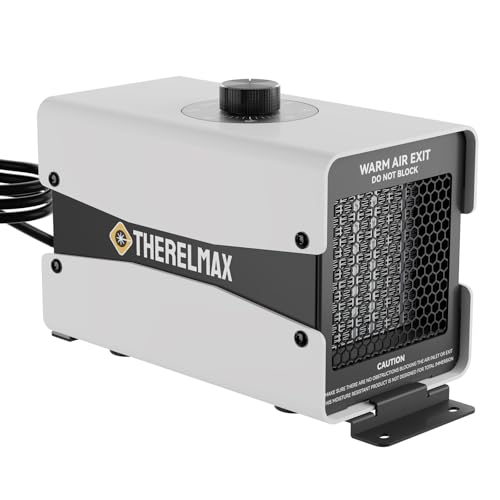
The Therelmax engine heater targets boat owners who want a compact, self-contained 500W solution with a built-in adjustable thermostat. The unit is designed to keep bilges warm and dry, reducing risk of freezing in colder days. It is ideal for boats that routinely operate in chilly weather or those aiming to minimize winterization costs. The integrated thermostat supports a temperature range from 41℉ to 86℉, with a recommended setting around 46℉ for typical bilge heating. The 3-second fast heating helps prevent critical engine components from dropping toward freezing temperatures.
Best for: Boat owners who value on-board thermostat control and quick heating in a small engine compartment. Choose this if you want a single, ready-to-install heater with clear temperature targets for bilges and pumps. Limitation: The unit’s 500W capacity may be less effective in very large engine compartments or extremely cold conditions where space requires larger preheating power.
Xtreme Heaters 400W Marine Bilge Heater

This 400W bilge heater from Xtreme Heaters is best for boaters who need a compact, dependable heater that can fit under RVs, boats, or greenhouse settings. It uses a self-regulating PTC element that turns on around 40°F and off around 55°F, maintaining a steady, energy-efficient temperature to protect the engine compartment. The aluminum anodized housing and sealed electronics module provide resilience in damp marine environments, and the unit’s versatile mounting lets it be placed in various orientations, including upside down if needed. A potential limitation is its smaller power output, which may be insufficient for larger engine bays or boats with higher thermal demands in very cold climates.
Best for: Small-to-mid-sized boats needing a reliable, simple setup with consistent heat. Better for: confined engine compartments where a compact, low-profile heater is advantageous.
Mhrxusd TPS151GT10-000 Engine Block Heater

The Mhrxusd TPS151GT10-000 offers a broad compatibility range for diesel and gas engines, including marine applications. It’s a high-capacity option designed to deliver up to 1500W, which can rapidly raise coolant temperatures and facilitate easier starting in very cold conditions. The model supports a variety of replacement part numbers and configurations, making it suitable for owners who need a flexible preheater that can align with existing components. A caution is to carefully verify unit compatibility and cord length, as some Generac models may include cords that differ from the standard 4-foot length.
Best for: Boat owners with larger or multiple engines, or those seeking a powerful preheater that can also serve other vehicle types. Choose this if you need significant preheating power and flexible compatibility. Limitation: More power means higher electrical demands and potential installation considerations in smaller boat spaces.
JEENDA TPS151GT10-000 Engine Block Heater

The JEENDA unit is positioned for marine and heavy-duty use, offering a 1500W option suitable for rapid preheating in harsh winter conditions. The model aligns with several TPS151GT10-000 and 590-893 part references, helping owners who need cross-compatible replacements. In practice, this heater is best for operators who want a straightforward, high-power preheater that can rapidly elevate coolant temperatures to ensure consistent starts. Limitation: The product listing emphasizes multiple reference numbers, so buyers should double-check the exact compatibility with their engine type and existing parts before purchasing.
Haoguo Boat Engine Compartment Heater

Haoguo’s 400W bilge heater is designed for boats up to 350 cubic feet. It uses a self-adjusting PTC element and features a 40CFM waterproof fan for air circulation. This makes it suitable for smaller boats or engines with moderate cooling demands where a quiet, steady heat is preferred. A limitation to consider is that 400W may be insufficient in very cold environments or larger engine compartments where higher wattage would provide faster preheating.
Buying Guide: Key Purchase Considerations
- Engine size and space: Larger engine compartments typically require higher wattage or multiple heaters; smaller boats benefit from compact, self-contained units.
- Heat control: Thermostat-based models offer precision. Self-regulating PTC heaters are easier to install and maintain but may provide less granular control.
- Power source and electrical load: Ensure your boat’s electrical system can handle the heater’s wattage, especially if you have other devices running on the same circuit.
- Moisture resistance: Marine environments demand sealed electronics and waterproof fans to withstand humidity and spray.
- Installation orientation: Some heaters can be mounted in multiple directions; others have fixed orientations. Check compatibility with your bilge or engine bay layout.
- Compatibility: If replacing an existing part, verify model numbers and part-references to ensure a proper match.
- Reliability and maintenance: Look for heaters with simple wiring, robust housings, and readily available replacement parts.
FAQ
- What wattage should I choose for my boat’s engine heater?
– Choose higher wattage for larger engine bays or very cold climates, and lower wattage for compact spaces or mild winters. Consider a model with adjustable thermostats for flexibility. - Is a self-regulating PTC heater enough for freezing conditions?
– Self-regulating PTC heaters are reliable for maintaining a stable temperature but may require sizing to match the space. In very cold conditions, a higher wattage option is often better. - Can I install a boat engine heater in any engine compartment?
– Most are designed for enclosed compartments, but always follow the manufacturer’s installation guidelines and ensure proper clearance and ventilation. - Will a heater prevent all freezing damage?
– Preheaters reduce freezing risk by keeping coolant and components above critical temperatures but should be part of a broader winterization plan. - Do I need professional installation?
– If you are comfortable with marine electrical work and wiring, you can install some units yourself; otherwise, consult a marine technician to ensure safe, compliant installation.